
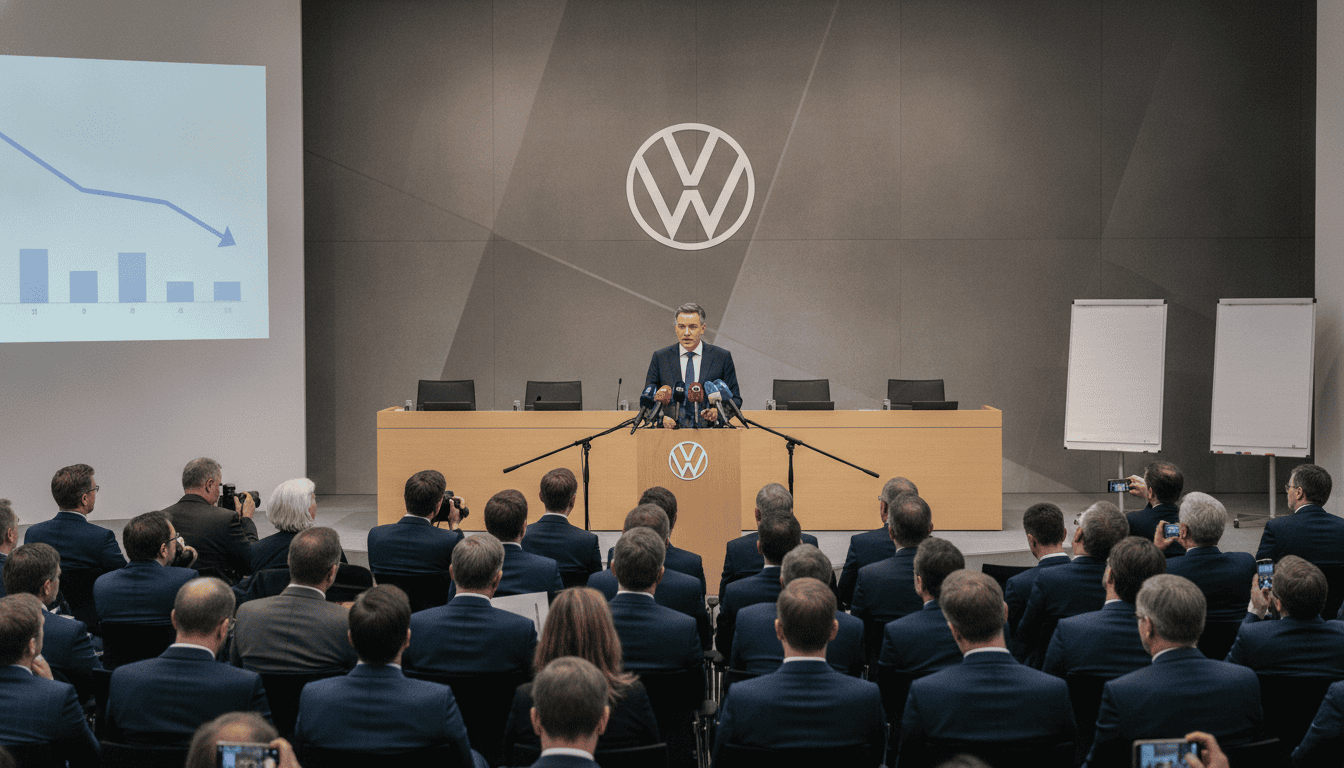
Volkswagen restructuring stalls as supervisory board delays decisions on plant closures and job cuts
Volkswagen restructuring faces a pause after the supervisory board on Thursday, July 9, 2026, declined to approve several contested measures in CEO Oliver Blume’s wide-ranging 2030 plan, leaving potential plant closures and deep job cuts unresolved.
Supervisory board stalls on consent matters
The Volkswagen supervisory board convened Thursday to review a comprehensive restructuring package presented by CEO Oliver Blume, but members withheld immediate approval on several consent-relevant items, according to people briefed on the meeting. The board said negotiations over matters that require co-determination by the works council will continue in subsequent sessions, with no exact timetable announced for follow-up meetings.
Discussion centered on initiatives that would affect sites, models and employment, and several supervisors signaled they needed more time to consult stakeholders before signing off. That delay leaves the most consequential elements of the Volkswagen restructuring — including potential plant closures — unresolved for now.
Blume’s 2030 blueprint and twelve initiatives
Blume outlined a strategic blueprint made up of twelve initiatives aimed at reshaping the group’s business model through 2030 and reducing costs across brands. The plan prioritizes a leaner product portfolio, tighter control of platform and software development, and a focus on core automotive activities rather than ancillary holdings.
Management framed the package as a response to intensifying global competition and a bifurcated technological landscape between China and Western markets. Executives argued the changes are necessary to preserve competitiveness, but acknowledged they will require difficult negotiations with labor representatives and governments.
Model range to be halved, complexity cut by three quarters
A central pillar of the Volkswagen restructuring is a radical reduction in the group’s model offering, shrinking the current roster of roughly 150 models across brands by up to 50 percent. Management projects that, combined with a steep cut in options and trim variants, complexity across the portfolio would fall by roughly 75 percent.
Executives say narrower line-ups and standardized equipment will lower manufacturing and procurement costs and accelerate software and electronics harmonization. However, removing entire nameplates will also shift production volumes between plants and could eliminate jobs tied to discontinued models.
Production capacity to fall toward nine million vehicles
Company planning documents presented at the meeting show Volkswagen has already reduced factory capacity from about 12 million vehicles to roughly 10 million annually through prior measures. The new plan contemplates further reductions, including an approximately 500,000-unit cut already in progress in China, with a target to bring global capacity to about nine million vehicles per year.
Lower capacity is intended to align supply with demand and improve capital efficiency, but it raises immediate questions about which factories will shoulder the reductions. Management said allocations of future model production will be negotiated with the works council and plant managers.
Potential plant closures and large-scale job impact
Sources familiar with the discussions said the plan includes scenarios in which four German plants could be closed and staffing reductions could extend to more than 100,000 positions across the group. Company leaders characterized those figures as contingent on negotiations and market developments rather than fixed commitments.
The possibility of plant shutdowns has already provoked strong reactions from unions. IG Metall staged protest actions at Volkswagen sites on Thursday to signal opposition to unilateral cuts and to demand binding job-security measures in any restructuring agreement.
Labor conflict set to shape next steps
Volkswagen management acknowledged that the most difficult phase of the Volkswagen restructuring will be the consultations with the works council and unions over consent-relevant measures. The firm said negotiations will cover where specific models will be built and which capacities will be reduced, making labor talks central to implementation timelines.
Union leaders have demanded clear guarantees for employment and retraining provisions in exchange for agreeing to structural changes. Company representatives emphasized that technical platform consolidation and software centralization are key to long-term competitiveness and argued that compromises will be necessary to secure the group’s future.
The supervisory board’s decision to defer approvals underscores how politically sensitive restructuring at Europe’s largest automaker has become. With core issues unresolved, stakeholders can expect protracted talks in the coming weeks and months as Volkswagen seeks to balance shareholder demands for efficiency with labor and regional concerns.
