
Trump call to FIFA reported after U.S. World Cup match, raising integrity concerns
Reported White House call from President Trump to FIFA’s Gianni Infantino after the U.S.-Bosnia match raises questions about referee review and integrity.
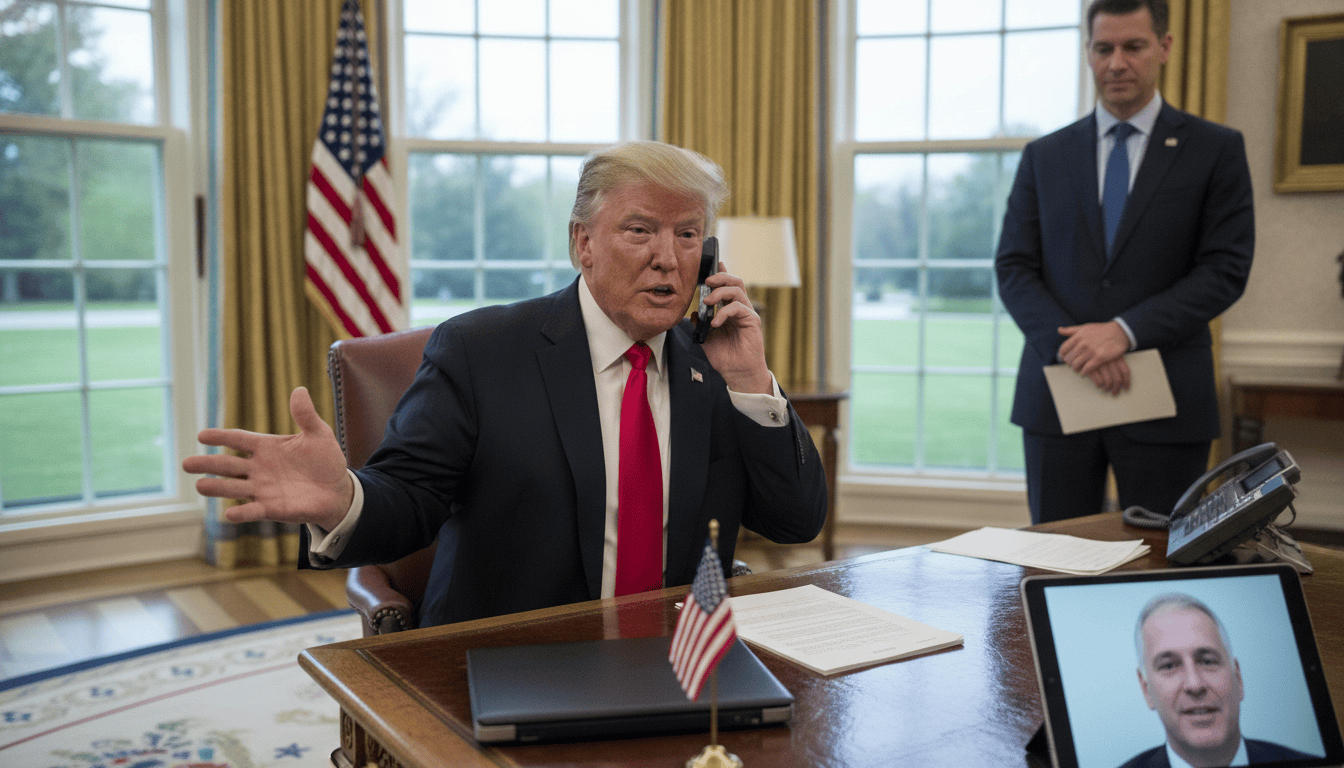
A reported Trump call to FIFA has emerged as a contentious development following the United States’ 2-0 victory over Bosnia and Herzegovina in the World Cup round of 32 in San Francisco. The New York Times first reported that President Trump phoned FIFA president Gianni Infantino late Wednesday, citing three people who said they were present for the exchange. The call, and the president’s subsequent acknowledgment that he asked for a review, has immediately sparked debate about the intersection of politics and sport.
Details of the reported phone call
According to the account published by The New York Times, the call occurred shortly after the U.S. match concluded. The report says the president raised concerns about a specific on-field decision and requested a review from FIFA leadership. Those present for the call described it as an attempt to prompt official scrutiny of a referee call that the president viewed as incorrect.
New York Times sourcing and initial coverage
The New York Times story attributed its reporting to three people who said they had direct knowledge of the conversation. The newspaper’s account was the first to publicly link the White House and FIFA leadership over a match-day decision. The report framed the call as unusual given the traditional separation between political leaders and independent sporting bodies.
President’s acknowledgment and public remarks
On Monday, President Trump confirmed he had asked for a review, saying, “I asked for a review because I didn’t think it was a foul,” while speaking to reporters at the White House. His comment constituted the first public admission that he had intervened in some fashion after the match. The president did not, in that remark, provide a detailed timeline or specify the mechanism he expected FIFA to employ in response.
Questions raised about ethics and competitive fairness
The revelation has prompted immediate questions about ethics, conflicts of interest, and the appearance of outside influence on officiating. Sporting integrity experts and governance scholars say even an informal phone call from a head of state to a governing body can undermine public confidence in the neutrality of match administration. The perceived involvement of political leaders in decisions that affect competitive outcomes can fuel concerns among fans, teams, and independent watchdogs.
Potential institutional responses and oversight options
FIFA and tournament organizers have established review mechanisms for on-field incidents, and the governing body historically defends its procedural independence. The reported call could prompt renewed calls for clear protocols governing unsolicited communications from officials and non-sporting actors. Legal and governance analysts say oversight bodies, ethics committees, or independent reviewers might examine whether any procedural rules or conflict-of-interest guidelines were implicated.
Impact on tournament narrative and stakeholder reactions
Beyond the narrow issue of one match decision, the story has the potential to affect the broader narrative around this World Cup and the perception of impartiality that underpins major tournaments. Players, coaches, sponsors, and international federations typically expect transparent, rule-based adjudication of incidents. If stakeholders perceive that external pressure influenced review decisions, it could influence trust in subsequent outcomes and fuel calls for reform.
The coming days are likely to see closer scrutiny from media outlets, governing bodies, and possibly regulatory entities about how the reported call was handled and whether existing safeguards were adequate. The central questions will hinge on what was said, who acted on the communication if anyone, and whether procedural norms were followed in any subsequent review.
Public statements from FIFA or tournament officials clarifying their response to the president’s request would be pivotal in shaping the next phase of this story. Independent reviews could also be requested by national associations or international sports governance groups seeking to preserve competitive integrity. For now, the administration’s admission and the initial newspaper account stand as the primary public record of the incident.
The reported Trump call to FIFA has turned a single match-day controversy into a broader debate about the boundaries between political influence and sporting governance, leaving fans and officials alike awaiting fuller explanations and any formal responses from the sport’s ruling bodies.
