
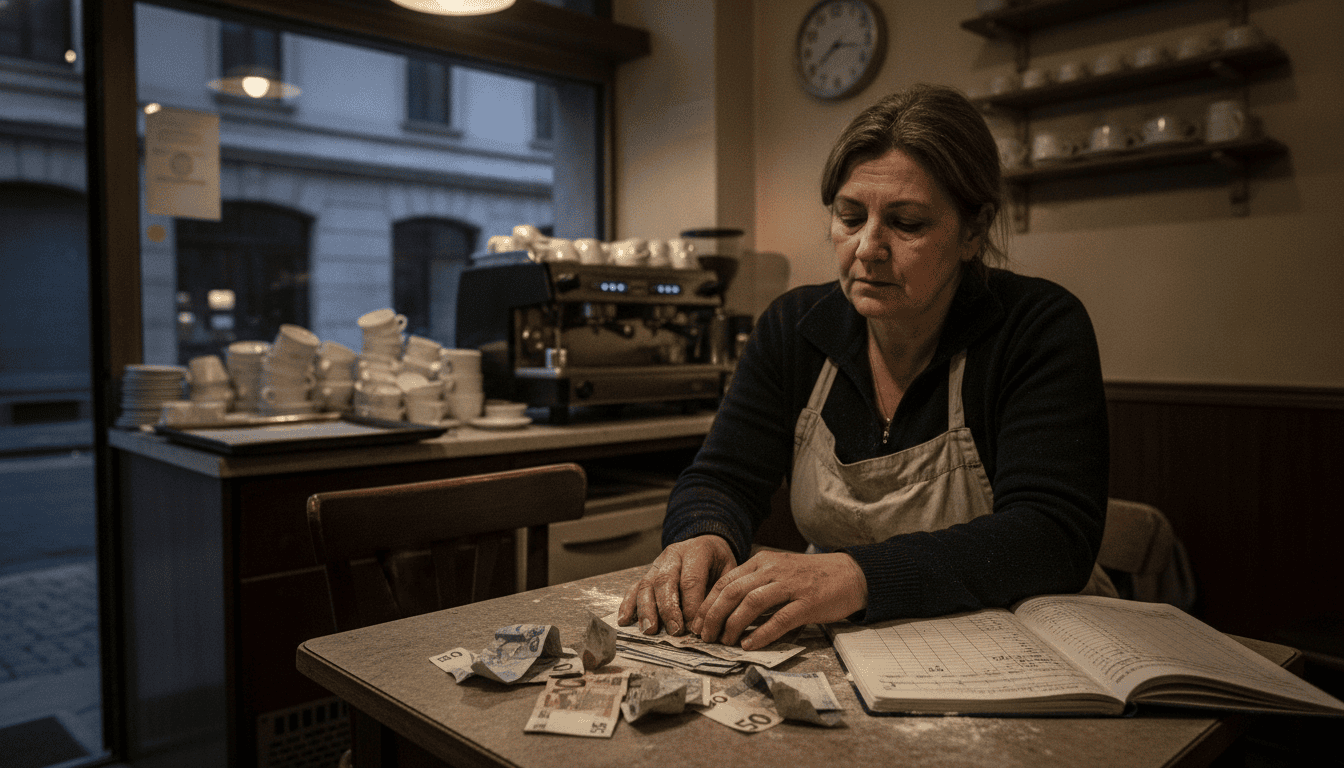
Opening a Café: Two Years On, Owner Works 80 Hours for €1,400 Net
After opening a café, owner Monique Eichhorn now works up to 80 hours a week and nets €1,400 a month, exposing the hidden costs and labor behind small gastronomy ventures.
Monique Eichhorn turned a Pinterest collage into a working café two years after leaving a television job that paid €4,600 gross per month. The café’s espresso machine steams and the oven hums, but the aesthetic dream now contends with daily repairs, staffing gaps and long nights of bookkeeping. Eichhorn’s experience highlights the gap between the idea of opening a café and the financial and human reality of running one.
Owner’s Dream Meets Daily Reality
Two years after she sketched her vision online, Eichhorn manages a busy café where customers come for pastries and coffee. The picture she once curated has given way to hands-on work: gluing the legs of wooden chairs, stepping in for absent staff and juggling service shifts. Each operational demand chips away at the time she expected to spend on growth and rest.
The contrast between expectation and reality is sharp: what began as a creative, autonomous career move now requires constant problem solving. Customers see the finished product; beneath the surface are recurring maintenance tasks and operational gaps that demand owner intervention. That effort has direct consequences for both income and personal life.
Long Hours, Limited Take-Home Pay
Eichhorn reports working as many as 80 hours in a single week while taking home roughly €1,400 net monthly. Those figures come after she left a salaried position in television that paid €4,600 gross, underscoring a substantial income reduction. The disparity illustrates how small hospitality businesses can generate modest personal income despite steady storefront activity.
Owners of new cafés frequently finance operational costs, payroll and supplies before realizing consistent personal profit. In Eichhorn’s case, extended opening hours and emergency cover for staff reduce opportunities for additional revenue streams or outside work. That time pressure also raises questions about sustainability for proprietors reliant on café income alone.
Daily Maintenance and Staffing Pressures
Routine repairs have become part of Eichhorn’s workflow, with fragile wooden chairs requiring frequent re-gluing to withstand service. When employees call in sick, she fills their shifts, adding labor hours that were not planned into the staffing budget. These operational shortfalls force owners to balance service continuity against exhaustion and increased personal workload.
The café’s small team means single absences ripple through schedules and customer service quality. Owners like Eichhorn often absorb the immediate cost of maintaining standards, whether through extra hours or temporary hires. Over time, these recurring pressures affect morale and the ability to plan strategically for growth.
Administrative Burden After Closing Time
Once patrons leave, Eichhorn tackles bookkeeping and administrative tasks that were once managed by others in her prior employment. Accounting, supplier invoices and payroll consume evenings that might otherwise be used for rest or planning. This after-hours administrative workload is a common burden for small-business owners who must reconcile daily operations with back-office duties.
The administrative demands also complicate the attempt to scale or diversify offerings, since time and attention are tied to immediate operational needs. Access to external support, such as an accountant or a reliable deputy manager, can ease that pressure but typically increases monthly expenses. For many early-stage café owners, those choices present difficult trade-offs between time, cost and quality.
Personal Trade-Offs and Community Expectations
Friends and family have adjusted to last-minute cancellations as Eichhorn prioritizes the café’s needs, a cost she describes as personal as well as financial. The social sacrifices and physical wear of long service shifts feature prominently in her account of daily life. Those trade-offs are part of a broader reality for entrepreneurs who convert a passion into a business.
Customer expectations for consistent service and the café’s curated atmosphere also add emotional labor to operational demands. Owners often shoulder reputational responsibility for every aspect of the venue, from the quality of a croissant to the condition of furniture. That constant accountability can intensify stress when margins are tight and time is scarce.
Final paragraph
Eichhorn’s experience shows the complexities behind opening a café: a compelling personal vision can lead to long hours, modest net income and sustained operational strain even when the storefront appears successful. For prospective café owners, her story underscores the importance of realistic financial planning, reliable staffing solutions and contingency arrangements to bridge the gap between dream and sustainable business.
