
Mali attacks target army and Russian-backed positions across north, centre and south
Renewed Mali attacks hit army and Russian-backed positions across north, centre and south; JNIM and Tuareg Azawad Liberation Front claim responsibility.
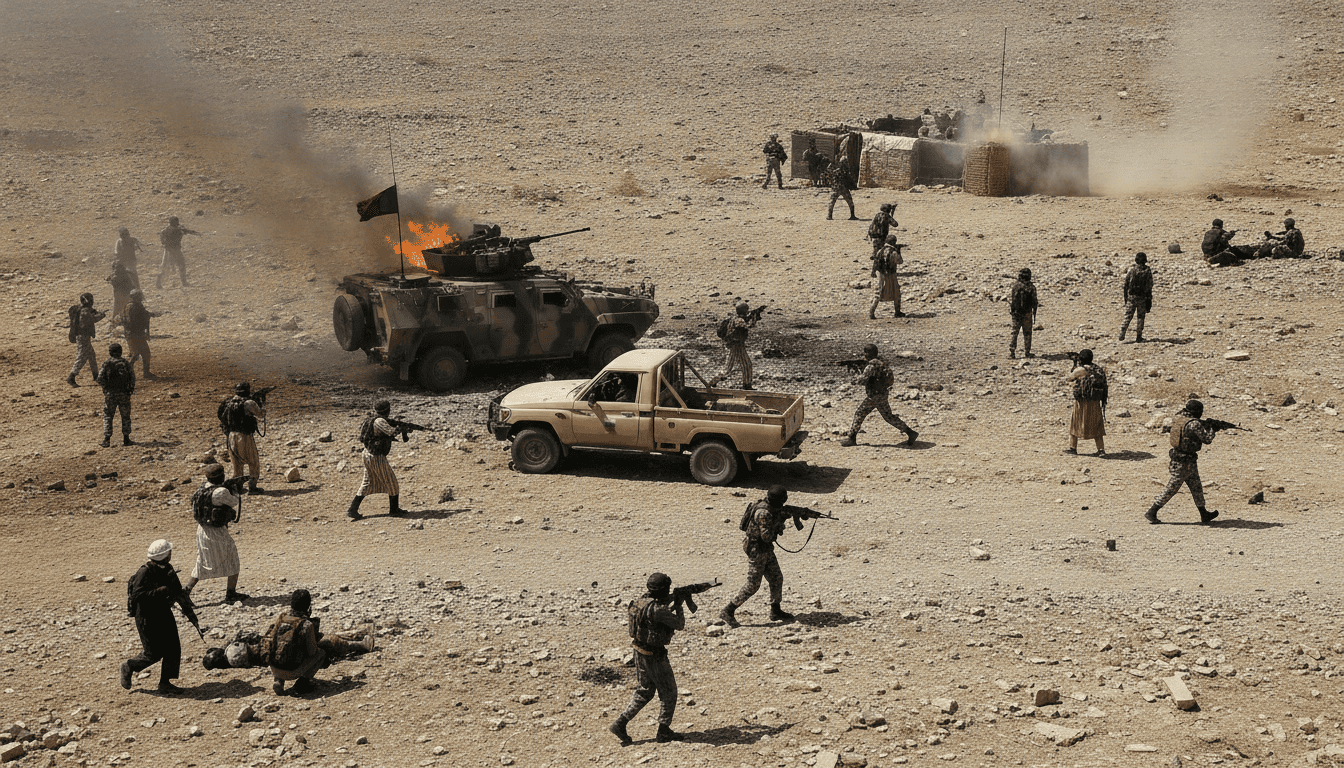
The latest Mali attacks saw coordinated assaults on army positions and bases used by Russian-backed forces, officials and militant statements showed, escalating violence across multiple regions of the country. Government forces reported repelling strikes in the north, centre and south while saying dozens of attackers were killed, though independent verification of battlefield claims is limited. Both the Tuareg-led Azawad Liberation Front and the al-Qaeda affiliate JNIM said they were involved in the operations, marking a renewed wave of violence weeks after earlier coordinated assaults. The attacks underline the fragile security environment that has persisted since successive rebellions and military coups reshaped Mali’s politics and alliances.
Attacks reported in five towns and several fronts
Malian military statements named Aguelhok, Anefis and Gao in the north, Sevare in central Mali and Kenieroba in the south as sites of the assaults. Officials later added that Konna and Somadougou in the centre were also targeted and said counter-operations had been conducted with support from Russia-backed paramilitary units. Local reports indicated a prison complex in Kenieroba, where political detainees are held, came under attack during the violence. Visual material circulated on social channels purported to show strikes and Russian personnel at bases, but those videos have not been independently authenticated.
Army says it has the situation under control and reports casualties
The Malian army announced that the situation was “totally under control” after the incidents and provided casualty figures for the confrontations. In its initial account, the military said around 20 attackers were killed in Sevare and six in Gao, while reporting one pro-government fighter killed and four wounded in Gao. Officials also said they had successfully repelled incursions in central towns with the help of Africa Corps, the Russian-aligned paramilitary group now active in the country. Independent confirmation of those battlefield tallies and many battlefield claims remains unavailable, a common challenge in Mali’s conflict zones.
JNIM and Azawad Liberation Front claim joint operations
A statement from Jama’at Nusrat al-Islam wal-Muslimin, or JNIM, asserted it had seized multiple positions held by the army or pro-government forces and described coordinated attacks in several locations. The Azawad Liberation Front, a Tuareg-dominated separatist grouping formed from northern factions, also publicly acknowledged participation through a spokesperson. Both groups have collaborated in past operations despite differing long-term goals, and analysts say such tactical cooperation can amplify the threat to state control. Reliance on claims from armed actors underscores the difficulty of independently verifying control on the ground.
Origins and aims of the armed groups involved
JNIM emerged in 2017 as a coalition of local Islamist groups, including a Saharan branch of al-Qaeda in the Islamic Maghreb and several Malian factions, and is led by veteran Islamist figure Iyad Ag Ghali. The group’s strategy has focused on extending territorial influence across border areas of Mali, Niger and Burkina Faso and on opposing Western presence and local governments it deems illegitimate. The Azawad Liberation Front formed more recently from a coalition of Tuareg separatists seeking autonomy or independence for northern Mali, led by Alghabass Ag Intalla. While the FLA’s core grievance is self-determination, its fighters have at times cooperated with jihadist factions against shared foes.
Longstanding instability and shifting foreign involvement
Mali has cycled through rebellions and political upheaval since independence, with a major turning point in 2012 when Tuareg insurgents and allied Islamist fighters seized large swaths of the north. A French military intervention in 2013 reclaimed key cities, and a 2015 peace accord sought to address Tuareg demands, but the country’s security picture remained unstable. Political turmoil intensified with military coups in 2020 and 2021, after which the ruling junta expelled French forces and later contracted Russian mercenary elements. Wagner Group fighters announced a formal withdrawal after years of deployment, yet Russian-aligned units have persisted under the Africa Corps banner, continuing to partner with Malian forces in counterinsurgency operations.
Analysts warn of shrinking government control and greater coordination among militants
Security experts note that government authority in Mali has increasingly been confined to hardened corridors and urban enclaves, while armed groups operate with greater coordination across regions. Analysts argue that combined operations by separatist and Islamist forces complicate counterinsurgency efforts and can offset advantages provided by foreign military assistance. Observers also caution that outside support has yielded mixed results, and that battlefield gains by state-aligned forces often fail to translate into durable security for communities in contested areas. The pattern of recurring attacks and shifting alliances suggests the risk of further destabilisation in the coming months.
The renewed Mali attacks underscore how entrenched rivalries, fragile institutions and external actors continue to shape the country’s security trajectory. With claims and counterclaims circulating and independent verification limited, families and local communities face continued uncertainty as national and regional leaders consider their next moves.
