
Birth registration in Cameroon rises after UNICEF-backed push, but gaps remain
Birth registration in Cameroon improves after UNICEF campaign; digital systems and outreach registered thousands, but legal and social barriers continue.
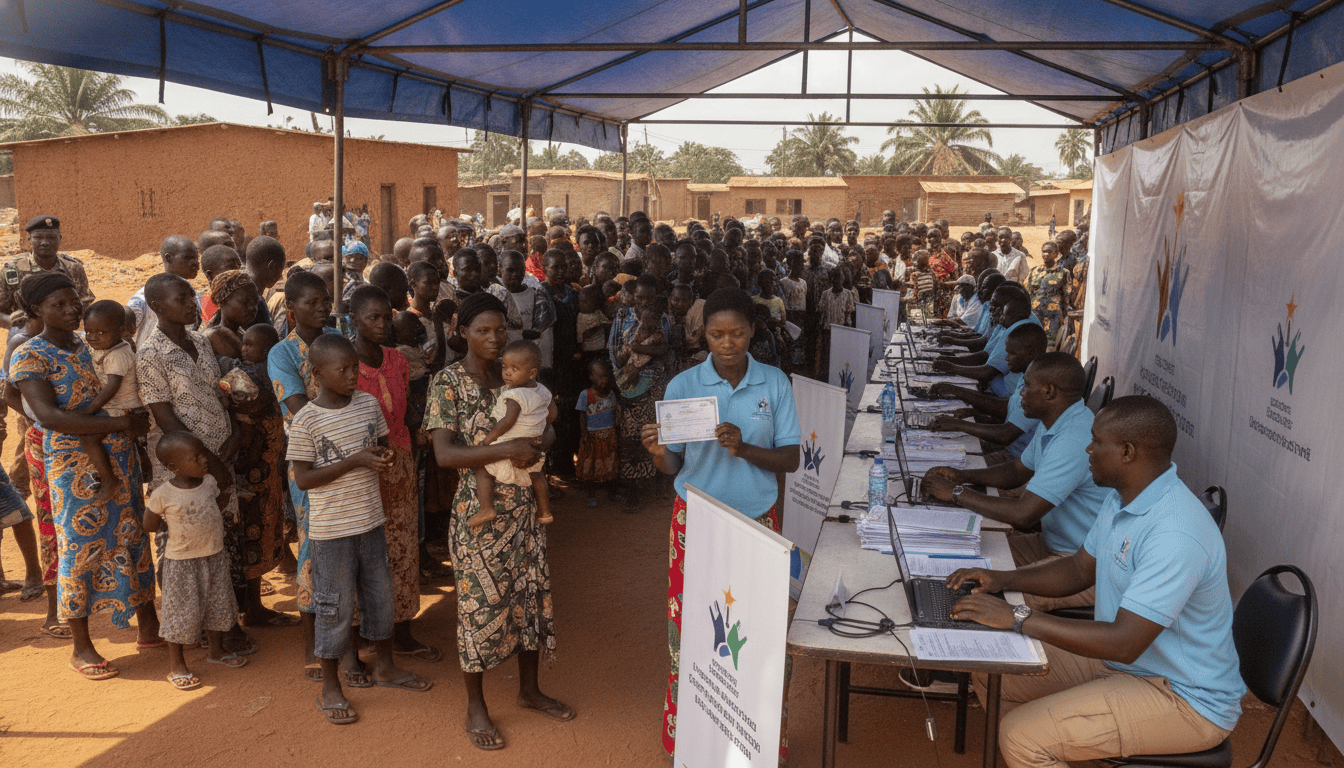
The push to strengthen birth registration in Cameroon has produced measurable gains this year, with local governments and UNICEF-backed initiatives registering thousands of children who previously lacked legal identity. Officials say the drive—anchored in a Mayors’ Forum and the nationwide “My Name” campaign—has brought services closer to families and introduced digital processing that speeds issuance of certificates. Despite progress, national and community-level obstacles mean many children still face exclusion from schooling, public exams and other essential services.
Garoua 2 recognised for rapid local action
Garoua 2 municipality in northern Cameroon was singled out as a model after local authorities reformed registration procedures and sped up access to documents. Mayor Oumarou Sanda received a national award that highlighted months of work to register newborns and school-age children. The municipality’s efforts combined outreach, training of health staff and administrative changes to reduce delays in issuing birth certificates.
Local officials credit the award with increasing public awareness and trust in the system, encouraging more parents to register births at health facilities or council offices. The recognition also underscored differences across the country in administrative capacity and resources for civil registration.
UNICEF campaign and mayors’ commitments drive momentum
The nationwide initiative followed the first Mayors’ Forum on Birth Registration in April 2024, where local leaders signed a charter to strengthen civil registration across municipalities. UNICEF partnered with the government to roll out the “My Name” campaign, a program intended to identify and register children without documentation in Cameroon’s 360 councils and 14 cities. Officials report that the campaign has registered more than 17,000 children since its launch.
The campaign focused on linking health services, local councils and community leaders to close gaps in the system. Support included training, community sensitisation and logistical assistance to extend registration beyond urban centres.
Tiko expands outreach to remote and traditional communities
In the Southwest region, Tiko Council took a community-led approach to reach rural families where births often go unreported. Council teams worked with traditional leaders to collect birth declarations from remote hamlets before forwarding records for formal registration. This approach helped overcome transport and information barriers that previously kept many children undocumented.
Tiko’s civil status bureau also ran awareness sessions for pregnant women at local clinics, encouraging early registration immediately after delivery. Officials say daily demand for certificates has increased, and thousands of documents have been issued as a result of the outreach.
Digital civil registration reduces waiting times in Garoua 2
Garoua 2 addressed chronic delays caused by handwritten registers by adopting a digital civil status system, allowing certificates to be produced within minutes. The transition cut administrative backlogs and simplified follow-up for families who had missing or delayed paperwork. Municipal staff report the system also improved record-keeping and made it easier to track registrations across neighbourhoods.
Digitisation, officials add, is not a panacea; it requires electricity, trained operators and data security safeguards, and those resources remain unevenly distributed between well-resourced towns and remote districts.
Education and protection consequences for undocumented children
The absence of a birth certificate has clear, immediate consequences for children’s access to education in Cameroon. The Ministry of Basic Education estimates more than 1.5 million primary pupils—roughly 30 percent—are enrolled without official birth certificates, placing limits on progression to secondary school and eligibility to sit for public examinations. School principals and civil registry officials say lack of documentation is often first noticed when children are blocked from assessments or transfers.
Beyond schooling, child protection specialists warn that undocumented children are harder to monitor and may be more exposed to exploitation. In conflict-affected areas, the lack of a legal identity can increase risks of trafficking or recruitment into armed groups, according to UNICEF staff working on child protection.
Persistent legal, social and logistical barriers
Cameroon’s civil status law guarantees a free 90-day registration window after birth, but the process becomes more complex and costly thereafter, with court procedures required after one year. For many families, distances to registry offices, lack of information and fees for late registration are prohibitive. Officials say the legal framework incentivises early reporting but enforcement and accessibility remain inconsistent.
Social norms also hamper progress. In some rural communities, harmful beliefs reduce the perceived value of formal documentation for girls or fetal losses, contributing to under-registration. Local campaigns increasingly involve religious and traditional leaders to shift attitudes, emphasise gender equity and encourage families to register births promptly.
Operationally, gaps in staffing, transport and funding limit councils’ ability to sustain outreach, and national registration rates lag behind the number of births recorded in health facilities. UNICEF figures show that of the 560,000 births recorded in health facilities in 2023, fewer than half were officially registered, highlighting the work still needed to connect health systems and civil registries.
Efforts to expand birth registration in Cameroon have shown that combined strategies—mayoral commitments, community outreach, digitisation and partnerships with traditional leaders—can deliver rapid gains. Sustained funding, clearer procedures for late registration and broader community education will be essential to translate early momentum into universal coverage and to ensure every child’s legal identity is protected.
