
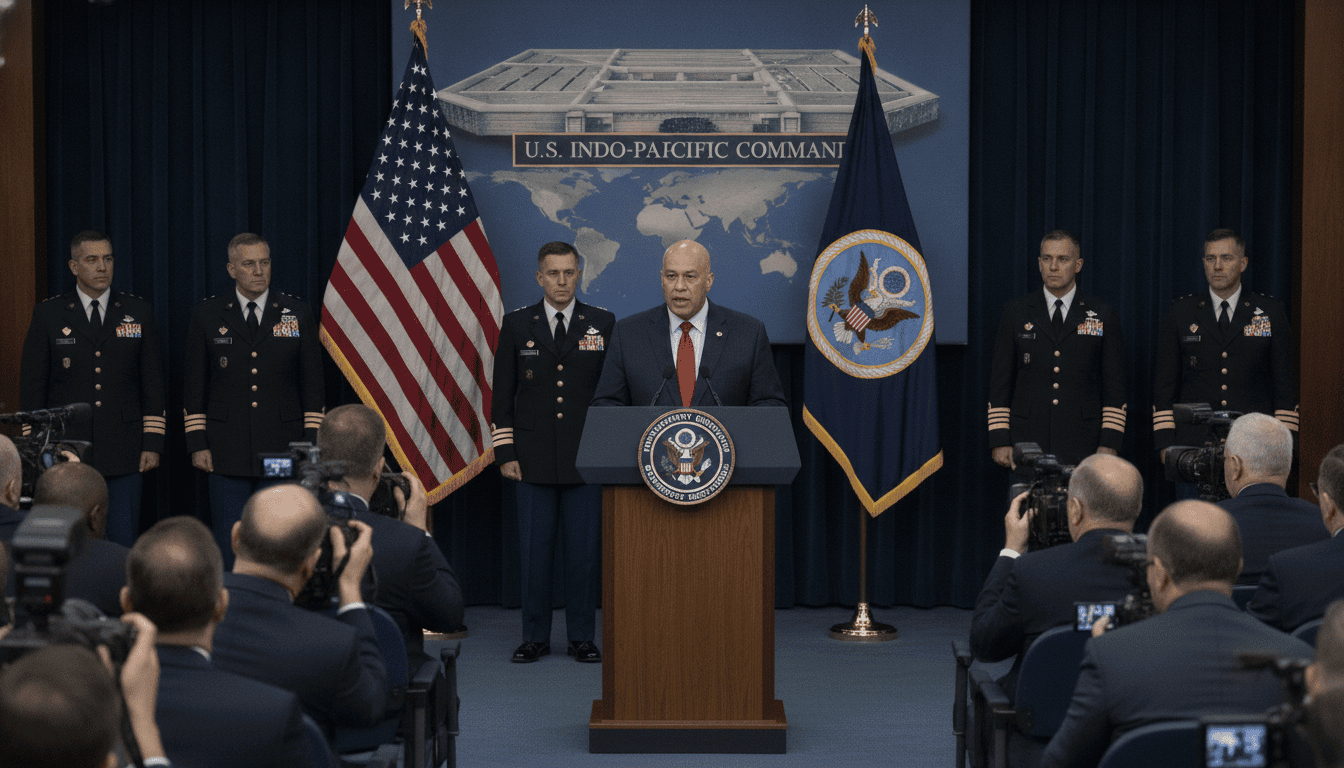
US Restores ‘Pacific Command’ Name, Signaling Shift in South Asia Strategy
US renaming of Indo-Pacific Command back to Pacific Command signals a strategic pivot: closer ties with Pakistan, Bangladesh and Nepal, less deference to India.
The Pentagon’s decision to drop “Indo” from the Indo‑Pacific Command and restore the Pacific Command name has reverberated across diplomatic and defence circles, marking what officials say is a return to historical nomenclature and what analysts call a clear strategic signal. The Pacific Command renaming appears to reflect a broader U.S. effort to engage South Asian capitals directly rather than treating New Delhi as the region’s default interlocutor. The move underscores a shift from a hierarchical architecture to a more transactional, multipolar approach in U.S. policy toward South Asia.
Pentagon framing and historical context
The Pentagon described the change as a restoration of the command’s original title while stressing that its geographic jurisdiction and missions remain unchanged. The “Indo” suffix, added in 2018 under the Trump administration, was intended to acknowledge deeper strategic linkages between the Indian subcontinent and the broader Pacific theatre. Then‑Defense Secretary James Mattis had defended the earlier change as recognition of the growing interdependence between the Indian Ocean and the Pacific.
The official explanation has not quelled debate. Observers say the renaming carries diplomatic weight beyond simple nomenclature, because names are routinely read as indicators of priority and posture in geopolitics.
Reactions from regional capitals and the Quad
Responses in New Delhi and among Quad partners were swift and pointed, with some Indian voices questioning whether the change signalled waning U.S. commitment to India as a primary counterweight to China. Indian parliamentarian Shashi Tharoor suggested the removal of “Indo” could undermine the cohesion of the Quad grouping. At the same time, U.S. allies such as Japan and Australia have publicly reiterated their continuing security ties with Washington.
Across South Asia, the renaming has been interpreted as a recalibration rather than an outright repudiation of India. Analysts note that Washington still values India’s naval capacity, market size and technological base, even as it broadens bilateral relationships across the subcontinent.
Direct engagement with Pakistan, Bangladesh and Nepal
Washington’s posture now emphasizes targeted bilateral engagement with Pakistan, Bangladesh and Nepal, treating these states as distinct actors with their own strategic interests. The U.S. approach is increasingly transactional: cooperation on specific issues such as minerals, trade, energy and humanitarian assistance, while leaving partner capitals free to maintain ties with Beijing or Moscow as they see fit.
That shift reduces India’s informal regional veto and increases U.S. diplomatic flexibility. Officials and strategists in Washington argue this pluralistic model better reflects the realities of a multipolar South Asia where capitals pursue diverse alignments and economic agendas.
Pakistan’s diplomatic resurgence and mineral potential
Islamabad’s recent outreach has been framed as a reorientation that widens Pakistan’s strategic options and economic partnerships. Pakistani leaders have promoted the country as a conduit for Gulf capital and a source of critical minerals, while maintaining ties with Beijing. Large deposits such as the Reko Diq copper and gold fields have been cited by diplomats and business analysts as potential leverage in diversifying supply chains away from Chinese dominance.
Pakistan has also pursued selective cooperation with the United States on security and counterterrorism matters, even as it cultivates relationships with multiple great powers. That diplomatic balancing act is seen in Islamabad’s efforts to secure trade concessions and clearer legal designations that address U.S. concerns.
Bangladesh’s rising strategic and economic profile
Bangladesh’s demographic weight, manufacturing capacity and position along the Bay of Bengal make it an increasingly pivotal actor for Washington. Once viewed largely through development and humanitarian lenses, Dhaka is now courted for investment, energy deals and technology partnerships. U.S. engagement could include support for refugee solutions, humanitarian initiatives and multilateral pressure on neighbouring states to stabilise border regions.
Bangladesh’s capacity to simultaneously engage the U.S., China and India exemplifies the transactional regional dynamics Washington seeks to harness: cooperation where interests align, and independence where domestic priorities dictate a different course.
Implications for U.S. grand strategy in Asia
The Pacific Command renaming is one component of a broader U.S. effort to avoid privileging any single regional partner and to hedge commercial as well as security risks. Washington appears intent on preventing any dominant power — whether China or another regional heavyweight — from consolidating control over South Asia. That includes managing emerging economic competition with India in sectors such as pharmaceuticals, information technology and electronics manufacturing.
U.S. policymakers frame this approach as learned prudence: cultivating multiple bilateral channels, supporting democratic transitions where possible, and preserving freedom of manoeuvre in a crowded strategic environment.
The Pentagon’s nominal change is therefore less a retreat from India than a formal acknowledgment that influence in South Asia will be won through flexible, issue‑by‑issue partnerships rather than by granting exclusive regional deference. Observers will watch whether Washington’s rhetorical recalibration is matched by sustained diplomatic and economic investments across the subcontinent.
