
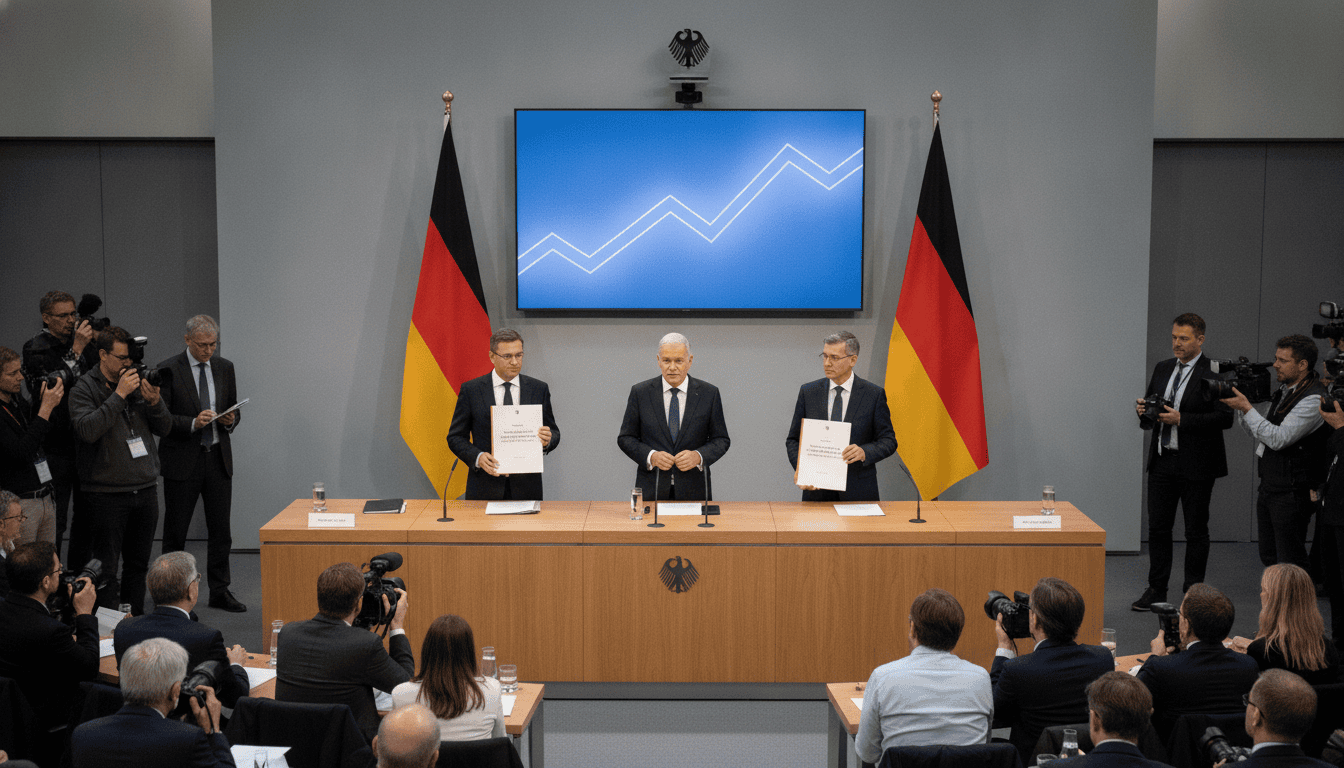
Germany unveils reform package to jumpstart growth and reshape labour, tax and trade policies
Germany unveils a reform package to boost growth, reshape labor rules, tax and trade policy. Key measures, political reactions and timeline in detail.
The German reform package announced this week sets out 34 measures aimed at reviving growth and signalling government unity after a year of internal strain, party negotiations and public scepticism. Chancellor Friedrich Merz framed the programme as a response to structural weakness in the economy and a bid to restore public confidence in governance. The plan ranges from labour-market flexibility and tax adjustments to trade defence measures designed to counter unfair foreign competition.
Origins of the reform push
The initiative traces back to cross-party discussions and external advice sessions that took place amid last year’s political turbulence following a contested judicial appointment. Economists such as Nicola Fuchs‑Schündeln pressed coalition leaders to prioritise economic momentum as a means of shoring up democratic support. That argument now underpins the government’s public case that credible reforms and visible economic progress will help rebuild electoral approval.
Officials stress the package is both a political signal and a technical roadmap, not an instant-growth formula. Merz declined to predict precise GDP gains from the measures, saying such estimates would be speculative. Instead, he framed the programme as the start of a longer process of structural change.
Key economic and fiscal measures
The package combines incremental tax relief with targeted social-policy adjustments designed to leave households and businesses better off over time. Measures include modest increases in the basic personal allowance and adjustments to child-related support, while broader tax-rate reform is limited in scope. The government also proposed changes to pension contributions linked to mini-jobs and introduced a new form of capital‑linked, individual pension entitlement.
Policymakers describe these moves as pragmatic steps to relieve pressure on incomes without jeopardising fiscal stability. Critics say the gains for many households will be small unless further reforms follow, while proponents argue the signal of action and predictability matters for investor and consumer confidence.
Labour-market reform and flexibility
Labour-market changes are among the most consequential elements. The coalition agreed to extend permissible fixed‑term contracts: instead of the previous two‑year ceiling, employers may now issue contracts extended in half‑year increments up to four years in total. Supporters argue this increases flexibility for growing sectors and helps workers move between industries.
The package also pushes portability of certain retirement claims and ties the new capital pension more closely to the individual rather than a specific employer. Advocates say these adjustments will ease transitions as some legacy industries shrink and new sectors expand, though unions and some regional politicians warned about potential risks for job security.
Trade measures and strategic industrial policy
For the first time in recent practice, the government explicitly embraced stronger defences against what it calls unfair foreign competition, specifically referencing antidumping and antisubvention instruments. The package authorises tougher scrutiny of foreign subsidies and contemplates binding requirements for technology transfers in joint ventures where German strategic interests are at stake.
This marks a shift away from earlier reluctance to pursue protectionist tools for fear of losing export markets, and reflects a broader reassessment of global supply‑chain risks. Business groups and exporters will watch implementation closely to see whether new safeguards are calibrated to protect domestic firms without triggering retaliation.
Political reaction and coalition dynamics
Public and institutional responses have so far been measured. Employers’ representatives welcomed “signals for employment and relief,” while major trade unions praised steps they see as supportive of jobs but flagged concerns about extended temporary contracts and other social protections. Coalition leaders emphasised that prior consultations with social partners smoothed the path to consensus.
Polls show the governing parties stabilised after a turbulent spring, but their combined support remains below the level won at the last federal election. The government’s ability to translate legislative action into tangible improvements for citizens will be decisive for its standing ahead of upcoming state votes.
Implementation hurdles and the calendar ahead
The government plans to move quickly on the agreed measures, but significant items still require parliamentary debate and legal drafting. A second stage of health-sector reform is scheduled for later this year and is expected to provoke intense discussion, particularly over hospital closures and regional access to care. Internal disputes persist over pension treatment of mini‑jobs and the distributional impacts of tax changes, with opposition from some regional party factions.
Timelines for further reforms have been conditioned by an electoral calendar that includes several state contests in the coming months. While leaders insist they will press ahead, political sensitivity around these votes could constrain how far and how fast more contentious items are pursued.
The success of the German reform package will ultimately depend on whether the measures deliver visible improvements in job opportunities, public services and living standards. If the package sparks sustained private investment and labour‑market dynamism, it could strengthen the government’s case that reform, not retrenchment, is the path to renewed economic resilience.
