
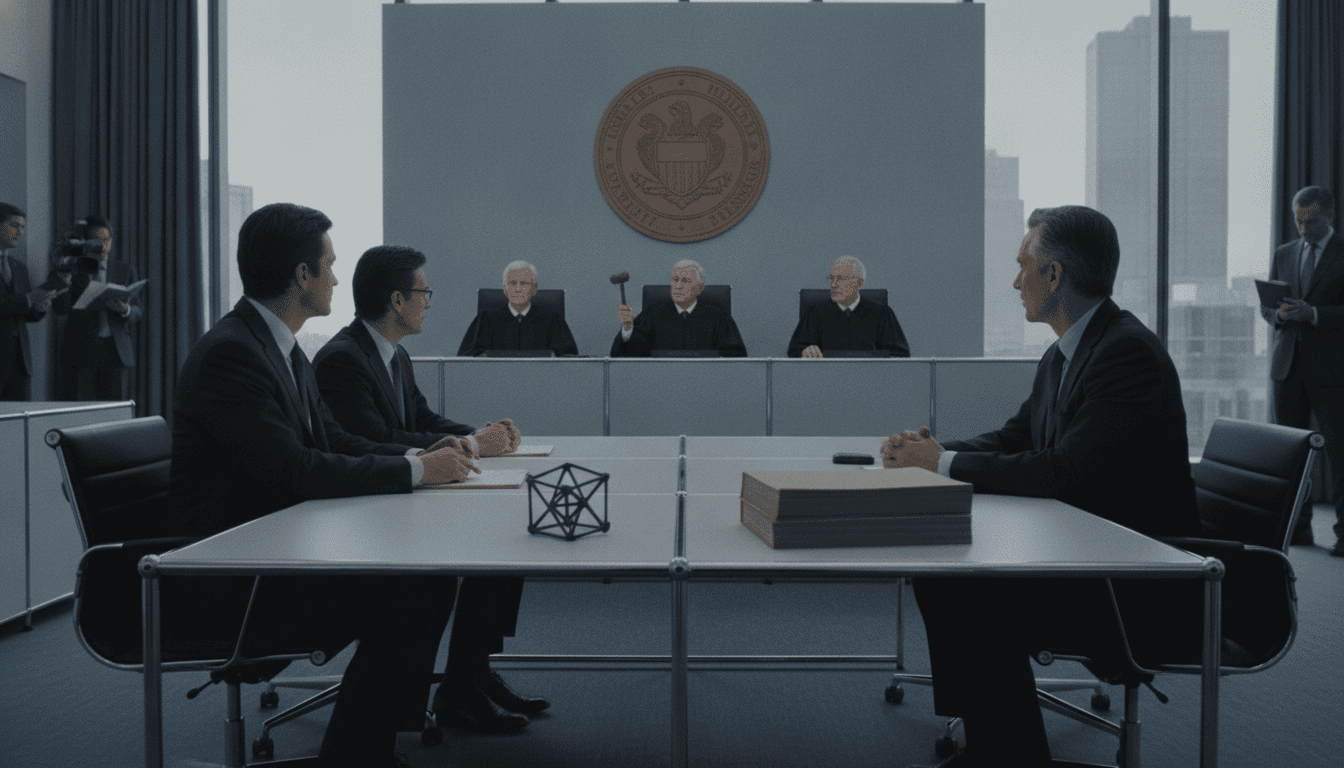
BGH Overturns Part of Ruling in USM Haller Copyright Case
BGH trims ruling in USM Haller copyright dispute; case sent back to OLG Düsseldorf after EuGH guidance on originality for applied art in design protection.
USM Haller’s long-running copyright dispute moved a step forward on Thursday as the Bundesgerichtshof (BGH) in Karlsruhe set aside parts of a lower-court decision and sent the matter back to the Oberlandesgericht (OLG) Düsseldorf for re-examination. The Swiss furniture maker, known for its modular USM Haller system, had argued that its assembly and aesthetic constitute works of applied art entitled to copyright protection.
The case pits a manufacturer of a widely recognized design system against a German dealer from Nuremberg that began by selling replacement parts and later offered competing modular components and assembly services. The contest has tested the boundaries between industrial design, patent protection and copyright law across multiple courts, including a referral to the European Court of Justice (EuGH).
Background to the USM Haller dispute
USM Haller, founded in Münsingen, Switzerland, is famed for modular shelving and roll containers joined by chromed steel tubes and spherical connectors. Its systems are a fixture in corporate offices and museums and have been displayed at New York’s Museum of Modern Art since 2001.
The dispute began when a Nuremberg dealer sold replacement parts online and later expanded to offer a full set of compatible components and mounting services. USM Haller argued that this intention to market a parallel system went beyond mere spare parts trade and infringed its rights in the design, seeking injunctions, information and damages.
Procedural history and prior rulings
The litigation has wound through German courts for years, featuring divergent findings at the Landgericht and Oberlandesgericht levels. The Landgericht Düsseldorf largely found in favor of USM Haller on copyright grounds, but the OLG later curtailed those claims and narrowed relief.
Both parties appealed, and the dispute attracted attention because national judges required guidance from the EuGH on whether the originality standard for applied art differs from that for other types of works. That referral delayed a final decision from the BGH for nearly four years.
EuGH guidance on originality for applied art
In a 2025 opinion, the EuGH clarified that objects of industrial or applied art should not be held to a higher originality threshold than other works. The court instructed that national tribunals must examine whether a contested product reproduces the creative elements of a protected work in a recognizable way.
That ruling required German courts to apply the same “uniform and objective” criteria to furniture and other design items as to literary, musical or pictorial works. The decision provided the legal yardstick the BGH relied on when reviewing the Düsseldorf proceedings.
What the BGH decided on Thursday
The First Civil Senate of the BGH, presided over by Judge Thomas Koch, overturned the lower-court judgment to the extent that it dismissed USM Haller’s copyright claims without adequate application of the EuGH standard. The Karlsruhe court found that the OLG Düsseldorf had not sufficiently considered certain indicia of originality, such as museum presentation and recognition within expert circles.
However, the BGH did not grant USM Haller an outright victory on the merits. Instead, it remitted the case to the OLG for a fresh assessment under the EuGH’s test, leaving factual questions about copying and the extent of similarity to be re-examined by the appellate court.
Implications for design protection and the furniture industry
Legal experts say the decision reinforces that design items can, in principle, qualify for copyright protection if they meet ordinary originality requirements. The ruling could make it harder for third parties to market visually similar modular systems without risking liability, where creative elements are shown to be appropriated.
At the same time, the judgment preserves space for market competition through spare parts and functional alternatives, particularly where differences or technical necessities exist. The interplay between patents for mounting techniques and copyright in overall appearance will remain crucial for manufacturers and dealers.
Next steps for the parties and the courts
The OLG Düsseldorf must now reassess the claim, weighing whether the Nuremberg dealer’s components and presentation reproduce creative elements of the USM Haller system in a recognizably similar way. Depending on that finding, the court could again consider injunctions, disclosure obligations and claims for damages.
The dispute’s outcome will likely inform future litigation over classic designs and modular systems across Germany and the EU. Companies that produce design classics will watch the OLG’s reconsideration closely, as will retailers who sell compatible parts or kit-based furniture.
The BGH ruling closes one chapter but keeps the core questions about originality and market competition open, requiring the appellate court to apply the EuGH standard and decide whether USM Haller’s modular system merits the full scope of copyright protection.
