
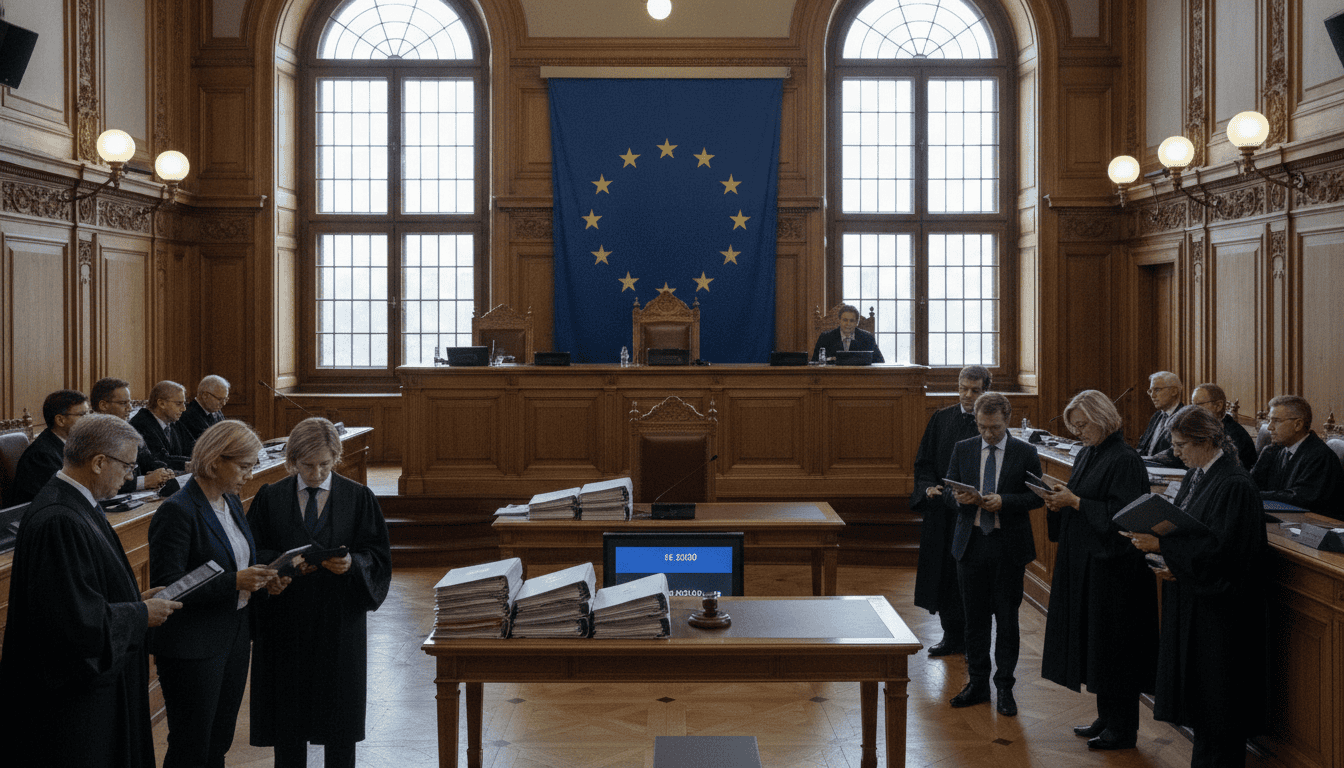
European Court Confirms €4.1 Billion Google EU Fine Over Android Bundling
European Court upholds €4.1bn Google EU fine for bundling preinstalled apps on Android, reinforcing Brussels’ antitrust ruling and potential remedies.
Google must pay a penalty of €4.1 billion after the European Court of Justice confirmed that the company imposed illegal restrictions on Android device makers to protect its search dominance, the court said. The ruling centers on practices that required manufacturers and mobile operators to install a package of Google apps, including the Search app and Chrome browser, on Android smartphones. The decision, widely described as one of the EU’s most significant antitrust outcomes against a tech platform, underscores the legal risk tied to app bundling on dominant mobile ecosystems.
Court upholds €4.1 billion penalty
The European Court found that Google used contractual terms to ensure its search engine and browser were preinstalled on the vast majority of Android handsets. Judges in Luxembourg concluded these restrictions unlawfully reinforced Google’s leading position in search, a central revenue source for the company. The court confirmed an adjusted fine of €4.1 billion, modestly lower than the original figure set by the Commission.
Bundled apps and the mechanics of market control
At the heart of the case is the requirement that device makers install a suite of Google applications as a condition for including Google services on Android devices. The package routinely included the Google Search app and the Chrome browser, effectively making them the default on most devices sold in the EU. According to the court, those distribution terms reduced the opportunity for competing search engines and browsers to gain presence on new Android phones.
Commission’s 2018 finding and legal journey
The European Commission first imposed a €4.3 billion fine in 2018, arguing the package of obligations harmed competition by foreclosing rival services. Google challenged the Commission’s finding and aspects of the sanction were subsequently examined in EU courts, with judges in Luxembourg reducing the penalty slightly in a later ruling. The court’s latest decision nevertheless upholds the Commission’s central conclusion that bundling and distribution conditions were anticompetitive.
Google’s defense and business changes
Google argued that the app bundling was necessary to monetise its investment in Android and to deliver a consistent experience to users. The company has already altered some of its commercial arrangements for Android since the Commission’s original charge, including offering greater flexibility around default apps and licensing. While the court accepted changes in practice in certain respects, it maintained that prior contractual restraints violated competition rules.
Payments to manufacturers not fully condemned
The court diverged from the Commission on one contested point, finding that evidence was insufficient to prove that payments to select large manufacturers and operators to favour the Google Search app alone had directly excluded rivals. Judges noted procedural shortcomings in how the Commission assessed that aspect of the case, including a lack of adequate prior hearing for Google on the specific allegation. That narrower ruling limited the scope of the Commission’s theory in a way that reduced the fine by roughly €200 million from earlier amounts.
Enforcement context and related rulings
The ruling comes amid an intensified regulatory push across Europe toward curbing perceived platform abuses and strengthening competition in digital markets. Brussels has levied multiple high-profile penalties against Google in recent years, and national courts have also issued rulings affecting the company’s services in separate cases. Regulators and private claimants have pointed to several decisions as part of a broader agenda to open access to consumers and advertisers alike.
The European Court’s confirmation of the Google EU fine is likely to accelerate compliance reviews and further adjust how major platforms negotiate with device manufacturers and carriers. Companies operating large ecosystems will watch closely for how remedies are implemented and monitored, as the ruling may influence follow-up enforcement actions and private litigation across member states.
