
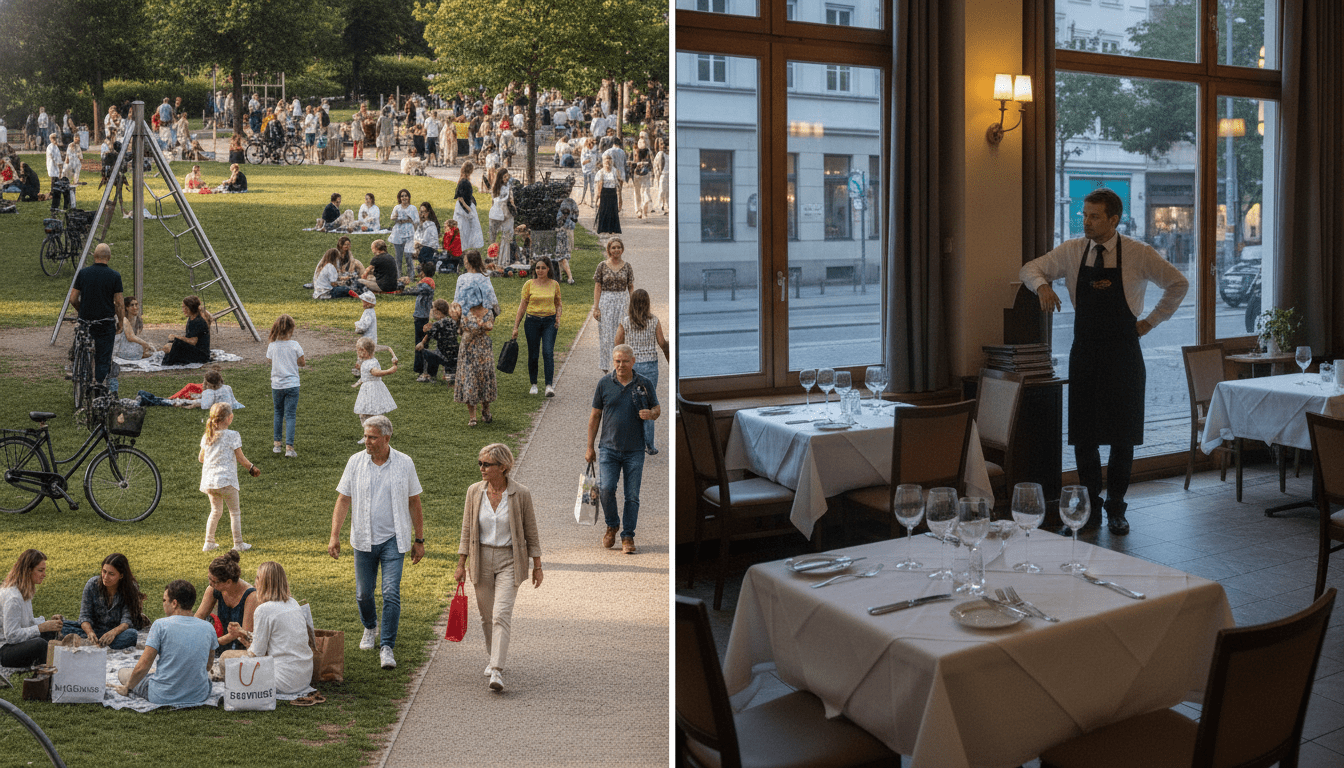
German Consumer Spending Skews Toward Leisure as Dining-Out Lags Behind EU Peers
New EU analysis shows German consumer spending prioritizes leisure but is conservative on eating out, affecting hotels, restaurants and retail across Europe.
Germany’s pattern of consumer spending stands out in a recent cross‑EU analysis: German consumer spending favors leisure activities while spending on dining out remains comparatively low. The finding highlights a split between robust expenditure on travel, entertainment and recreation and more restrained outlays at cafés and restaurants. That divergence is reshaping opportunities for businesses that rely on discretionary household budgets.
Germans lead EU in leisure spending
Households in Germany allocate a larger share of their budgets to leisure than many other EU countries, according to the analysis. This includes travel, cultural events, sports and recreational services, sectors that have seen above‑average growth since pandemic restrictions eased.
Industry observers say the leisure tilt reflects both preferences and available disposable income, with Germans showing strong demand for domestic and international travel. Vacation patterns and spending on experiences have become key drivers of the wider consumer economy in Germany.
Eating out remains subdued compared with Mediterranean neighbours
Despite high leisure expenditures, Germans spend less on eating out than many southern European populations, where restaurant and café culture is more established. The analysis suggests Germans are more likely to prepare meals at home or to be selective about restaurant visits.
Price sensitivity, cultural habits and differing social routines help explain the restraint, with consumers balancing experience spending against everyday costs. Restaurants and quick‑service outlets therefore face a tougher market in Germany than in countries where dining out is a routine social practice.
Regional patterns across the European Union
Across the EU, consumption patterns vary markedly: southern states typically record higher shares for food and dining, while northern and central economies allocate more to services such as leisure and travel. These regional contrasts underline how culture, climate and income shape household budgets.
Eastern and some Baltic states continue to spend a larger portion of income on essential goods, reflecting lower average incomes and different stages of market development. That variance matters for firms planning cross‑border expansion and for policymakers monitoring consumer demand.
Income, age and lifestyle explain spending choices
Demographics play a central role in German consumer spending decisions. Younger cohorts tend to prioritize experiences, contributing to elevated leisure spending, while older households allocate more to healthcare and household services. Income distribution also shapes behavior, with higher‑income Germans more able to spend on travel and cultural outings.
Lifestyle factors such as time availability, commuting patterns and family structure further differentiate how Germans spend their money. Urban households, for instance, may choose to pay for leisure services and cultural access while rural households allocate more to transport and home maintenance.
Consequences for hospitality, retail and tourism businesses
The split between leisure and dining expenditure is forcing businesses to adapt their offers and marketing in Germany. Hotels, tour operators and entertainment venues can benefit from higher interest in experiences, but restaurants must work harder to attract regular customers or to capture occasional splurge spending.
Retailers that combine goods with experience—such as stores hosting workshops or destinations offering bundled leisure packages—report greater resilience. Operators that tailor price points, loyalty programs and weekday promotions can better reach German consumers who are selective about eating out.
Policy, prices and the outlook for German consumer spending
Inflation, tax policy and wage developments will influence whether the current pattern of German consumer spending endures. Rising living costs could push households to reallocate from discretionary leisure back toward essentials or to seek lower‑cost leisure alternatives. Conversely, sustained wage growth would support continued spending on travel and recreation.
Environmental and social trends may also alter choices, as a growing share of consumers seek sustainable travel and local cultural experiences. Businesses and policymakers will need to monitor these shifts to anticipate demand and to design supportive measures for sectors affected by changing consumption.
German consumer spending now presents a nuanced picture: strong appetite for leisure experiences coexists with cautious restaurant expenditure, creating both opportunities and challenges across the hospitality and retail landscape. As economic and social conditions evolve, businesses that respond to German preferences for priced, high‑quality experiences and selective dining will be best positioned to capture future growth.
