
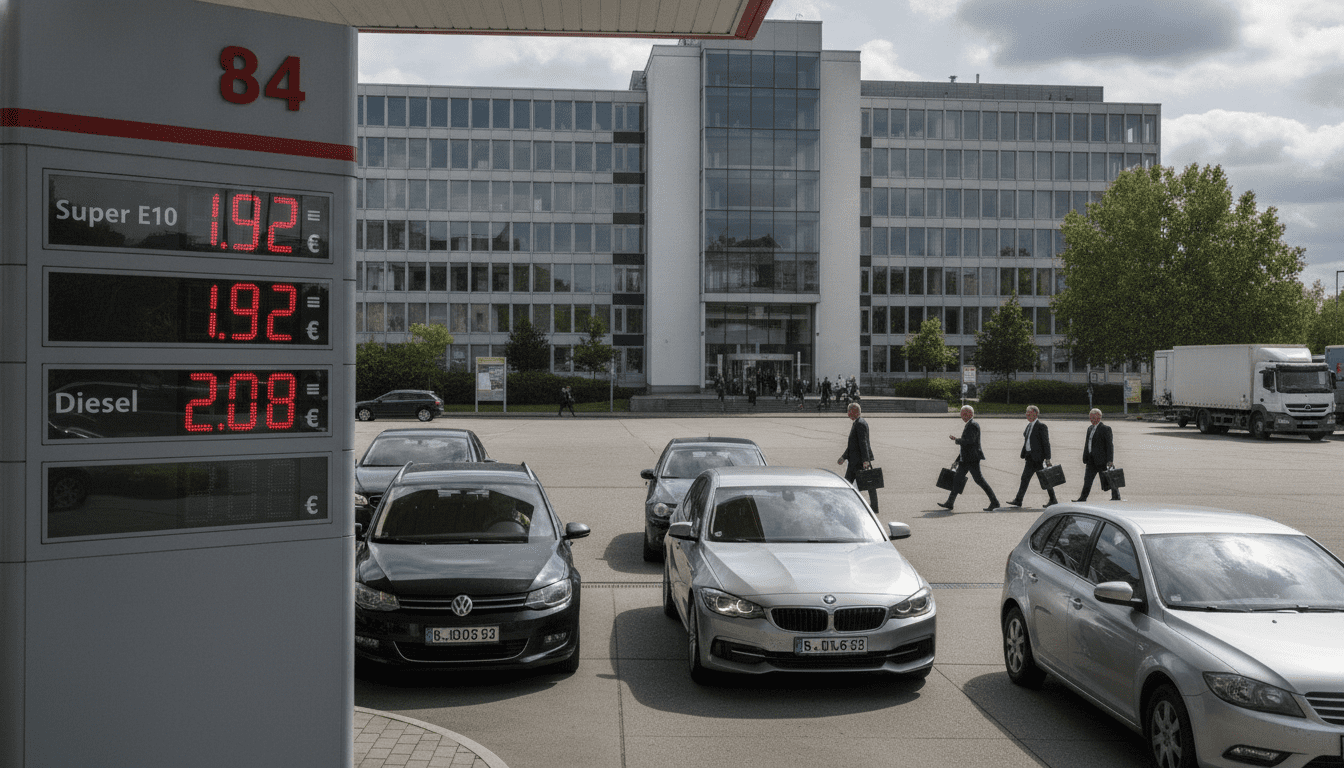
Ifo: Germany’s tank rebate largely reached petrol drivers but only partly reached diesel motorists
Ifo finds Germany’s tank rebate was almost fully passed to petrol buyers but only partly to diesel users; ending the subsidy in early July may push pump prices higher.
Germany’s short-term tank rebate reached motorists unevenly, the Munich-based ifo Institute reported, with petrol buyers receiving most of the benefit while diesel drivers saw only a fraction passed on at the pump. The institute’s analysis, which covered price developments through June 25, 2026, found average pass-through for diesel of about 12 euro cents per litre against a 16.7-cent tax cut. The findings set the stage for renewed debate as the temporary relief is scheduled to expire in early July 2026 and consumers and policymakers weigh near-term price risks.
Ifo finds diesel pass-through fell short of the tax cut
The ifo Institute calculated that diesel prices reflected an average pass-through of roughly 12 cents per litre through June 25, 2026, meaning oil companies or retailers retained part of the subsidy. By contrast, the statutory reduction in fuel tax amounted to 16.7 cents per litre, so diesel motorists received only about three quarters of the intended relief. The institute’s deputy head of public finance, Florian Neumeier, highlighted the gap between the tax cut and the price relief at the pump as a key concern for transparency and policy impact.
Petrol motorists received most of the rebate
Super E5 and Super E10 petrol grades were almost fully adjusted to reflect the tax reduction, with estimated pass-throughs of 17 and 16 cents per litre respectively. Those figures track closely to the 16.7-cent tax cut and indicate that petrol buyers largely benefited as intended from the measure. The near-complete transmission for petrol contrasted with diesel and helped explain diverging public reactions across different driver groups.
Analysts warn oil firms captured part of diesel subsidy
Economists at ifo warned that the incomplete diesel pass-through likely boosted margins for mineral oil companies rather than delivering the full benefit to consumers. Scientist Christian Gréus noted that a portion of the €1.6 billion cost of the policy appears to have been retained by the supply side in the diesel market. Industry group en2x has previously argued the rebate was fully passed on, but the ifo results mirror a separate Monopolkommission study that also concluded the tax relief was not entirely transmitted to drivers.
Expiry of rebate and near-term price outlook
With the tank rebate scheduled to lapse in early July 2026, the ifo Institute cautioned that pump prices are likely to rise again once the cut is removed. That outlook, however, remains sensitive to developments in the global crude market: recent declines in oil prices had been pushing retail fuel costs down prior to the rebate’s expiration. Market watchers also note that geopolitical factors — including potential diplomatic shifts between the United States and Iran — could either dampen or amplify price moves in the coming weeks.
Methodology and policy implications
IFO based its estimation on a comparison with fuel price trends in France to isolate the effect of the tax cut from broader movements such as changes in crude oil prices. That cross-border benchmark allowed researchers to distinguish normal market variation from the discrete effect of the rebate itself. Policymakers face a choice between temporary consumer relief and the risk that part of such measures will be absorbed by intermediate firms rather than end users, a trade-off underscored by the institute’s findings.
The ifo assessment adds fresh evidence to an ongoing policy debate in Germany about the design and efficacy of short-term subsidies for energy costs. As the rebate ends, legislators and regulators may reconsider mechanisms to ensure future measures deliver the intended relief directly to consumers without creating windfalls for intermediaries. The coming weeks will show whether wholesale and retail adjustments align with expectations or whether further interventions become politically necessary.
