
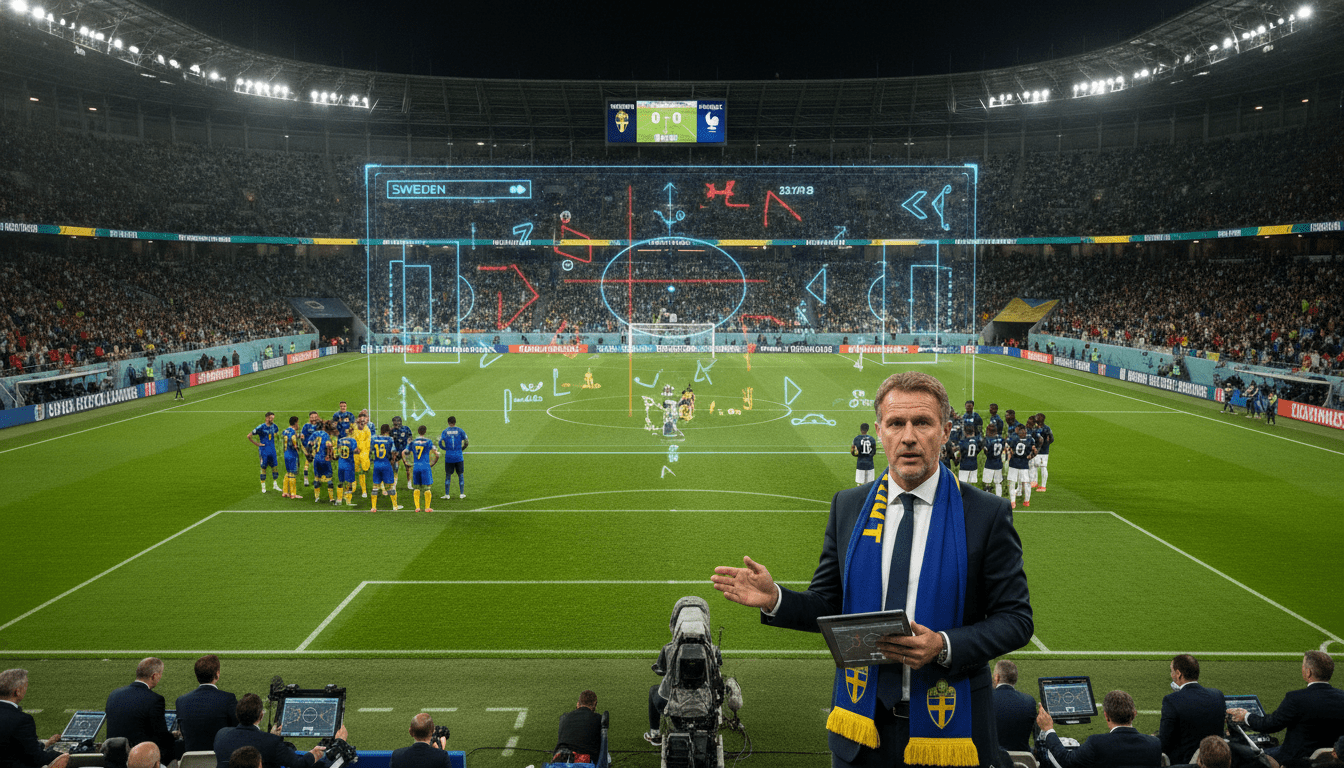
Sweden vs France: Potter weighs attack or deep defence as World Cup round of 16 approaches
Sweden faces France in a pivotal World Cup round of 16 clash that forces manager Graham Potter to choose between attacking on merit or compact defending. The Sweden vs France matchup pits a Stockholm-born tactical plan against one of the tournament’s most fearsome forward lines, with place and momentum on the line for both sides.
Potter’s tactical dilemma
Graham Potter arrives at the Sweden vs France game with two clear options: lean on his side’s attacking strengths or adopt the low block that many underdogs prefer against elite opposition. Relying on Sweden’s forwards would mean trading defensive security for chances to unsettle France on the break and in open play.
Potter has publicly signalled a willingness to press and counter rather than sit deep for 90 minutes. That instruction — to close space higher up the pitch — carries risk but also offers the reward of forcing turnovers in dangerous areas.
Sweden’s attacking lineup
Sweden’s roster features a cluster of proven Premier League attackers who have carried much of the team’s scoring burden in this tournament. Viktor Gyökeres and Alexander Isak form a physically imposing tandem up front, while Anthony Elanga and Yasin Ayari provide movement and creativity off the ball.
Those four have shown they can hurt opponents when in rhythm, with Gyökeres notably prolific in the playoff run that secured Sweden’s place at the finals. If Potter can unlock combinations that let the centre-forwards operate in the penalty area, Sweden may create openings even against France’s defence.
France’s offensive depth
France, by contrast, arrive with an attack that few national teams can match in depth and individual quality. Victories in the group stage underscored how quickly they can convert pressure into goals, and their forward options present a different level of threat down both flanks and through the middle.
Sweden must prepare for sustained periods without the ball and be ready to absorb waves of possession without conceding clear openings. Containing France will demand disciplined collective defending and coordinated transitions to prevent overloads in the final third.
Unconventional route to the World Cup
Sweden’s presence in the knockout phase follows a turbulent qualifying cycle that only resolved through the Nations League pathway. After a poor start to qualification and missing major tournaments in recent years, the team earned playoff spots and capitalised by defeating Ukraine and Poland to reach the finals.
That circuitous route has shaped the squad’s mentality: resilience and opportunism have replaced expectation. Potter’s appointment eight months ago coincided with that turnaround, and the manager has emphasised adaptability as his side faces superior-ranked adversaries.
Striker partnership and tactical trade-offs
Isak and Gyökeres are both near 1.90 metres, classic centre-forwards whose primary comfort zone is inside the box, yet national-team demands require them to share space and timing. Club tactics rarely produce such pairings, which means Potter must devise specific roles to avoid redundancy and maximise their complementary strengths.
The trade-off for deploying both is often midfield density or defensive solidity elsewhere, so Potter’s selections will indicate whether Sweden prioritises goal threats or structural balance. Solving that puzzle could be decisive if the match is tight and the margin for error small.
Fixture consequences for the knockout bracket
Beyond national pride, the Sweden vs France result carries immediate tournament implications: the winner advances with a possible meeting against Germany in the next round. That bracket dynamic raises the stakes for both teams and adds a tactical layer to how they approach the contest.
For Sweden, a victory would not only mark a historic upset but also shift perceptions of a squad that has displayed inconsistency in the group phase, from a 5-1 win over Tunisia to a heavy loss to the Netherlands and a cautious draw with Japan. For France, progress would underscore their status as favourites and clear a potentially difficult path to the later rounds.
This match will test whether Potter’s team can impose its preferred style or whether pragmatism must prevail. The choice between open engagement and compact defence will define not just one game but Sweden’s claim to be more than a surprise qualifier at this World Cup.
