
Germany’s state investments rise to €147.5 billion as equipment spending soars
Germany’s state investments rose 12.3% to €147.5bn, driven by a near‑48% surge in equipment spending; analysts warn special funds may miss intended projects.
Germany’s state investments increased sharply last year, reaching €147.5 billion, the Federal Statistical Office reported, an advance of €16.2 billion or 12.3% compared with 2024. The jump marks the strongest year‑on‑year growth in public investment since 2000 and reflects a marked shift toward higher outlays on movable equipment, including military procurements. Officials and analysts say the composition of spending will shape how effectively the rise translates into long‑term modernization.
Federal investments reach highest growth since 2000
The Federal Statistical Office attributed the overall expansion to broad increases across several spending categories, but noted the headline figure was disproportionately influenced by one area. Government gross fixed capital formation totaled €147.5 billion, up from the prior year, with the agency highlighting that such a rate of increase has not been seen in more than two decades. Policymakers point to an intensified investment effort as a response to strategic and infrastructure needs.
This surge followed earlier momentum: public investment grew by roughly 9% in 2024, about 4% in 2023 and close to 9% in 2022. However, the office also recorded a moderation in the current year’s first quarter when investment growth slowed to just over 3% year‑on‑year, suggesting volatility in the pace of public spending.
Equipment spending rises nearly 48% due to defence and procurement
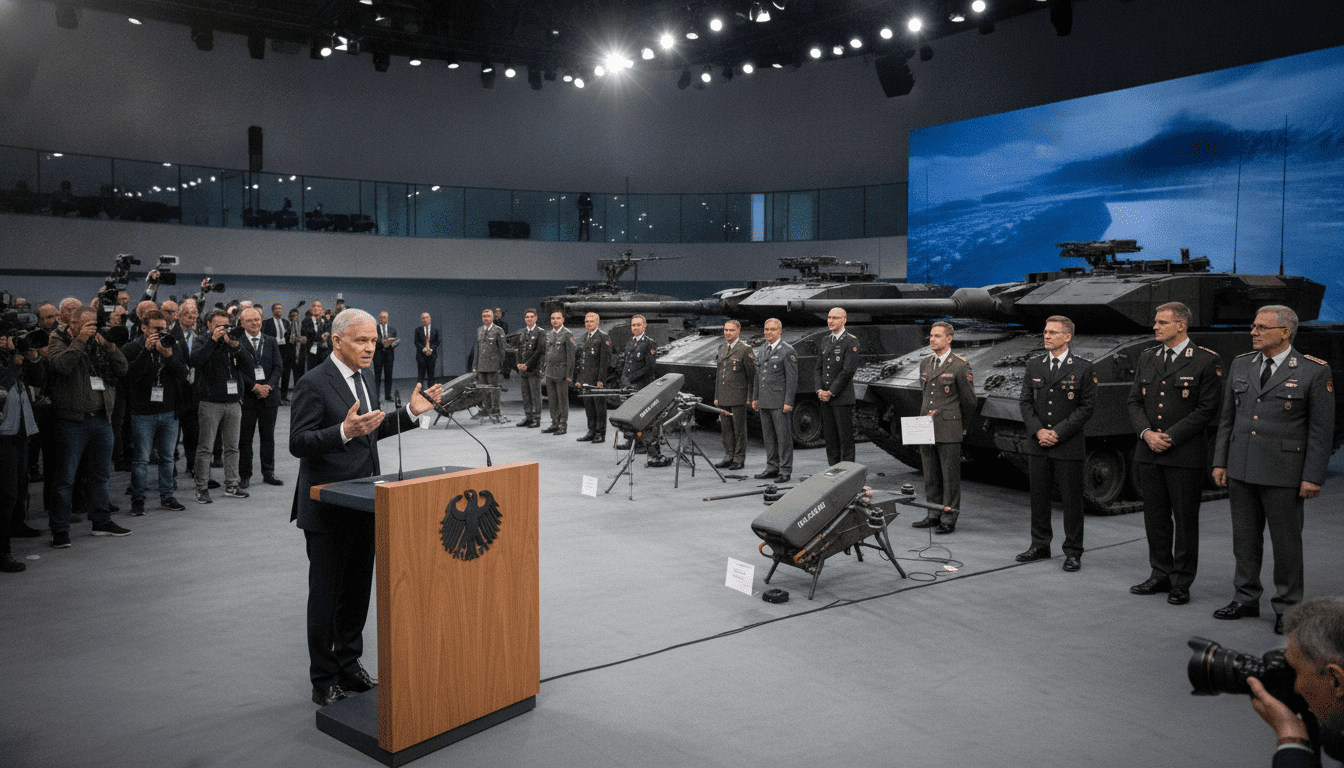
The most striking change was a near‑48% increase in equipment spending, the statistical agency said, a category that covers movable assets and procurement contracts. Much of this rise is attributable to elevated expenditures on military systems and other Bundeswehr procurements, reflecting government decisions to accelerate capability upgrades and deliverables to defence suppliers.
By contrast, the previous year had seen equipment investment expand by only about 8%, underscoring the exceptional nature of the current uptick. Analysts caution that while such purchases can boost industrial output and bring forward important capabilities, they also concentrate a large share of public investment into a narrow set of goods and contracts.
Construction investment lags with only modest growth
Public construction outlays increased by about 2%, a considerably softer result than other investment categories. Statisticians pointed out that construction prices had themselves risen sharply between 2022 and 2024, which dampened the volume effect of nominal spending and complicated comparisons with earlier years.
The weaker growth in building investment raises questions about the pace of infrastructure renewal, housing projects and public works. Observers note that if construction remains subdued while equipment spending dominates, governments may face bottlenecks in translating procurement into durable civic improvements.
Sustained upward trend but early‑year slowdown signals uncertainty
Despite the robust annual increase, the investment trajectory shows signs of unevenness. The sequence of gains since 2022 demonstrates a deliberate expansion of public capital formation, yet quarterly data from the start of the latest year point to a cooling of momentum. That mixed picture suggests policymakers may need to balance short‑term procurement pushes with sustained financing for longer‑term projects.
Economists warn that the timing of payments, delivery schedules and inflation dynamics can produce swings in reported investment figures. They urge careful monitoring of whether nominal increases reflect higher volumes of public assets or simply price and accounting effects linked to large‑scale purchases.
Union‑linked institute urges clearer use of special funds
The Hans‑Böckler‑Stiftung, a labour‑affiliated foundation, welcomed the investment growth but urged scrutiny of how additional borrowing and special funds are allocated. Sebastian Dullien, director of the foundation’s macroeconomic institute, said the country is seeing progress in modernization but called for assurances that extra debt raised through special budgets actually finances new public investments.
Analysts at the institute estimated that a substantial share of funds from the so‑called Sondervermögen had been channelled to measures that do not necessarily create new public capital, including tax cuts and benefit changes. They urged the government to ring‑fence resources intended for investment to ensure they deliver measurable improvements in infrastructure and services.
The recent figures will likely sharpen debate in Berlin over fiscal priorities and the role of special budget vehicles in public investment policy. Ministers face pressure to demonstrate that elevated outlays translate into enduring capacity rather than temporary fiscal adjustments.
If the government sustains a balanced approach—pairing targeted equipment procurement with renewed focus on construction and durable projects—the surge in Germany’s state investments could underpin wider economic resilience. For now, scrutiny from statisticians, think tanks and opposition parties is expected to continue as quarterly data reveal whether the strong annual advance marks a structural shift or a transitory spike.
