
EU Methane Regulation Faces Push from a Dozen Member States to Postpone Implementation
Twelve EU states ask for a three‑year delay to the EU Methane Regulation over supply fears; Germany’s economy minister backs talks with the Commission.
The EU Methane Regulation has become the subject of a growing political dispute after a group of a dozen member states formally asked the European Commission to postpone key import-related obligations by three years, citing threats to energy and fuel supply. Germany’s economy minister, Katherina Reiche, publicly supported the request during discussions at an EU energy ministers meeting in Luxembourg, arguing that immediate enforcement could endanger deliveries of gas and petroleum products. (agenceurope.eu)
Member states request formal delay
A coalition of EU governments—reported variously as eleven to twelve countries—delivered a coordinated appeal asking for a temporary suspension or deferral of the regulation’s import obligations, which they say could prompt some suppliers to curtail shipments to the bloc. The group argues that market actors are already concluding contracts for deliveries to be received in 2027 and that those deals cannot be easily renegotiated to meet new methane verification standards. (euronews.com)
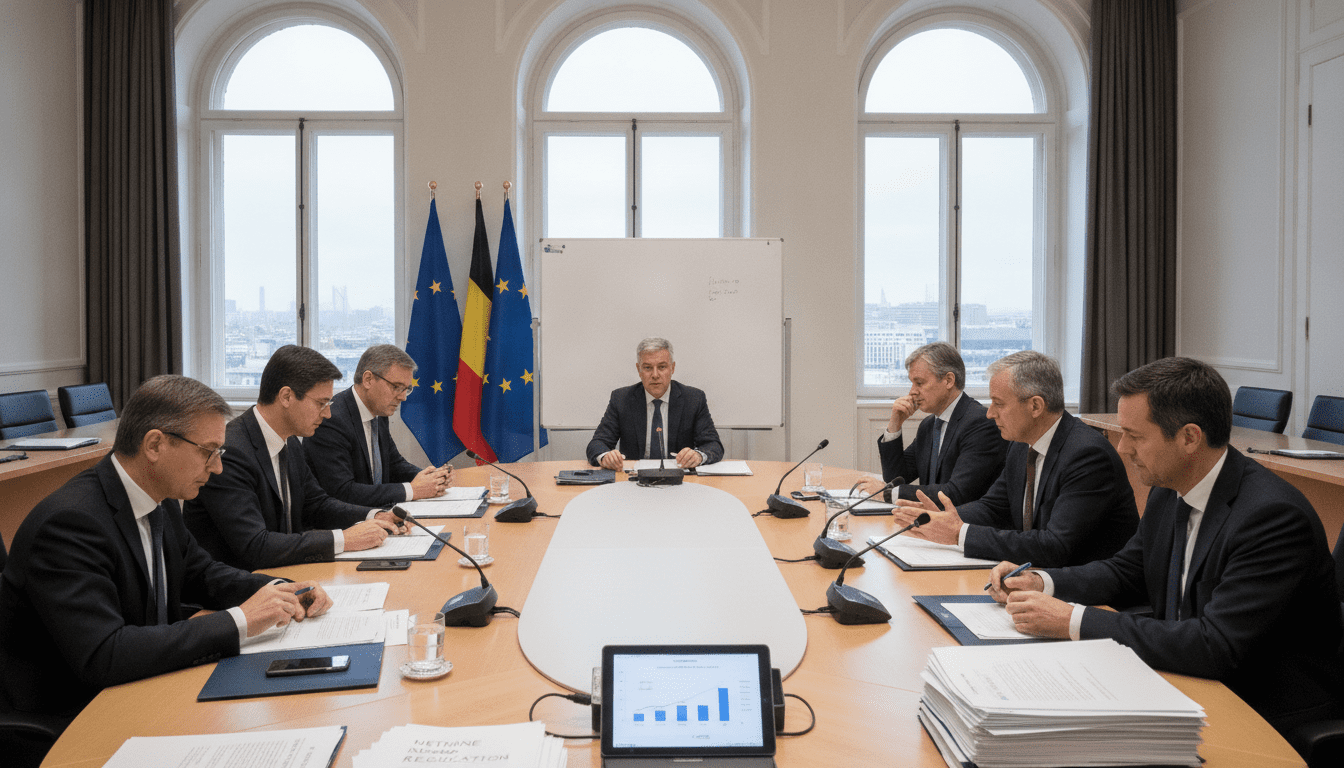
Germany’s intervention at the Luxembourg meeting added weight to the request. Economy Minister Reiche told colleagues that Berlin needs at least a postponement or suspension “so that the Federal Republic of Germany can be reliably supplied with gas imports and mineral oil products such as kerosene.” She warned that procurement for 2027 is already underway and that decisions are needed quickly to avoid supply disruptions. (n-tv.de)
How the regulation works and key dates
The EU Methane Regulation (EU/2024/1787) entered into force in August 2024 and sets new monitoring, reporting and verification (MRV) obligations for imports of natural gas, crude oil and coal into the Union. While the regulation was adopted in 2024, several of its import-related obligations are scheduled to apply from 1 January 2027, notably requirements tied to methane reporting and equivalence verification for suppliers. The law also establishes leak-detection, repair timeframes and limits on routine venting and flaring across the energy sector. (energy.ec.europa.eu)
Under the text adopted by EU institutions, operators must routinely check pipelines and facilities for leaks and repair components that exceed certain methane thresholds; the regulation sets progressive timelines that include immediate fixes where necessary and full repairs within a maximum of 30 days after discovery. The rules further tighten restrictions on venting and flaring, phasing out routine practices and restricting them to emergencies or specific safety situations. (consilium.europa.eu)
Supply chain and industry concerns
Governments pressing for a delay contend that suppliers in major producing countries may lack the methane monitoring and verification systems the regulation requires and could therefore reduce deliveries rather than face non-compliance. Officials have warned that producers from regions including the United States, the Middle East and North Africa might respond by reallocating cargoes to markets without such rules, tightening global availability and pushing prices higher. Critics of the delay effort, including environmental NGOs, argue the proposal mirrors industry lobbying and would undermine climate goals. (agenceurope.eu)
Several member states raising the alarm say the practical effects are already visible in contracting behavior: long-term supply agreements and cargoes being booked for 2027 cannot easily be retrofitted with the new MRV documentation or supplier audits required by the regulation without renegotiation. That, they say, leaves a narrow window for a policy adjustment to avoid contractual and logistical fallout. (eunews.it)
Political divisions within Berlin
The German government’s position surprised some Brussels observers because it contrasts with the stance of the federal environment ministry. While Economy Minister Reiche and a number of member states argue for urgent flexibility, Environment Minister Carsten Schneider has been identified as a defender of the regulation and its timelines, reflecting a broader split in national policy priorities between climate enforcement and supply security. Berlin’s public backing for a delay at the Luxembourg meeting was described by diplomats as a coordinated government position, even as the environment ministry continues to press for implementation. (agenceurope.eu)
European Commission weighing limited reprieve
In response to member-state pressure, the European Commission has reportedly considered temporary measures aimed at easing immediate penalties for non-compliance while keeping the regulation intact. Internal Commission papers have floated the idea of suspending sanctions for a transitional, limited period; officials in Brussels were reported to be preparing a proposal that could be presented in the coming days. The Commission has emphasized that any operational adjustments must preserve the regulation’s environmental objectives while addressing legitimate supply-chain concerns. (agenceurope.eu)
Implications for climate and energy policy
The dispute underscores an emerging tension at the heart of EU policy: enforcing stricter methane controls, which scientists say are essential because methane is a far more potent short-term greenhouse gas than CO₂, versus maintaining steady and affordable energy and aviation fuel supplies during a geopolitically strained period. Proponents of the regulation argue that robust methane controls actually strengthen long-term energy security by encouraging cleaner production practices and reducing waste along supply chains. Opponents counter that abrupt implementation without realistic verification pathways risks immediate disruption. (energy.ec.europa.eu)
How the Commission balances those imperatives will shape both near-term contract flows and the credibility of the EU’s climate enforcement regime. Brussels faces pressure to produce a fast, legally defensible response that can reassure markets while avoiding a precedent that weakens enforcement of environmental rules.
The coming days are likely to determine whether member-state calls result in a formal three‑year deferral, a narrower temporary waiver on penalties, or an alternative package of implementation measures designed to smooth the transition for importers and exporters alike. (agenceurope.eu)
