
Stuttgart 21 cost jumps to €14.5 billion as Deutsche Bahn delays key openings by five years
Deutsche Bahn raises Stuttgart 21 cost to €14.5bn and delays major openings to 2027–2033 after a corporate review cites planning, digital and standards failures.
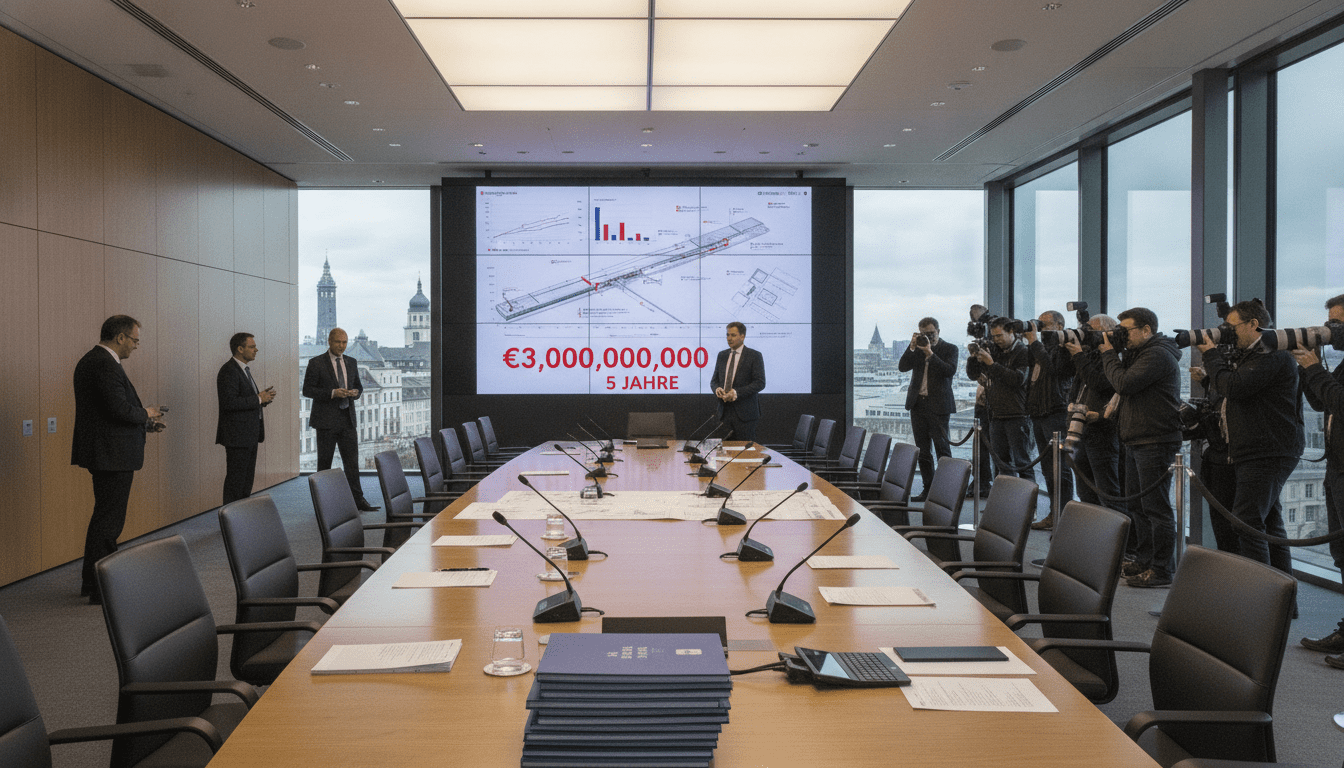
The Deutsche Bahn internal review has concluded that Stuttgart 21 will cost an additional three billion euros and face a five year delay, pushing the project cost to €14.5 billion and shifting key openings into a phased schedule between 2027 and 2033. The report, presented this week by DB leadership, found serious shortcomings in planning, project control and risk management, and prompted chief executive Evelyn Palla to describe the findings as deeply troubling. Stuttgart 21 remains central to long term rail capacity plans for Baden Württemberg even as the company commits to organisational and personnel changes to steady the programme.
Deutsche Bahn identifies planning and risk management failures
The corporate review attributes the delays and overruns to systemic failures across multiple project disciplines. Inspectors found that previous process management did not meet the demands of a complex rail and urban redevelopment scheme and that risk controls were insufficiently robust. DB executives acknowledged that expectations for earlier completion were not met and said the new management team has abandoned unrealistic assumptions in favour of a more conservative approach.
Revised schedule sets phased openings from 2027 to 2033
The updated timetable splits Stuttgart 21 into five staged deliveries over six years, beginning with passenger improvements in late 2027 and extending to final tunnel connections in 2033. DB plans a partial opening of the Bonatz building access routes at the end of 2027, the airport long distance station in December 2030, and the main through station in December 2031. The Pfaffensteigtunnel that links the Gäubahn and reduces travel time to Zurich is slated for December 2033.
Project cost climbs to €14.5 billion
The new estimate raises the total project budget to €14.5 billion, approximately three billion euros above prior forecasts and more than five times early 2010s projections. Deutsche Bahn says most of the extra cost stems from additional work necessary to achieve safe and reliable commissioning under current technical and regulatory requirements. The company also highlighted that prolonged construction timelines add overhead and contractual expenses that feed into the higher price tag.
Technical causes include digitalisation complexity and late norm changes
The review singled out four principal technical drivers behind the delay and cost growth, including greater than expected complexity in digitalising the rail node and insufficiently mature planning processes. Design elements from 2013 no longer fit modern operational needs and a late change in electrical supply standards required substantial rework. Those factors combined to force repeated redesigns and new implementation work that could not be absorbed within the original schedule.
Interim passenger benefits coming in 2027 and 2028
Despite the setbacks for full commissioning, Deutsche Bahn says passengers in Stuttgart will see improvements in the near term as parts of the station environment are completed. From the end of 2027, tens of thousands of daily travellers are expected to benefit from shorter routes through the Bonatz building and across the new station roof. Retail and service facilities in the Bonatz building are scheduled to open in 2028, and DB says the surrounding station precinct will be made progressively more attractive for residents and visitors.
Political response and promised organisational consequences
Political leaders briefed on the report reacted with concern and urged transparency as the project moves forward. Baden Württemberg’s minister president described the additional five year shift as difficult to justify while Stuttgart’s mayor said the revised timeline appears realistic and understandable. Deutsche Bahn announced that it will implement firm organisational and personnel measures and has pledged to improve governance and transparency to rebuild public trust.
Stuttgart 21 traces its origins to design concepts of the 1990s and has long combined rail infrastructure with urban development ambitions by replacing the citys terminal station with an underground through facility and freeing central land for new uses. Work has been underway for more than 15 years and critics have repeatedly pointed to shifting schedules and budgets.
The company stressed that project objectives remain unchanged and that, once completed, Stuttgart 21 will increase capacity at the Stuttgart rail node, improve connections for long distance and regional passengers and support modal shift to rail in Baden Württemberg. Deutsche Bahn said it intends to learn from past shortcomings and to deliver the remaining phases under the revised, more conservative plan so that future milestones can be met with greater reliability.
