
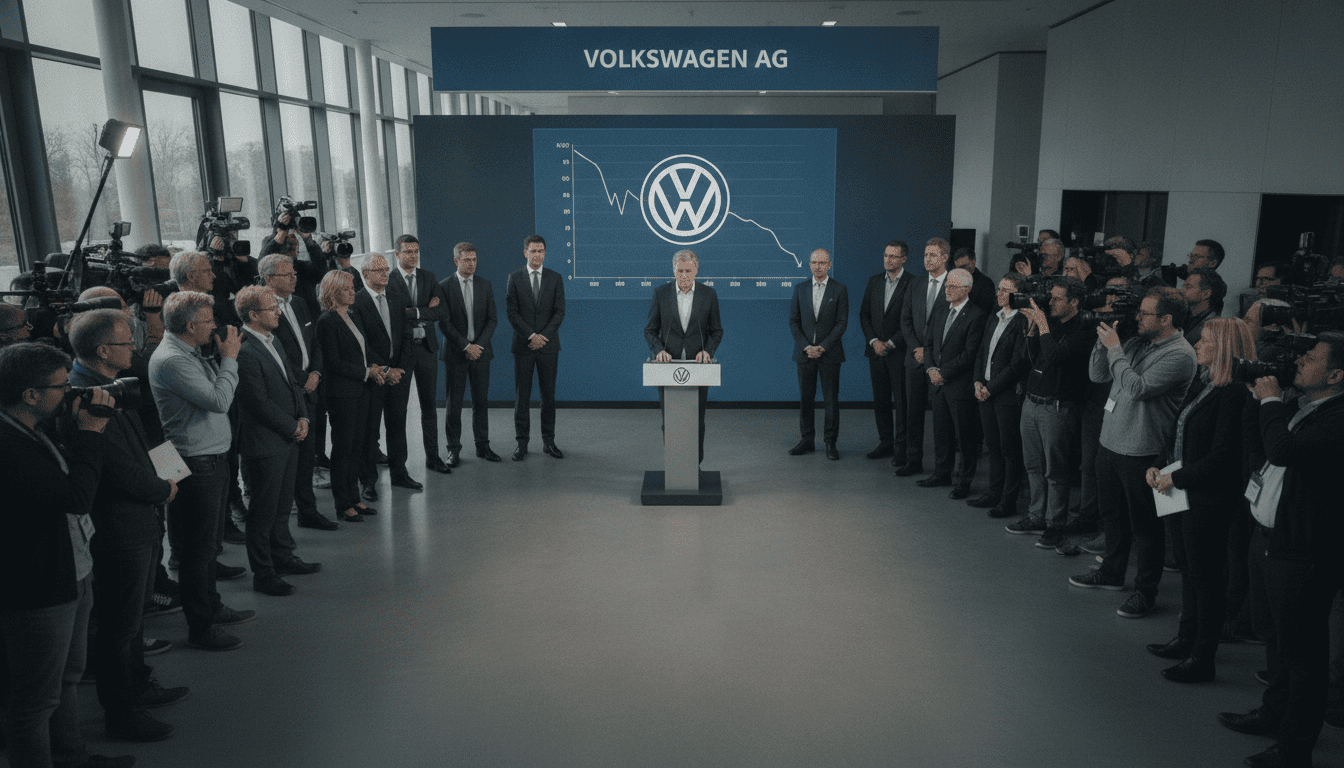
Volkswagen job cuts doubled to 100,000 as supervisory board prepares July 9 review
Volkswagen doubles planned job cuts to 100,000, provoking union and political backlash nationwide. Supervisory board will review the proposal on July 9, 2026.
Volkswagen announced on June 26, 2026 that it plans to double its previously announced workforce reductions, raising the figure from 50,000 to 100,000 job cuts through 2030. The expanded plan, framed as an urgent measure to restore competitiveness, immediately sparked alarm among unions, the works council and political leaders in Lower Saxony. The company said the proposal will be discussed by the supervisory board at a meeting scheduled for July 9, 2026.
Scope of the new proposal
The new plan increases announced job reductions from the earlier target of 50,000 positions to a proposed 100,000 by 2030. Volkswagen executives argue the deeper cuts are required to generate further savings and to reorganize the business amid mounting competitive pressures in the global auto industry. Details on how reductions would be distributed across divisions, sites and countries remain limited in the company’s initial communication.
The announcement did not list specific plant closures or exact timelines for phase‑outs beyond the 2030 horizon, leaving employees and local authorities seeking clarification. Company spokespeople have indicated the supervisory board review will produce a more detailed “future plan” that is expected to outline implementation measures and potential social safeguards.
Timing and reaction among employees
The timing of the disclosure—published just before many employees began summer leave and the onset of Lower Saxony school holidays starting July 2, 2026—heightened tensions across the workforce. Workers and local representatives said the move undermined morale at a moment when many had planned vacations and family commitments. Photographs of production sites such as the Emden plant circulated alongside coverage, underscoring the regional impact.
Works council members and local shop stewards described the announcement as abrupt and said consultations have so far been insufficient. Several employee representatives warned that uncertainty over jobs could depress productivity and complicate recruitment and retention in key manufacturing roles.
Supervisory board meeting and decision process
The supervisory board is slated to review the management’s future plan on July 9, 2026, a date company insiders confirmed in briefings. That meeting will determine whether the proposal moves forward, is modified or returned for further negotiation with employee representatives. Management has framed the proposal as a necessary step to secure long‑term viability, while critics say the board must weigh social consequences and legal constraints.
Observers noted that any approval by the supervisory board will trigger negotiations under German co‑determination rules and could prompt formal consultation phases. The exact path from board approval to implementation will involve collective bargaining with unions, internal workforce planning and, potentially, local government engagement.
Political and union opposition in Lower Saxony
Union leaders, the works council and Lower Saxony’s state government reacted strongly, warning of social and economic fallout if mass reductions proceed. The region, long regarded as Volkswagen’s heartland, faces disproportionate exposure to plant rationalization and job losses. Lower Saxony’s minister‑president and other political figures expressed concern that such sweeping cuts would harm communities and the regional economy.
Debate has resurfaced over the role of the controversial Volkswagen law and whether political actors can exert influence to protect jobs. Critics also voiced apprehension that management could employ legal or structural maneuvers to fast‑track reductions, a contention the company denies while asserting it will follow statutory procedures and collective‑bargaining obligations.
Company justification and strategic context
Volkswagen executives contend the expanded savings program is necessary because earlier cost measures fell short of what is required to compete in electrification, software development and global markets. The firm points to rising investments in electric vehicle platforms and digital services as drivers of restructuring, arguing that streamlining labor costs is part of broader efficiency efforts. Management frames the proposal as aimed at preserving the company’s competitiveness and financing a strategic pivot.
Analysts caution that workforce adjustments of this scale are complex and costly in the short term, and that social mitigation—severance, retraining and redeployment—will be decisive factors. Company sources say they expect negotiations to include proposals for early retirement schemes, qualification programs and voluntary departures, though no final packages have been presented publicly.
As supervisory board deliberations approach, the balance between financial necessity and social responsibility will dominate discussions. Stakeholders on all sides signaled a readiness to contest specific measures and to press for transparent criteria on site selection and staff reductions.
For now, uncertainty remains high as workers, unions and local governments prepare for protracted talks and potential legal challenges. The July 9, 2026 review will be a focal point for determining whether Volkswagen moves forward with the proposed 100,000 job cuts, modifies the scale of reductions, or seeks alternative cost‑saving measures that limit the social impact.
