
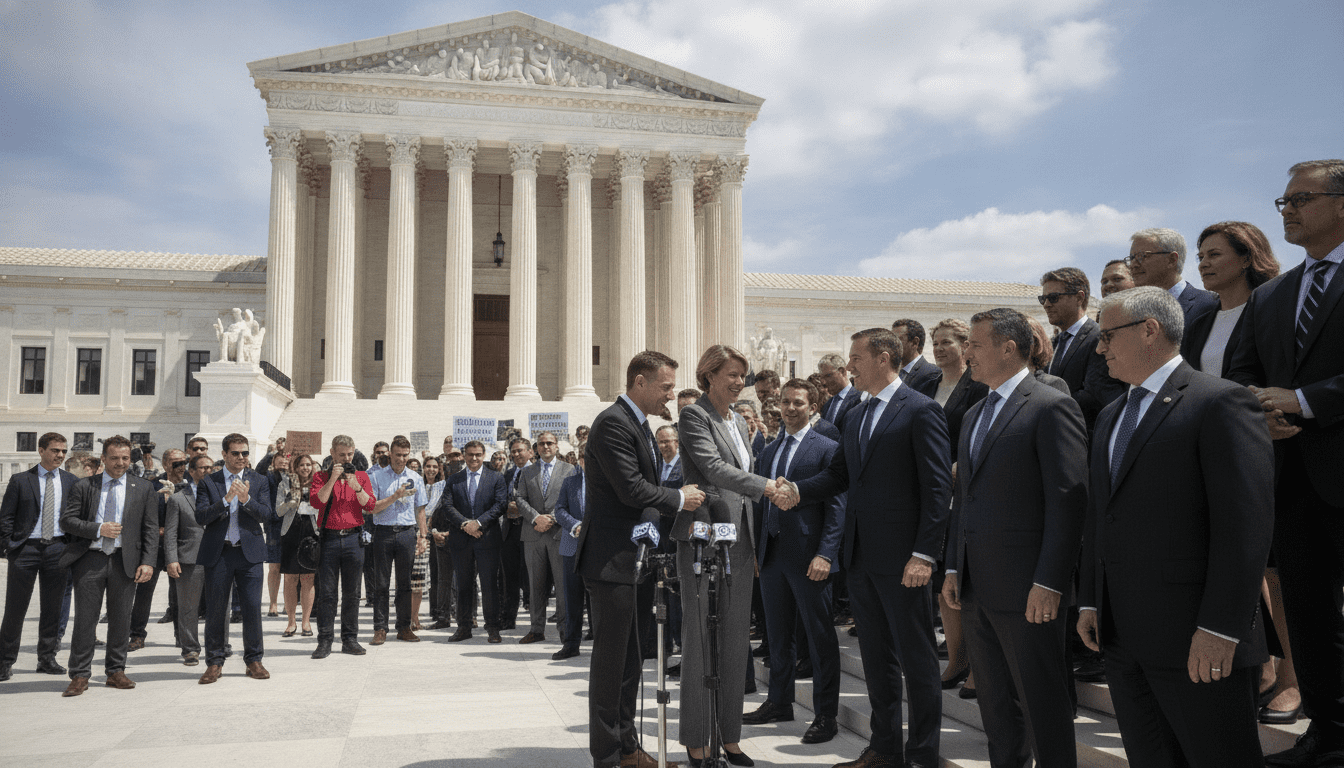
Bayer glyphosate lawsuits hit by Supreme Court preemption ruling, settlement fate now hinges on July hearing
Supreme Court rules that federal pesticide approvals preempt state-based failure-to-warn claims, undermining thousands of Bayer glyphosate lawsuits and shifting the litigation landscape. Jun 25, 2026 decision could remove the legal basis for many Roundup claims and affect a pending $7.25 billion settlement. (law.cornell.edu)
Supreme Court narrows state failure-to-warn theory
The U.S. Supreme Court held on June 25, 2026 that the Federal Insecticide, Fungicide, and Rodenticide Act (FIFRA) can preempt state-law failure-to-warn claims when the EPA has approved a pesticide label. The majority opinion found that allowing state requirements that differ from federally approved labels would frustrate Congress’s aim for uniform national regulation. Legal analysts say the ruling directly undercuts the central legal theory in thousands of Roundup cases. (law.cornell.edu)
Case background and what was at stake
The decision arose from Monsanto v. Durnell, a lawsuit alleging that glyphosate exposure caused cancer and that Roundup labels lacked adequate warnings. Litigation over Roundup has persisted for years, with plaintiffs arguing label warnings were insufficient and defendants pointing to repeated EPA approvals that did not require a cancer warning. The Supreme Court’s ruling resolves a long-running split among appellate courts over whether federal approval bars such state claims. (law.cornell.edu)
Monsanto deal left Bayer with massive liabilities
Bayer acquired Monsanto in 2018 for roughly $63 billion, a transaction that brought Roundup and its legal baggage onto Bayer’s balance sheet. The takeover was intended to expand Bayer’s agricultural arm but instead exposed the company to an unprecedented wave of U.S. litigation and billions in payouts and reserves. Investors and commentators have repeatedly linked the company’s ownership of Monsanto to the sustained legal and market pressures that followed the acquisition. (bayer.com)
Scale of outstanding claims and settlement mechanics
By early 2026 Bayer faced roughly 67,000 pending Roundup-related claims in U.S. courts, a volume that has driven both large jury awards and multibillion-dollar settlement efforts. The company proposed a $7.25 billion class settlement intended to resolve current and future claims of non‑Hodgkin lymphoma linked to Roundup exposure; a Missouri judge gave preliminary approval on March 4, 2026 and set a fairness hearing for July 9, 2026. That hearing will determine whether the deal can be finalized and whether the settlement language survives objections from groups of plaintiffs and intervenors. (wisnerbaum.com)
CEO Bill Anderson’s strategy and lobbying push
Since taking the helm, CEO Bill Anderson has shifted Bayer’s approach from defensive litigation to a multifront strategy combining legal arguments, regulatory engagement and public communication. Anderson has publicly argued that companies complying with EPA-approved labels should not face divergent state requirements, and he has signaled a willingness to halt sales if regulatory clarity is not secured. Bayer executives credit the change in leadership and litigation posture with improving the company’s position ahead of the Supreme Court ruling. (bayer.com)
Immediate legal and corporate implications
The Supreme Court’s ruling does not automatically dismiss every claim, but it removes the legal foundation for many label-based failure-to-warn suits and will narrow the range of viable allegations going forward. Plaintiffs’ lawyers are likely to reassess case strategies, focusing on non-label theories or damages not preempted by FIFRA, while defendants will push for dismissal where preemption clearly applies. For Bayer, the decision reduces legal overhang but leaves other risks — including state-law theories that survive preemption and the outcome of the Missouri settlement process — on the table. (law.cornell.edu)
Investor outlook and potential corporate moves
Market observers say the ruling could ease one major source of uncertainty for Bayer, possibly reviving investor interest in structural options such as asset sales or a split of its crop-science business. If the July 9, 2026 fairness hearing results in final approval of the $7.25 billion settlement, Bayer would remove a large swath of present and future Roundup exposure from its books, allowing management to focus on debt reduction and operational improvements. However, activists and some holders caution that remaining non-preempted claims and reputational damage mean long-term risks have not disappeared. (cen.acs.org)
The Supreme Court ruling on June 25, 2026 and the upcoming July 9, 2026 fairness hearing together mark a turning point in the long-running Roundup litigation; whether they deliver a definitive end to the Bayer glyphosate lawsuits will depend on how courts apply preemption to individual claims and whether the proposed settlement receives final judicial sign-off.
