
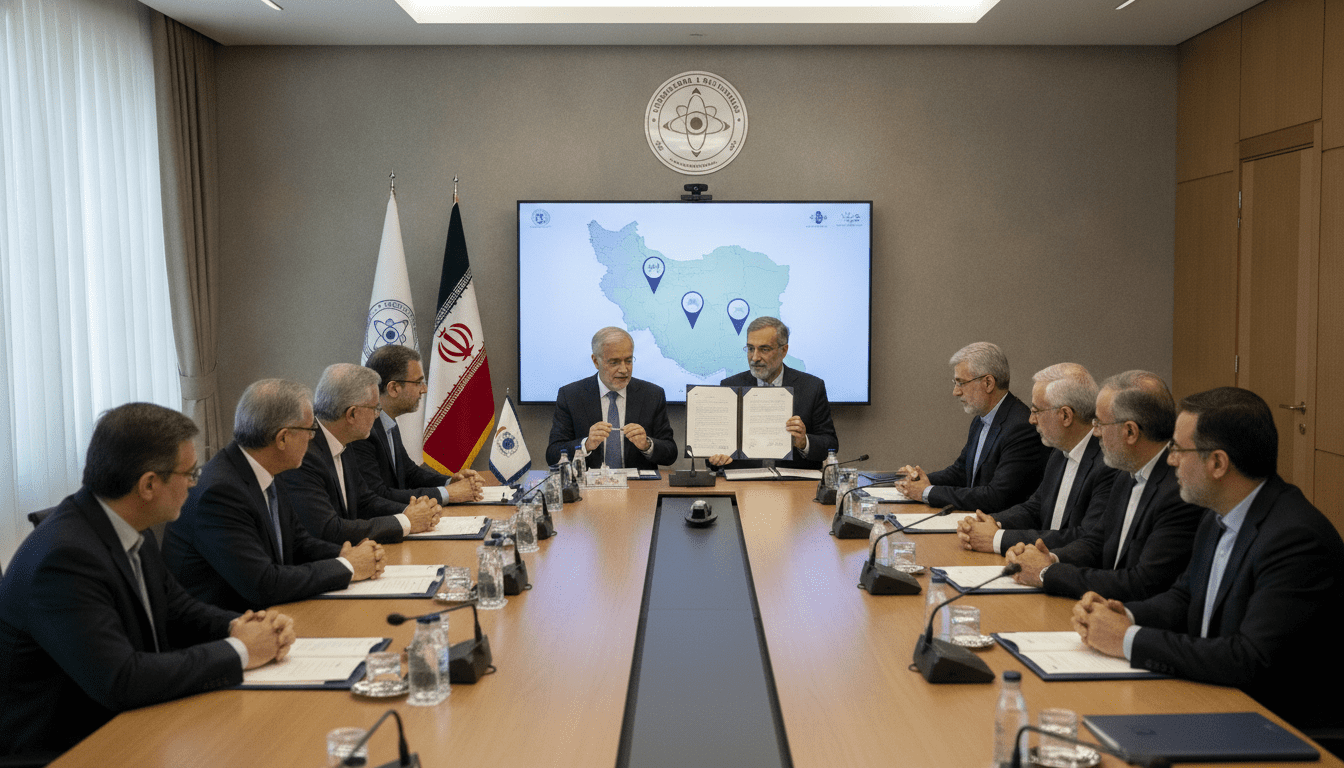
IAEA inspections of Iran’s nuclear sites set to begin under US-Iran memorandum
IAEA inspections of Iran’s nuclear sites will be conducted under a US-Iran memorandum, the agency’s director general says, with technical work already underway and access required.
The International Atomic Energy Agency will carry out inspections of Iran’s nuclear sites under the terms of a memorandum of understanding between Tehran and Washington, IAEA Director General Rafael Grossi said during remarks in Tokyo. Grossi told reporters that the nuclear components of the agreement place supervisory responsibility on the IAEA and that effective supervision will require on-site inspections. He added that technical work to prepare for monitoring has already begun and that the agency will need timely access to relevant facilities to verify compliance.
IAEA assigned supervisory role in memorandum
Grossi said the memorandum of understanding explicitly assigns the IAEA oversight of the nuclear elements, making the agency central to verification efforts. He explained that supervision is not a remote exercise and that physical inspection is essential to assess activity at declared sites. The director general emphasized that the agency’s mandate under the MoU is to establish confidence through independent, technical verification rather than political judgment.
Access and inspection logistics outlined by IAEA chief
The IAEA’s ability to verify conditions at Iranian facilities will depend on negotiated access arrangements and the deployment of inspectors and equipment. Grossi noted that access is a prerequisite for meaningful supervision and that the agency is preparing protocols and logistical support for teams that may be tasked with site visits. He indicated readiness to continue technical preparations and to deploy personnel as soon as arrangements and clearances are in place.
Technical preparations already in motion
According to Grossi, technical work connected to the verification framework has already started, covering inspection procedures, sensor deployment and data handling systems. The agency is expected to adapt standard safeguards practices to the specifics of the memorandum while ensuring continuity with existing monitoring mechanisms. Preparatory steps also include calibrating instrumentation and establishing secure channels for reporting and analysis.
Image of Bushehr reactors underscores monitoring need
Satellite imagery released previously showed construction activity at the Bushehr reactors in southern Iran, illustrating why independent verification remains a priority for the international community. Analysts say such imagery can be an important complement to on-the-ground inspections but cannot substitute for the detailed information that inspectors collect inside facilities. The IAEA has long relied on a mix of satellite, environmental sampling and on-site observation to build a comprehensive picture of nuclear programs.
Diplomatic context and potential international responses
The memorandum between the United States and Iran places technical verification at the heart of broader diplomatic efforts, and the IAEA’s role will be watched closely by capitals worldwide. Some states may view the agency’s involvement as a confidence-building measure, while others could press for stringent access terms and rapid implementation. How Iran responds to inspection requests, and how quickly the agency can establish operational arrangements, will shape near-term diplomatic dynamics and regional security assessments.
Implications for nuclear monitoring and transparency
If implemented as described, IAEA inspections under the memorandum could expand the agency’s direct oversight of specific nuclear activities and facilities in Iran. Enhanced access would allow the IAEA to collect on-site data to corroborate declarations and clarify any discrepancies. Observers caution that the pace and scope of inspections will determine how effective verification is in reducing uncertainty about Iran’s nuclear intentions and capabilities.
The IAEA is now positioned at the technical center of an agreement that links verification to broader political objectives, and its next steps will be procedural and technical rather than political. Grossi’s public statements in Tokyo signal the agency’s intent to move from planning to operational readiness, but actual inspections will depend on formal access arrangements, scheduling, and security guarantees. International stakeholders will be monitoring the process closely as the IAEA seeks to translate the memorandum’s provisions into verifiable oversight on the ground.
