
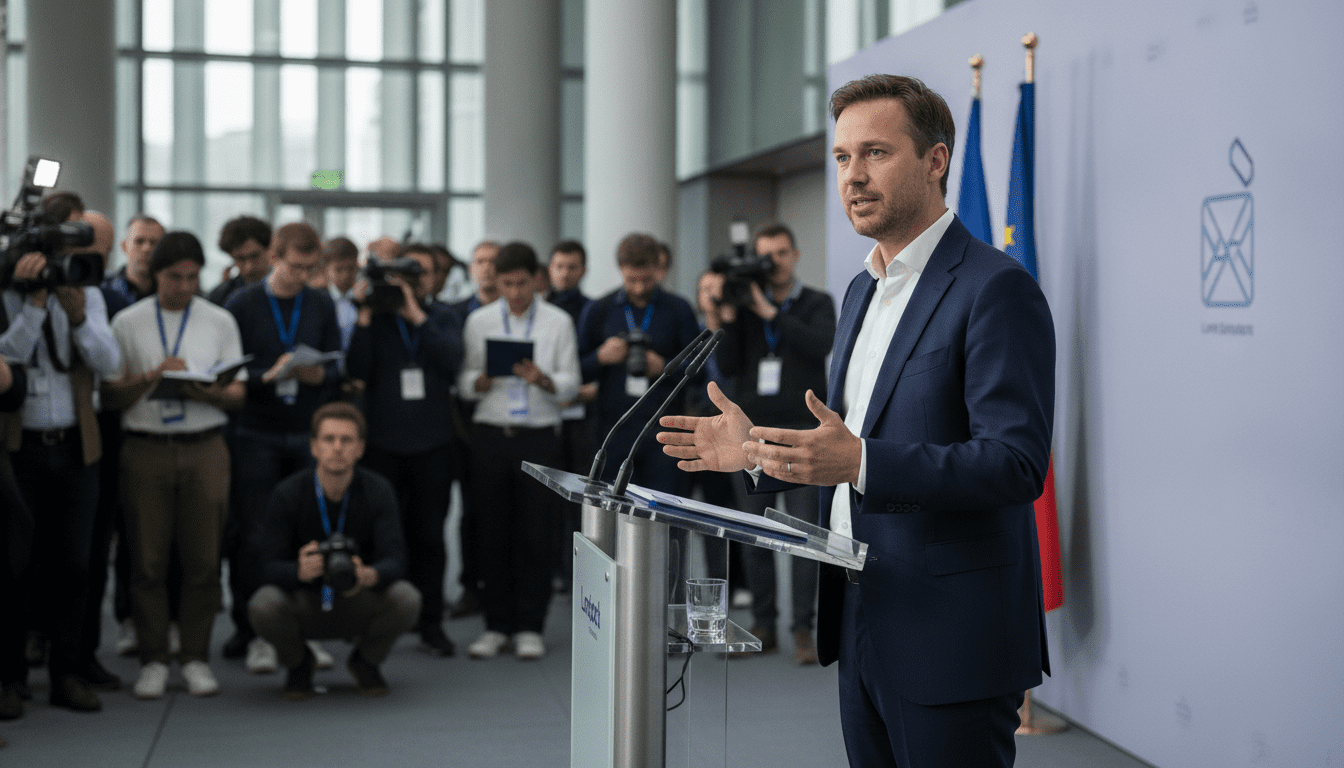
Judith Dada named co‑CEO of Langdock as investor steps into executive role
Judith Dada, a longtime investor in Langdock, has been appointed co‑CEO of the enterprise AI platform she helped fund; she aims to scale Langdock into Europe’s leading AI company and boost jobs.
Dada joins Langdock leadership after early investment
Two years after leading the only financing round for Langdock, Judith Dada is moving from lead investor to co‑chief executive, signaling a major executive shift at the startup. Dada’s elevation follows her role as an early backer and reflects a hands‑on transition from investor oversight to operational leadership. She told Handelsblatt that taking the co‑CEO post gives her an opportunity to influence the company’s next phase directly and to help shape broader economic trends in Europe. The appointment underscores increasing investor willingness to assume executive roles when firms enter scaling phases.
Investor record and connection to Langdock
Dada was among the first external backers of Langdock and led the company’s sole financing round to date, according to her public comments. That early capital and ongoing support positioned her as a prominent stakeholder with detailed knowledge of the product, customers, and technology roadmap. Investors who take executive roles often cite the need for continuity and speed in execution, and Dada’s move reflects that pattern in a sector where time‑to‑market is critical. Her prior experience as a general partner at Visionaries Club and other funds also informs the strategic priorities she has outlined for the company.
Langdock’s platform role in enterprise AI adoption
Langdock bills itself as a platform that helps companies of varying sizes adopt and operationalize artificial intelligence across business processes. Executives describe the product as a gateway — a single interface and set of tools that allow organisations to deploy, monitor, and scale models without rebuilding existing IT stacks. That positioning aims to address a common enterprise challenge: connecting advanced models to legacy systems and workflows in a secure, compliant way. By focusing on integration and usability, Langdock is targeting the large, fragmented market of corporates seeking practical, production‑grade AI rather than bespoke research projects.
Funding history and growth plans
The start‑up has relied on early private capital and that single funding round remains the only external financing publicly acknowledged so far. With Dada now at the operational helm, the company is expected to pursue further capital and commercial expansion to accelerate product development. Management has signalled plans to broaden customer acquisition and to invest in engineering resources to improve scalability and data governance capabilities. Industry observers say a clear growth roadmap and a visible executive sponsor can materially improve a young company’s ability to attract follow‑on funding.
Ambition to become Europe’s largest AI company
Dada has publicly expressed the belief that Langdock can become the largest AI company in Europe, framing the firm’s platform as central to enterprise adoption of the technology. That ambition places Langdock in competition with established cloud vendors and a growing set of European startups focused on tooling, observability, and model operations. Achieving market leadership will require both differentiated technology and strong commercial execution, particularly across regulated sectors that demand robust compliance and security. Executives argue that European firms will increasingly prefer local vendors that understand regional data rules and enterprise procurement processes.
Implications for European tech and labour markets
A successful scale‑up at Langdock could have ripple effects across regional tech ecosystems, from supplier relationships to hiring patterns and investment flows. Dada has indicated that building the company is also a chance to influence Europe’s economic development, including job creation within software engineering and AI operations roles. If Langdock secures larger enterprise contracts and additional funding, that could accelerate hiring and partnerships across the continent. Policymakers and investors monitoring the sector will be watching whether executive changes translate into measurable growth and broader ecosystem benefits.
Langdock now faces the immediate tasks of executing product roadmaps, converting pilot projects into long‑term contracts, and preparing for the next phase of fundraising and scale. Dada’s dual perspective as an early investor and now co‑CEO gives her a platform to align financial priorities with day‑to‑day operations, but success will depend on delivering tangible enterprise value at scale. The coming months will show whether the company can meet its founders’ and investors’ ambitions and claim a leading position in Europe’s fast‑evolving AI market.
