
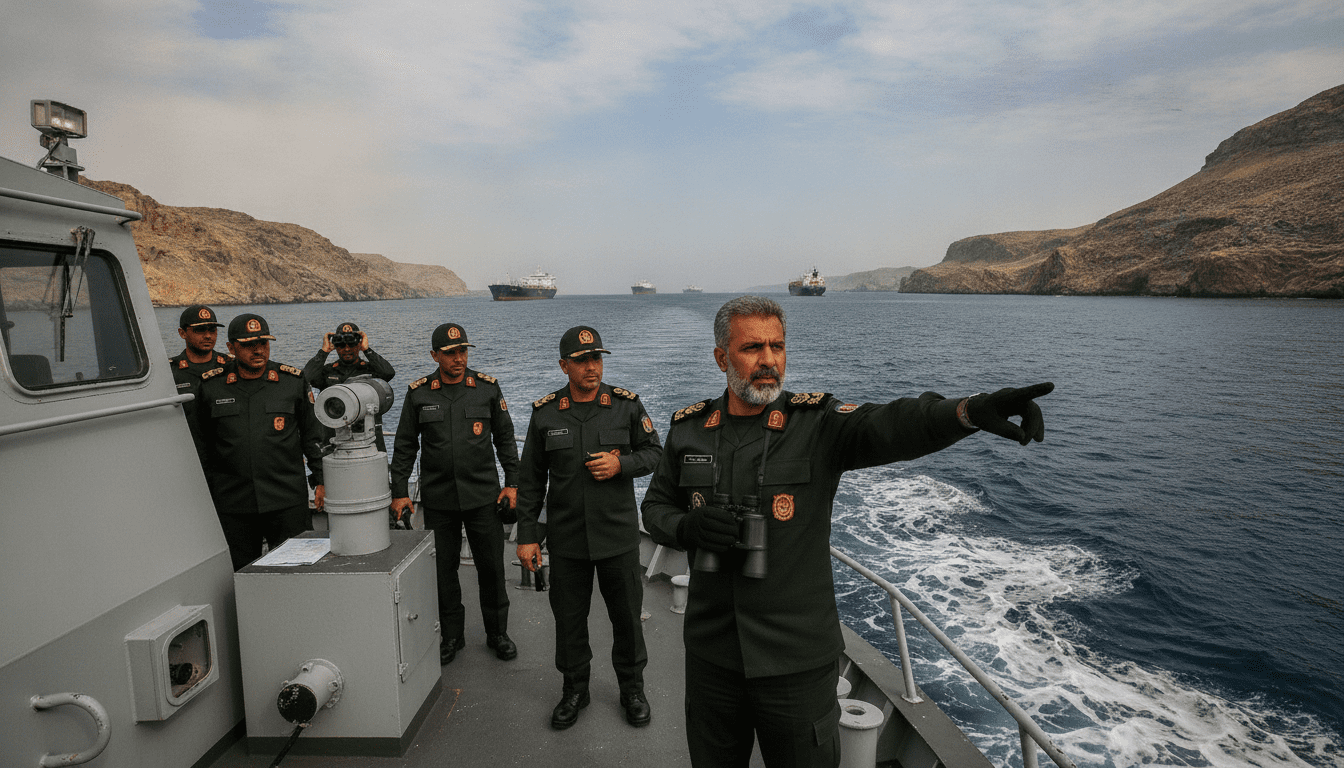
Iran’s Revolutionary Guards Warn of Unauthorized Passage Through Strait of Hormuz
IRGC warns against unauthorized passage through the Strait of Hormuz after the Liberian tanker Stoic Warrior transited close to Oman’s coast amid fee dispute.
The Iranian Revolutionary Guards on June 25, 2026, issued a sharp warning that any vessel crossing the Strait of Hormuz without Tehran’s authorisation “will be dealt with,” escalating tensions after a Liberian-flagged oil tanker used a coastal route near Oman to exit the waterway. The development follows announcements by Iran and Oman about proposed charges for services in the strait and comes amid a temporary ceasefire arrangement that allows free transit for a limited period.
IRGC Issues Transit Warning
On June 25, the IRGC declared that the only authorised passage through the Strait of Hormuz is the corridor announced by the Islamic Republic, and said any unapproved crossing is “unacceptable and extremely dangerous.” The statement also criticised what it described as a newly announced route, without naming the authorities behind it.
The warning frames control of navigation as a security prerogative for Tehran’s military arm and underscores the continuing dispute over who may determine passage practices in one of the world’s most strategic chokepoints. The message comes at a sensitive moment while negotiating parties discuss the longer-term status of the strait.
Tanker Stoic Warrior’s Coastal Transit
The Liberian oil tanker Stoic Warrior set sail early on Thursday and hugged the coasts of the United Arab Emirates and Oman as it transited the strait, according to on-scene reporting. The vessel’s path took it around Oman’s Musandam Peninsula relatively close to shore, following a corridor that Oman developed in coordination with the International Maritime Organization.
Maritime analysts note the Stoic Warrior’s routing intentionally followed the Oman‑announced corridor, a choice that appears to be prompted by safety and navigational guidance but which Tehran views as bypassing its de facto control. The passage has become a focal point for disputes over authority, safety guarantees and the mechanics of civilian shipping through the narrow waterway.
Strategic Importance of the Strait of Hormuz
The Strait of Hormuz remains a global energy lifeline, with roughly one-fifth of the world’s crude oil and liquefied natural gas typically transiting the channel. At its narrowest point the strait is approximately 30 kilometres wide, creating a natural chokepoint where military and commercial interests intersect.
Control over movement through the strait has been used historically as leverage in regional and international disputes, and the recent warnings highlight the extent to which the corridor informs wider strategic calculations. The combination of narrow geography and heavy traffic amplifies the consequences of any unilateral enforcement measures.
Ceasefire Provision Allows Temporary Free Transit
A memorandum of understanding signed last week between Tehran and Washington extended a ceasefire and included a clause allowing commercial ships to transit the Strait of Hormuz free of charge for a 60‑day period. That temporary window was designed to lower immediate tensions and stabilise energy shipments while broader negotiations continue.
It remains unclear what arrangements will replace the 60‑day provision once it expires, and both sides have signalled divergent expectations about future control and oversight. Negotiators on both sides continue to dispute whether transit governance should remain an international regime or incorporate Iranian administrative measures.
Dispute Over Fees and Sovereignty Claims
Iran and Oman have announced plans to examine “costs” associated with services related to administration of the strait, language Tehran has characterised as maritime service fees rather than tolls. Washington, speaking through a visiting US official this week, reiterated that it will not accept any charges for passage, maintaining the position that the strait is an international waterway.
Tehran’s insistence that only Iran’s announced corridor is authorised reflects a broader claim to exercise influence over navigation, a stance the IRGC says is necessary for national security. Critics argue that any attempt to impose fees or control transit routes risks creating legal and commercial uncertainty for global energy markets.
The standoff has immediate commercial consequences because tankers and shipping companies may alter routes, insurance costs and operational practices in response to perceived risks or regulatory changes. Shipping industry groups are monitoring the situation closely and seeking assurances that commercial traffic will be able to operate safely and predictably.
A Tehran-based correspondent cited frustration within the Revolutionary Guards over route changes that are seen as diminishing Iranian leverage, noting that control of the strait has been used as a pressure point since the start of the conflict between Tehran and Washington. That sentiment helps explain the IRGC’s unusually explicit language threatening action against unauthorised passages.
The sequence of events — a tanker using the Oman corridor, Iran’s statement asserting a single authorised route, and talks over temporary free transit and future fees — illustrates how maritime operations are now intertwined with diplomatic negotiations. The immediate outcome will influence both the conduct of shipping companies and the pace of talks between Tehran, Washington and Gulf states.
The international shipping community will be watching whether the 60‑day free transit period is renewed or replaced by a new regime, and whether practical arrangements can be found that reconcile Iran’s security concerns with international law governing navigation. For now, commercial vessels face a delicate choice between following Oman‑approved corridors and navigating the political sensitivities of Iranian control claims.
