
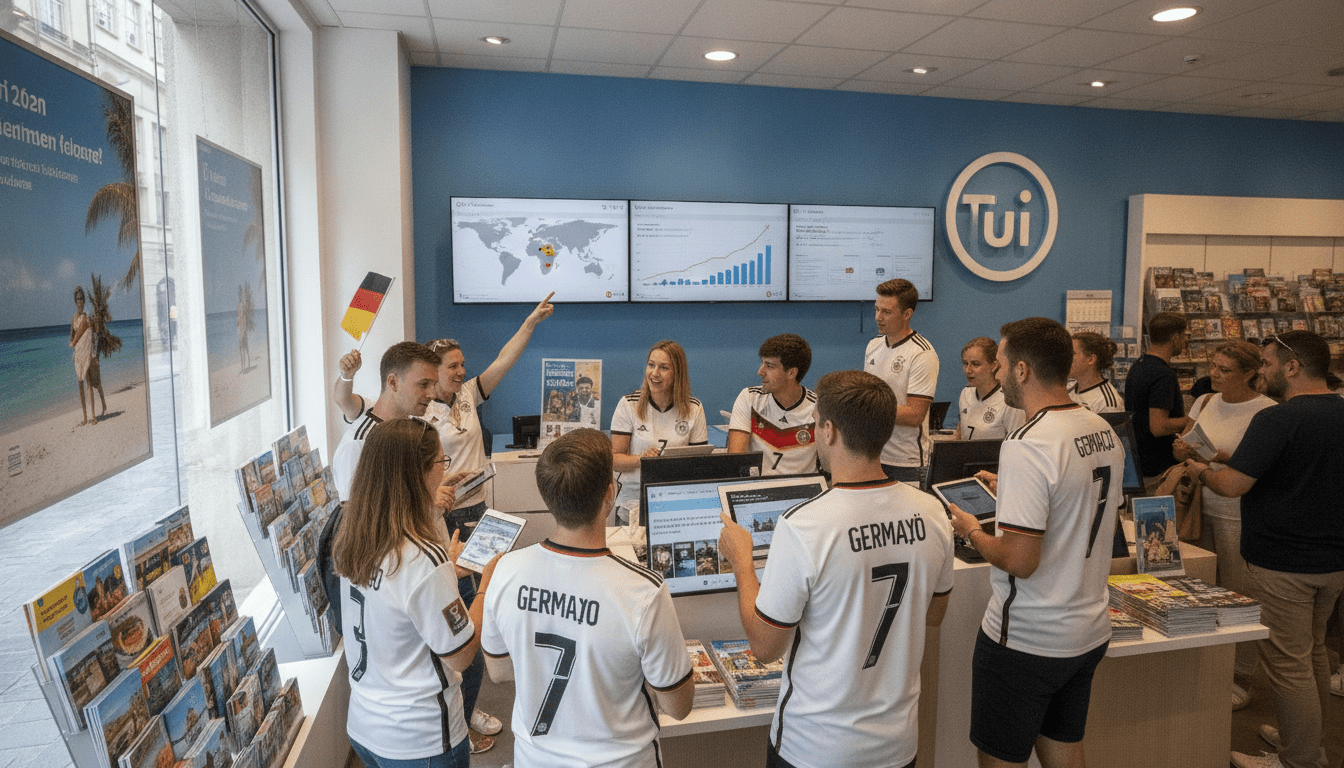
Summer travel bookings rebound as TUI and Eurowings report late surge
German travel firms report rising summer travel bookings after a volatile spring; TUI notes Curaçao interest and carriers see last-minute demand amid price drops and leftover flight contingents.
Germany’s travel sector is seeing a renewed upswing in summer travel bookings as last-minute demand picks up ahead of school holidays. TUI reported an unprecedented spike in searches for Curaçao following the national football team’s 7-1 victory, while carriers and tour operators say short-notice reservations are climbing despite geopolitical worries. Industry executives and researchers say interest has returned, but affordability and changing travel patterns will determine whether searches translate into confirmed trips.
TUI records record searches for Curaçao after national team win
TUI Germany executives said their website registered more searches for Curaçao than at any previous time, a phenomenon the company links directly to the national team’s victory. The tour operator had opened its first TUI Blue hotel on the island this summer, which industry sources say likely amplified consumer attention. Company representatives cautioned that search activity does not always equal bookings but described the pattern as an encouraging barometer of renewed demand.
Conflicts and fuel worries dent bookings but not interest
The outbreak of conflict in the Middle East prompted emergency returns from some Gulf destinations and raised fears of aviation fuel shortages, which weighed on early bookings. Travel industry leaders say these events briefly depressed forward sales but did not extinguish consumer appetite for holidays. Analysts point out that uncertainty pushed many travelers to delay decisions rather than cancel plans outright.
Antalya overtakes Mallorca as most-booked destination at TUI
Shifts in consumer preference have produced unexpected winners this season, with Antalya supplanting Mallorca as TUI’s most-booked destination for the summer. Price volatility played a role: hotels in the western Mediterranean had raised rates in anticipation of diverted demand, only to roll back prices when that surge failed to materialize. These adjustments have created bargains that are drawing cost-conscious holidaymakers back to traditional sun-and-sea destinations.
Eurowings reports strong growth in short-notice bookings
Eurowings and its Eurowings Holidays arm described a significant rise in late bookings, reporting that most reservations were made within 42 days of departure. The carrier said roughly one in six bookings occurred less than a week before travel, signaling a pronounced “super last minute” trend. Company officials noted the growth partly reflected the prior-year starting point for their package business, but they emphasized the clear behavioral shift toward shorter decision windows.
One in four Germans report they cannot afford a holiday this year
Independent research from the tourism research group shows cost remains a major barrier: one-quarter of respondents said they lacked the money for a holiday. While overall participation in travel remained high in recent years, the number of longer vacations has not fully returned to pre-pandemic levels. Many households are opting for shorter stays or cheaper destinations as a deliberate budgeting strategy.
Industry places hopes on undecided travelers and discounted offers
Travel providers are counting on the undecided segment of consumers to convert as peak season arrives, with targeted discounts and leftover flight contingents seen as key tools. TUI highlighted available flight capacities and package rates that, in some instances, keep a family holiday within reach at competitive prices. Tourism scholars warn, however, that discounts only go so far if households have already exhausted their discretionary budgets earlier in the year.
Consumer behavior this season is being reshaped by a mix of external shocks and economic pressures, with operators adapting through pricing and inventory strategies to capture late demand. The coming weeks will be decisive: if short-notice bookings continue, the industry could close the gap to last year’s figures; if affordability constraints prevail, providers will face a more muted peak season than they had hoped.
