
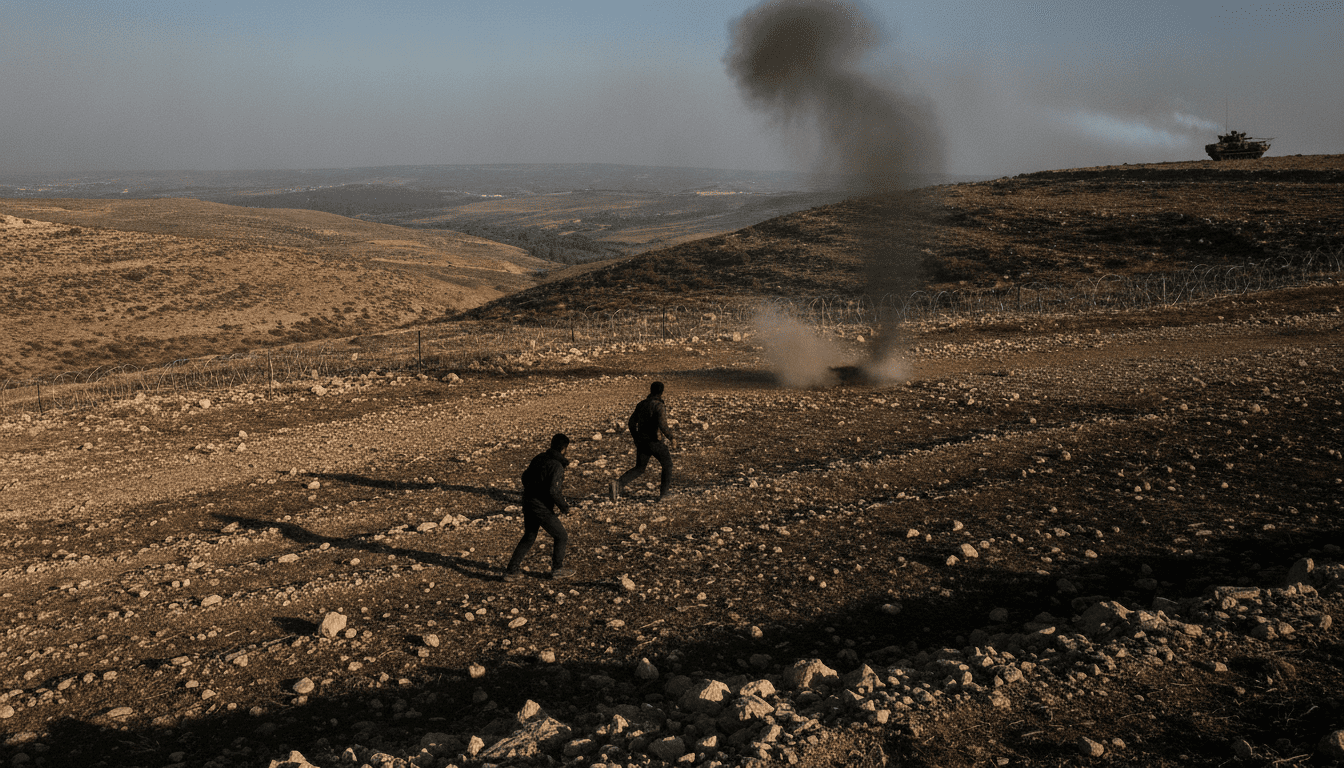
Israeli strike in southern Lebanon targets two people, army says
Israeli strike in southern Lebanon: the army says it attacked two people in a vehicle that ‘posed a threat’ on June 24, 2026; independent verification pending.
On June 24, 2026 the Israeli military said it carried out an attack in southern Lebanon after two people entered the area it occupies, describing the action as an Israeli strike in southern Lebanon against a perceived threat. The army’s brief statement, posted on X, said the two were travelling in a vehicle and posed a danger to Israeli forces, but offered no supporting evidence. Independent confirmation of casualties or the identities of those targeted was not provided by the military, and no additional details were included in the announcement. Local authorities and on-the-ground reporting have not yet corroborated the army’s account.
Israeli military statement
The Israeli army issued a short post on X saying its forces engaged two individuals who entered the occupied area in southern Lebanon and that the operation was carried out because the pair represented a threat. The statement did not elaborate on the precise location, the nature of the threat, or whether any weapons were observed. Military spokespeople routinely release brief accounts in cross-border incidents; this post followed that pattern and offered minimal context. Journalists and independent monitors often seek further verification after such terse notifications.
Incident location and immediate actions
According to the army’s statement, the confrontation occurred in territory in southern Lebanon currently under Israeli military control, where Israel has repeatedly said it acts to protect its forces and nearby communities. The military described the individuals as travelling in a vehicle, implying a mobility-based encounter rather than a stationary checkpoint incident. No imagery, video, or forensic detail was released alongside the claim, leaving a gap between the army’s characterization and independent assessment. Such gaps complicate external efforts to determine whether the engagement complied with rules of engagement and international law.
The absence of detailed information also leaves open questions about whether the operation involved ground forces, aerial assets or both, and whether local residents witnessed the engagement. In many cross-border episodes, civilian observers and humanitarian actors provide additional perspective that can confirm or challenge official accounts. At this stage, however, there has been no public corroboration from local sources or international observers available to substantiate the army’s version.
Evidence and verification
The military’s announcement explicitly did not include evidence to back its assertion that the vehicle and its occupants posed a threat, a detail that experts say is central to assessing the legality and proportionality of any use of force. Independent verification—such as satellite imagery, on-site reporting by journalists, hospital records or statements from local officials—remains necessary to confirm whether the strike occurred as described. In the absence of such verification, international organizations and human rights groups typically call for transparent investigations. Analysts caution that uncorroborated claims can inflame tensions and complicate factual reconstruction.
Regional security backdrop
The incident comes against a long-standing backdrop of tension along the Israel-Lebanon frontier, where sporadic exchanges, reconnaissance missions and occasional strikes have been recorded in recent years. The border area hosts a mix of military positions, civilian communities and international peacekeeping presences, creating a complex operational environment. Cross-border engagements routinely raise concerns about escalation, particularly when information is limited and parties offer competing narratives. Observers note that even single incidents can have outsized political and security repercussions if they are interpreted as deliberate escalation.
Humanitarian and local impact
Beyond immediate security considerations, incidents in southern Lebanon often have humanitarian implications for residents who live close to the line of control and for displaced populations in the wider region. Fear of renewed hostilities can disrupt daily life, impede access to services and prompt movements of civilians seeking safety. Local hospitals and clinics sometimes play a key role in documenting injuries and fatalities, but their ability to report is contingent on operational access and security conditions. Humanitarian organizations typically urge restraint and call for rapid, impartial assessments following any reported use of force.
Calls for clarity and next steps
International actors and monitoring bodies generally emphasize the need for transparent reporting and independent verification when military forces announce strikes across contested frontiers. Multiple stakeholders, including media, non-governmental organizations and foreign ministries, will likely press for more information and for access to the site if security conditions permit. The Israeli military has in the past said it will share further details when operationally appropriate, though timelines for such disclosures vary. Observers will be watching for hospital reports, local statements and satellite imagery that could shed light on the event.
The broader trajectory of cross-border relations will depend in part on the responses of local authorities and any armed groups operating in the area, as well as on diplomatic engagement by regional and international interlocutors. Each side’s public narrative and the availability of independent evidence will shape whether this incident is absorbed into routine friction or evolves into a more serious confrontation.
At the time of this report there is no independently verified information confirming casualties or the identities of those the army said it attacked in the Israeli strike in southern Lebanon, and further updates are expected as journalists and monitoring organizations seek to corroborate the military’s account.
