
Volkswagen nears decision on Everllence sale as bidders vie for majority stake
Volkswagen nears decision on Everllence sale now as board meets; bidders CVC, Bain and EQT (with Porsche SE and Qatar) vie for a 51% stake valued €8–9bn.
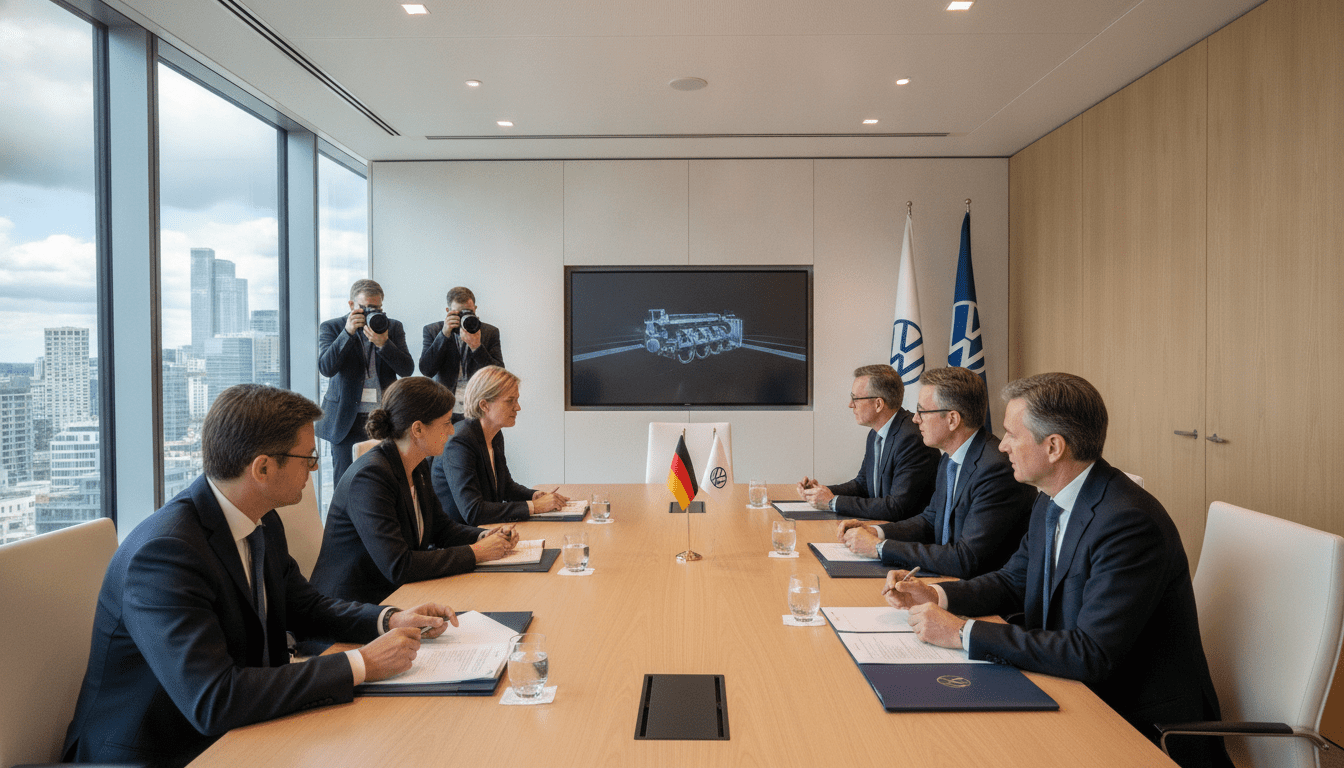
Volkswagen executives met Wednesday afternoon to weigh final offers in the Everllence sale process and prepare a recommendation to the supervisory board, which convened later the same day. The sale, which would transfer a 51% stake in the ship-engine specialist, drew binding bids from CVC, Bain and an unusual EQT consortium that includes Porsche SE and Qatar. Insiders value Everllence at roughly €8–9 billion, and the company’s role as a global leader in marine engines has heightened scrutiny of the transaction.
Board deliberations and transaction timetable
The Volkswagen board reviewed detailed proposals after investment banks Goldman Sachs and J.P. Morgan ran the auction process following a late-summer decision to explore a deal. Advisors say the three shortlisted firms submitted preliminary offers earlier this month and delivered final, priced bids at the start of the week. Company and market participants describe the timetable as compressed but thorough, with the board expected to signal a preferred buyer before the supervisory board’s evening session.
Company spokespeople declined comment on the ongoing process, and private-equity bidders likewise remained silent. Sources familiar with the negotiations said the board’s recommendation will reflect a blend of price, industrial commitments for sites and jobs, and assurances on future investment in product development.
Profiles of the bidders and the EQT consortium
CVC and Bain entered the final phase as conventional private-equity contenders seeking a majority stake in a capital-intensive engineering business. Both firms have portfolios that include industrial and technology assets, and their pitches reportedly emphasize operational improvement and international expansion. Market observers see private-equity ownership as likely to aim for efficiency gains while positioning Everllence for future growth in decarbonization and new propulsion markets.
EQT’s offer is notable for its partners: the buyout firm is bidding alongside Volkswagen’s largest shareholder Porsche SE and major investor Qatar. That alignment ties the potential buyer directly to influential owners of Volkswagen itself, creating an uncommon overlap between seller and prospective purchaser. The consortium has framed its approach as combining industrial continuity with financial backing, a mixture designed to reassure staff and customers.
Everllence’s financial profile and market standing
The Augsburg-based business, rebranded as Everllence from MAN Diesel & Turbo and formerly MAN Energy Solutions, reported roughly €4.9 billion in revenue last year and employs about 16,200 people. Insiders estimate last year’s EBITDA at between €700 million and €800 million, a figure that underpins the €8–9 billion valuation range cited by market participants. Ship engines still account for the lion’s share of revenues, and the company is widely regarded as a global market leader in large-bore marine propulsion.
Analysts say Everllence’s cash generation and technological position make it attractive to buyers despite cyclical exposures in shipping and commodity markets. Potential owners will need to balance near-term profitability with long-term investment in lower-emission engine technologies and service networks, which are central to maintaining the company’s market share.
Supervisory board makeup creates unusual voting dynamics
The transaction’s governance framework has complicated the vote because representatives of the major shareholders sit on Volkswagen’s supervisory board. Porsche SE and Qatar each hold board representatives who would have a vested interest in an EQT-led bid, prompting the expectation that those members will abstain from the final vote to avoid conflicts of interest. Combined with other shareholder-affiliated seats, that abstention could remove a sizeable block of votes from the capital-side deliberation.
That circumstance magnifies the influence of employee representatives on the supervisory board, a condition rarely seen in mergers and acquisitions of this scale. Worker directors are understood to possess an outsized role in the final decision, though observers note they are unlikely to oppose a recommendation put forward by the executive board. The anticipated abstentions and attendant legal caution are cited as reasons why Volkswagen has taken extra time to vet the offers.
Historical context and worker agreements shaping the sale
Everllence’s origins lie in MAN, which was folded into Volkswagen’s truck and bus holding before the engineering unit was separated from Traton and other pieces of MAN in the late 2010s. Volkswagen first sought to divest the engine business in 2019, but that earlier attempt was unsuccessful. During the years that followed, management and employee representatives negotiated terms that included a commitment tying the unit to the VW group until at least 2026, contingent on meeting growth and profitability targets.
Those workforce agreements and past restructuring efforts have influenced the current transaction structure. Senior executives previously argued internally for keeping Everllence within the group, and a former personnel chief who supported that view departed the company last year. Sources say the final deal structure being considered would leave Volkswagen with a minority stake, reflecting a compromise driven by labor representatives who pushed to maintain a continued corporate link.
The supervisory board’s evening session is expected to decide whether to accept the board’s recommendation, marking a pivotal step in a sale that would reshape Volkswagen’s industrial portfolio and determine the next chapter for a leading marine-engine maker. Observers will watch closely how commitments on jobs, investment and technological development are written into any binding agreement, and whether regulatory or stakeholder concerns influence the ultimate outcome.
