
North Korea 1966 World Cup shock: how a dental assistant’s header toppled Italy and redefined football folklore
North Korea 1966 World Cup upset saw a little-known Asian team qualify amid a continental boycott and then defeat Italy 1-0 in one of football’s most famous shocks. The victory in Middlesbrough — sealed by Pak Do‑Ik’s goal — transformed an obscure side into global sensations and left a lasting imprint on World Cup history. This article examines the qualification controversy, the match itself, the reception in England and Italy, and the long shadow the result casts over the tournament’s legacy.
Unusual route to the England finals
The path that brought North Korea to the 1966 World Cup was anything but routine, shaped by political protest and FIFA’s allocation rules. African, Asian and Oceanian nations objected to receiving a single combined slot among 16 teams, and most withdrew from qualification in protest, leaving very few contenders. North Korea and Australia remained, and decisive wins over Australia ensured the Koreans a spot in the finals despite the extraordinary circumstances.
The unusual qualification highlighted global inequalities in international football at the time and raised wider questions about representation on the world stage. For North Korea, entry to England marked the rare intersection of sport and diplomacy that would produce scenes no one had anticipated.
Warm reception and fan fervor in Middlesbrough
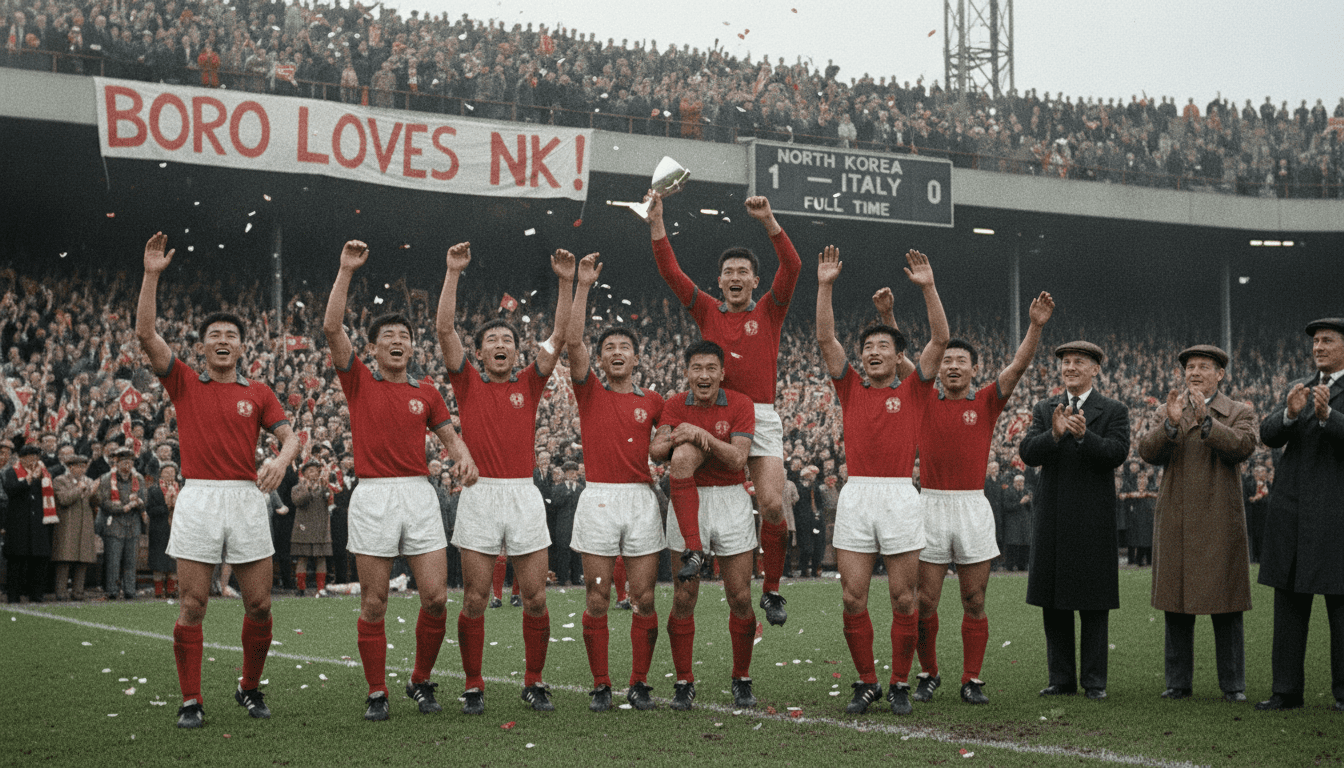
Once in England, the North Korean squad encountered an unexpected source of warmth in Middlesbrough, where fans embraced the team with surprising enthusiasm. Locals adopted the red-and-white kit, waved homemade flags and treated the visitors with a curiosity that quickly turned to affection. Though the British government did not formally recognize the DPRK, grassroots support and stadium crowds created an atmosphere of genuine public interest.
Organizers navigated diplomatic awkwardness by removing national anthems from the pre-match program and substituting neutral marches, yet spectators’ affection for the underdogs made the team feel at home. The reception in Middlesbrough became part of the match’s enduring myth, a reminder that sporting moments can transcend politics.
How the match unfolded in Wembley
Italy entered the group match as heavy favorites and required only a draw to progress, but they were repeatedly frustrated by resolute defending and a spirited North Korean keeper. The decisive moment arrived from an unlikely source: Pak Do‑Ik, a dental assistant drafted into full-time training with the national team, found himself in the right place after an aerial contest. He timed a low, accurate finish that slipped past Italy’s defense and into the net, giving North Korea a lead they would hold to the final whistle.
Tactical discipline and quick transitions defined the Korean approach, while Italy’s superior possession failed to produce the goals required. The result showcased how organization, belief and a single moment of precision can overturn expectations at the highest level.
Immediate fallout in Italy and media reaction
Back in Italy the loss provoked astonishment and bitter headlines, as pundits and former players struggled to explain how a footballing giant had been toppling by a team most observers had dismissed. Returning Italian players were greeted with derision by parts of the press and with ironic offerings of food at the airport, illustrating national embarrassment more than reproach. Some commentators used grand historical metaphors to describe the defeat, underlining how deeply the match resonated beyond the pitch.
Rumors circulated about the fate of the North Korean players after their celebrated return home, but later accounts indicate a more prosaic aftermath. The short-lived celebrity of the team and the mystery that followed only contributed to the match’s legendary status in subsequent retellings.
Long-term legacy and football mythology
The 1966 North Korea upset has become a staple of World Cup folklore and is routinely cited among the competition’s greatest surprises. For North Korea itself, such international appearances were rare; the team did not return to the finals until decades later, which further elevated the 1966 campaign in memory. The match has been replayed in documentaries, books and fan retrospectives as an emblem of unpredictability in sport.
Over time the game generated playful and conspiratorial spin-offs in popular culture, as observers imagine alternative histories and improbable continuities. Yet beyond mythmaking, the result remains a concrete lesson about how underdogs can alter the narrative of a tournament through a mix of tactical clarity and individual moments of brilliance.
The Middlesbrough match endures as a touchstone for football fans who value surprise and spectacle, and Pak Do‑Ik’s goal continues to be replayed as proof that the World Cup can produce truly astonishing outcomes.
