
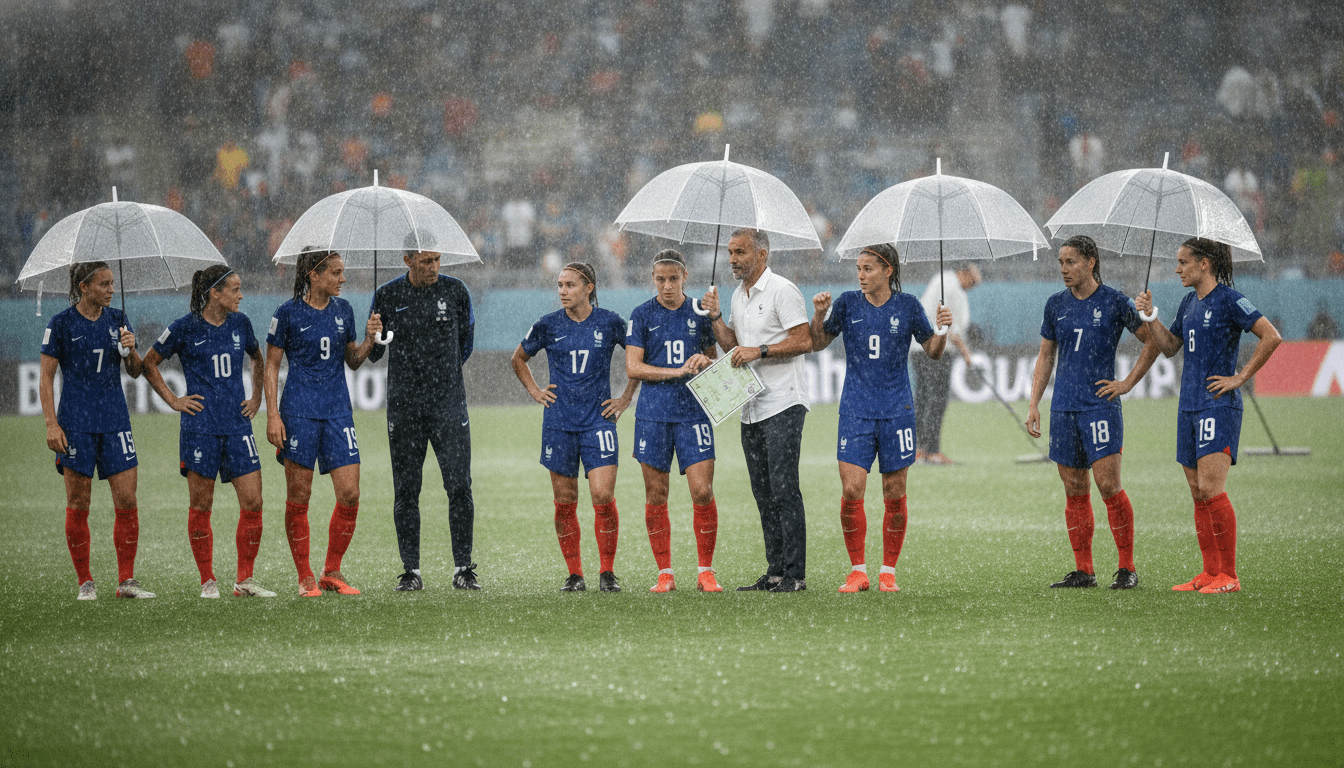
Philadelphia rain delay tests France as World Cup victory stretched into marathon match
A severe Philadelphia rain delay interrupted the World Cup match and forced a nearly two‑hour halt, testing players’ focus and turning France’s 3–0 win over Iraq into a nearly four‑hour affair.
The Philadelphia rain delay began at halftime when spectators were ordered off the stands amid an approaching storm, and play did not resume for almost two hours. Players and staff described the stoppage as mentally draining, yet France held composure to secure a 3–0 victory that advanced them into the knockout phase.
Delay Forces Extended Evacuation at Halftime
Match officials paused the game at the interval after public address announcements warned of a severe thunderstorm and advised fans to seek shelter. Stadium staff cleared the stands and closed public areas while emergency weather monitors tracked lightning in the region.
The interruption stretched well beyond initial expectations, with the on‑field action resuming only after conditions were declared safe. From kickoff to final whistle, the fixture consumed nearly four hours, transforming a routine World Cup contest into an endurance test for teams and organizers alike.
Players Report Mental and Physical Challenges
France’s midfielders and forwards said the prolonged break was as taxing mentally as it was disruptive to physical rhythms. One French player described how the team worked to stay loose with mobility exercises and conversation, saying the stoppage “felt endless” but that professionalism kept the squad prepared.
Kylian Mbappé and others highlighted the strain of spending an extended period in the dressing room and needing to re‑establish competitive focus at restart. The unusual timeline required players to recalibrate warm‑ups and tactical plans while guarding against loss of concentration.
Coaching Staff Used Different Strategies During the Pause
France’s head coach kept the mood light, according to team accounts, with informal activities such as card games and relaxed banter aimed at easing tension. The approach was framed as part of a wider emphasis on safety and mental readiness ahead of the resumed second half.
Iraq’s coach used the break for a lengthier technical review, deploying additional video analysis to try to sharpen his side’s response. Despite those efforts, the visitors were unable to overturn momentum after play resumed, and the match quickly tilted in France’s favor.
Safety Protocols Refer to National Weather Guidance
Organizers followed established guidance from the US weather authorities on lightning and outdoor events, which calls for suspending activities when strikes are detected within a specified radius. The policy typically requires a minimum 30‑minute pause after a lightning event, with the clock restarting after any subsequent strikes.
Those precautions informed the decision to hold spectators and teams off the field until monitors showed conditions had cleared. Event officials defended the delay as necessary to protect fans, players and staff, even as the extended wait complicated scheduling and broadcast plans.
Match Developments After the Resumption
Once play resumed, France dominated the contest and converted their advantage into a 3–0 scoreline, with multiple players contributing to the win. The side’s cohesion after the stoppage underlined how effective management of downtime can mitigate the disruptive effects of weather interruptions.
The victory clinched early progression for France into the tournament’s knockout rounds, removing some competitive pressure from the remaining group fixtures. For Iraq, the loss underscored the challenge of competing as an underdog amid extraordinary circumstances.
Organizers and Coaches Reflect on Unusual Circumstances
Coaching staff on both sides acknowledged the peculiarity of the situation and expressed hope that similar interruptions would not recur. France’s coach called the episode a “special circumstance” and stressed that safety outweighed any frustration about the delay.
Iraq’s manager noted it was the first time he had experienced such a long stoppage in competitive football and conceded the extra interruption made preparation harder for his players. The sentiment was echoed by match officials who pointed to the primacy of weather protocols in high‑risk situations.
The Philadelphia rain delay highlighted how extreme weather can reshape a major sporting event, imposing logistical hurdles and psychological strains that teams must manage on the fly. While France emerged with a decisive win and early qualification, organizers and participants agreed the priority had been safety, and they left the stadium hoping for clearer skies in the tournament’s next rounds.
