
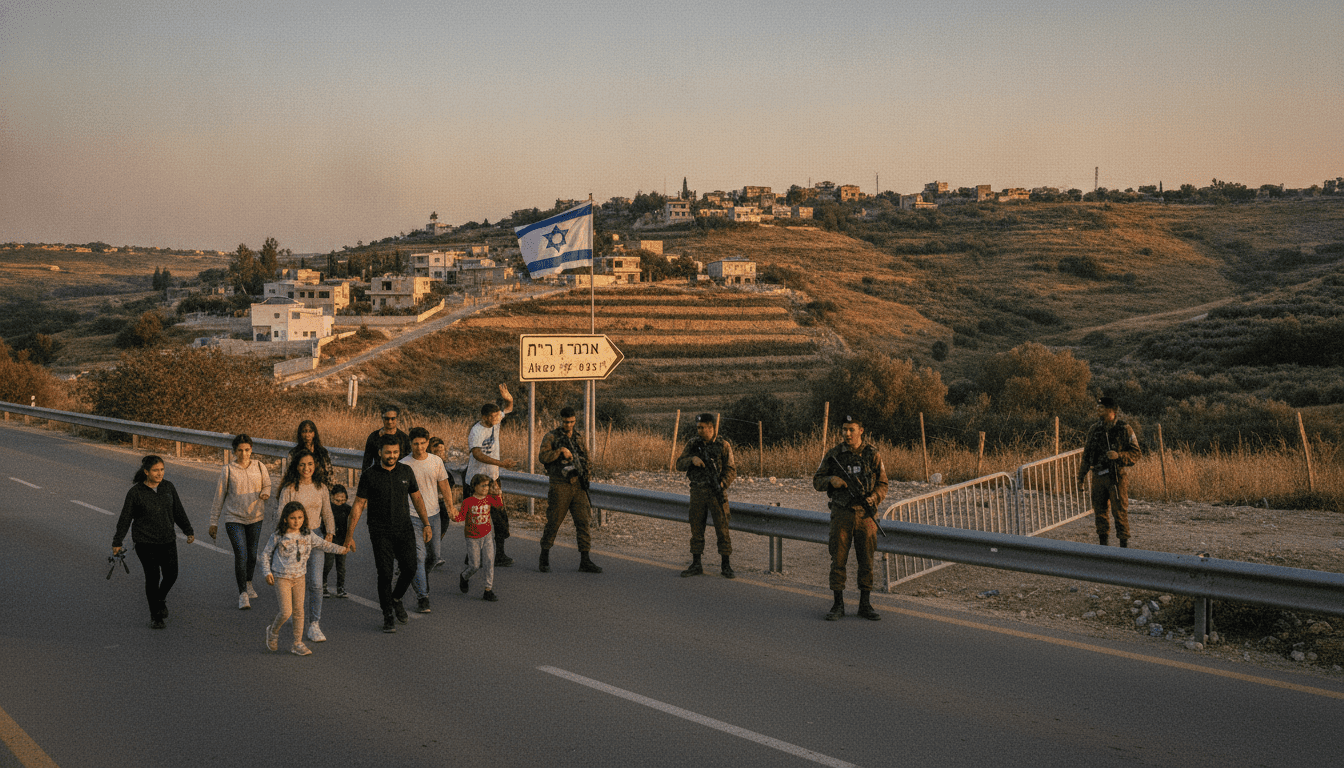
Israel lifts restrictions on northern border as communities return to full activity
Israel lifts restrictions on northern border effective June 22, 2026, the military said, allowing residents to resume full activity after weeks of partial limitations.
The Israeli military announced on Sunday, June 21, 2026, that Israel lifts restrictions on northern border areas tied to the war on Lebanon, effective at 6:00 a.m. on Monday, June 22, 2026. The statement said border communities will move from a partial activity level to full activity with no restrictions, reversing measures that had limited daily life and movement. The decision comes after weeks of heightened tensions along the Israel-Lebanon frontier and follows recent cross-border exchanges.
Military ends partial activity order
The Israeli military said the move ends a phased regime of restrictions it had imposed on communities near the northern border during the conflict with Lebanese armed groups. The change was described in a formal notice that set a precise time and date for the restoration of full civilian routines.
Officials did not detail all operational criteria used to reach the decision, but the announcement framed the step as a return to normalcy for towns and villages that had been subject to curfews, shelter advisories and reduced commercial activity. The military said the areas will operate without the partial limits that had been in place.
Communities prepare to resume daily life
Local authorities and municipal councils in northern towns prepared logistics to restore services and reopen public facilities once the restrictions were lifted. Schools, shops and public transportation are expected to resume standard schedules, allowing residents to return to work and regular commerce.
Residents expressed cautious relief at the prospect of resumed normality while also voicing lingering concerns about security and infrastructure repairs needed in some communities. Civil defense and municipal teams have been coordinating to assess needs and support families affected by the earlier restrictions.
Recent cross-border strikes and the security context
The announcement follows a period of cross-border hostilities, including air and artillery strikes in southern Lebanon and intermittent exchanges across the border. An image captured on June 19, 2026, and credited to AFP showed smoke rising from southern Lebanon as seen from positions across the border in the Upper Galilee, underscoring the volatile environment that surrounded the decision. (AFP)
Security sources say the operational picture along the frontier has been fluid, with periodic escalations prompting temporary restrictions and advisories. The military’s decision to lift measures reflects its assessment that immediate conditions no longer require the partial activity posture.
Economic and humanitarian implications
The removal of restrictions is likely to ease economic strains on border communities where businesses and services have operated under constrained conditions. Local economies that rely on daily commerce and cross-regional trade were among the hardest hit by the partial activity regime.
Humanitarian actors and municipal officials have noted that the lifting of restrictions does not eliminate needs created during the conflict, including repairs to damaged property and support for families who evacuated or lost income. Authorities have signaled plans to prioritize recovery efforts and re-establish support services in the coming days.
Guidance from local officials and the military
The military urged residents to remain vigilant and to follow instructions from civil defense and local authorities even as full activity resumes. It said contingency protocols remain in place should security conditions change, and that units along the border will maintain heightened situational awareness.
Local mayors and municipal directors are coordinating with regional authorities to disseminate clear guidance on reopening public facilities, the status of emergency shelters, and available social services. Officials emphasized that the return to full activity will proceed gradually in some areas as assessments continue.
Monitoring, potential reversals and international reactions
Analysts caution that the lifting of restrictions does not signal an end to broader tensions in the Israel-Lebanon theatre, and military spokespeople have noted the possibility of future adjustments if flare-ups resume. International observers and humanitarian organizations continue to monitor the border for signs of renewed escalation and to track civilian needs.
Diplomatic channels have been active in urging restraint and the protection of civilians, while regional stakeholders watch for developments that could affect stability along the northern frontier. For now, the change restores routine activity for residents who have faced weeks of disruption.
The lifting of restrictions will take effect at 6:00 a.m. on Monday, June 22, 2026, and marks an immediate shift in daily life for Israel’s northern border communities, though officials caution that the situation remains subject to change.
