
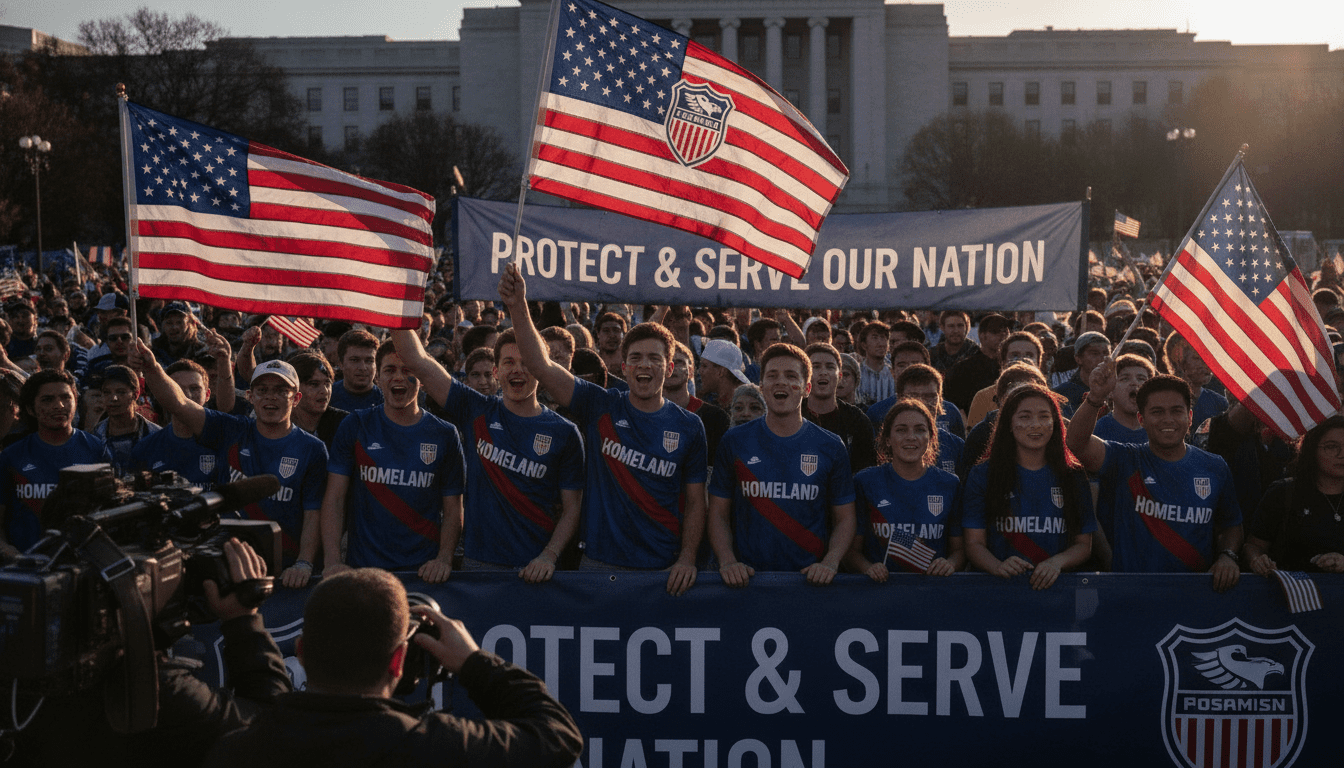
DHS ‘Defend the Homeland’ Image Sparks Backlash After Repurposing U.S. Soccer Team
DHS ‘Defend the Homeland’ image repurposed photos of U.S. national team players with nationalist slogans, prompting criticism over government messaging and athlete image use.
Homeland Security Posts ‘Defend the Homeland’ Graphic
The Department of Homeland Security posted a large graphic on platform X that layered bold slogans over images of three U.S. men’s national soccer players. The image included the headline “DEFEND THE HOMELAND” and lines reading “ONE NATION. ONE HOMELAND. ONE TEAM,” language critics called explicitly nationalistic.
A follow-up post from the department added the phrase “Our soil” alongside an American flag and a separate team photo set before a steel fence with the words “BUILT THE WALL” visible beneath the players’ feet. The visuals tied the team’s public profile to immigration and border rhetoric.
Players’ Likenesses Reused During World Cup
The government images co-opted players who have appeared at the FIFA World Cup under the tournament slogan “Football unites the world,” a message now juxtaposed against DHS messaging. Names singled out in public discussion include Folarin Balogun, Sergiño Dest and Chris Richards, whose images were used without broader context in the department’s posts.
Balogun has been described in media as a birthright American and Dest is a dual national born in the Netherlands, underscoring that the team includes athletes with diverse backgrounds. Observers noted the contrast between the players’ international profiles and the domestic security framing imposed by the DHS posts.
Public and Political Reactions Emerge Quickly
Civil society groups and sports commentators raised immediate concerns about the appropriateness of government agencies repurposing athlete images to advance policy narratives. Critics argued the posts blurred lines between national security messaging and partisan symbolism, creating the appearance of state endorsement of a particular political agenda.
Social media users and some lawmakers characterized the graphics as jarring and unifying to a message of exclusion rather than the inclusive spirit typically promoted around national teams. The debate quickly broadened to include questions about consent, image rights and the potential chilling effect on athletes who express personal views.
Legal and Ethical Questions About Government Use
Legal experts observed that while public officials can reference public figures, government use of athlete imagery for policy promotion raises ethical and constitutional considerations. The reuse of likenesses by a federal agency touches on administrative norms about nonpartisan communication and the permissible scope of official messaging.
Ethicists also highlighted the tension between celebrating national sports achievements and deploying those images to advance a hardline immigration stance. This intersection of sports, policy and public resources prompted calls for clearer guidelines on how agencies may use images of private citizens or public figures.
Implications for U.S. Sports Diplomacy
Observers warned the DHS posts could complicate the United States’ sporting diplomacy during a global tournament. The World Cup is widely framed by organizers and players as a venue for international exchange, and critics said government messaging that leans heavily into nationalist rhetoric risks undermining that message.
Some analysts predicted the impact on the tournament’s reputation in the U.S. will be uneven but potentially lasting, noting that shifts in public perception often emerge over seasons and election cycles. The juxtaposition of team imagery and border-focused slogans drew particular scrutiny for how it might be perceived by fans and foreign partners.
Political Context and Election-Year Ramifications
The timing of the DHS graphics drew political analysis connecting the posts to broader administration messaging ahead of national elections. Commentators tied the imagery to slogans associated with the Make America Great Again movement and suggested it fit a pattern of using symbolic national moments to advance policy themes.
Opponents framed the move as an attempt to nationalize a largely apolitical cultural event, while supporters argued federal agencies may highlight national unity in times of global attention. The debate has now moved into congressional hearings and media coverage, where lawmakers are pressing for explanations about the decision-making behind the posts.
The controversy over the DHS ‘Defend the Homeland’ image has highlighted sharp divides about how government institutions should engage with national symbols and public figures. The incident has prompted requests for the department to clarify its social media policies and for lawmakers to consider stronger guidance on the use of images tied to private citizens and sporting organizations.
Public scrutiny is likely to continue as officials respond and athletes weigh whether to comment on the repurposing of their images. The broader conversation around nationalism, immigration policy and the role of federal agencies in public communications has been amplified by a single set of posts, and the outcomes of any inquiries or policy changes will shape how such imagery is used in future high-profile events.
