
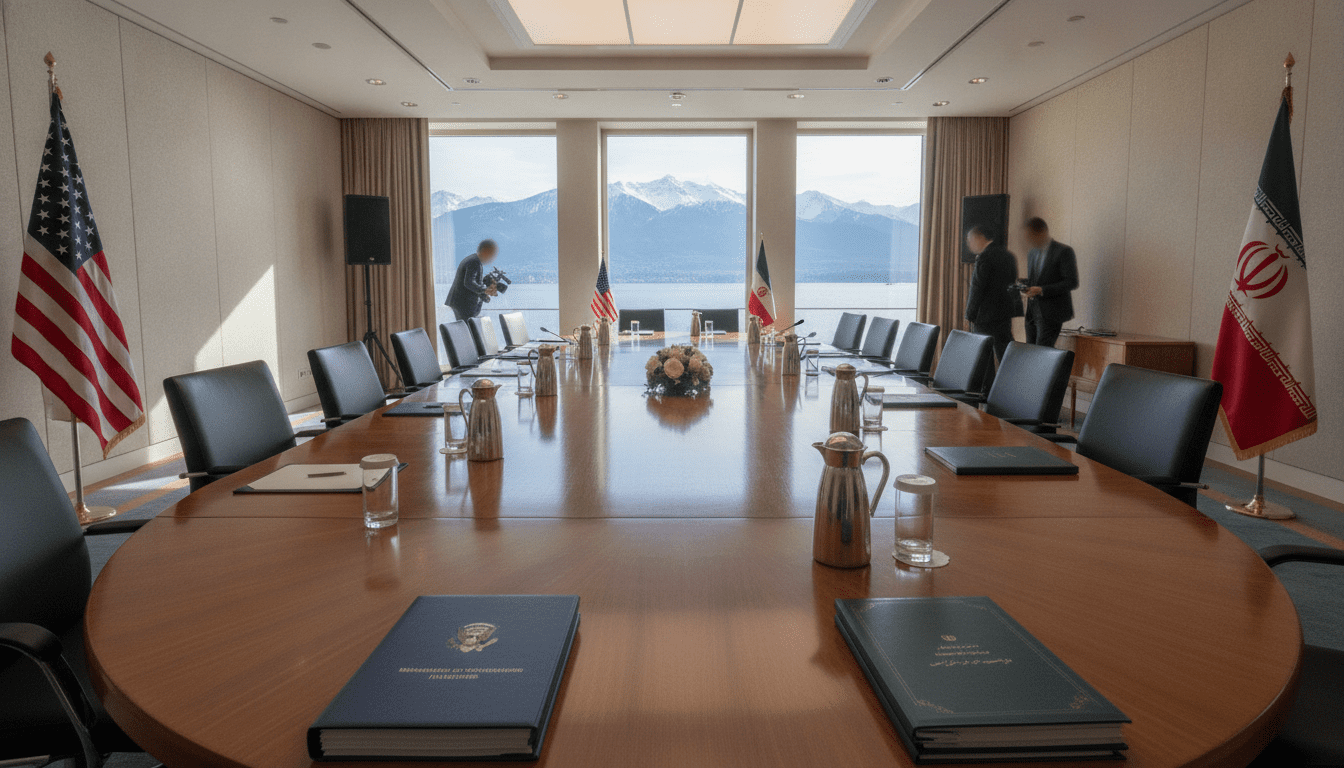
Iran-US talks in Switzerland seek to reinforce Memorandum of Understanding framework
Iran-US talks in Switzerland on June 21, 2026 seek to reinforce a Memorandum of Understanding framework, with diplomats racing to resolve standing disputes.
A high-level delegation from Iran and representatives of the United States met in Switzerland on June 21, 2026 for what officials described as high-stakes Iran-US talks in Switzerland aimed at bolstering a Memorandum of Understanding framework. Diplomatic sources said the session was designed to keep a fragile agreement on track after weeks of intensive shuttle diplomacy, while key disagreements over sequencing and verification remain unresolved. Al Jazeera correspondent Osama Bin Javaid reported that negotiators had worked to maintain momentum but acknowledged sensitive issues that could delay a final political settlement.
Swiss venue chosen for neutrality and logistical access
Swiss officials offered neutral ground and secure facilities that have long been favoured for sensitive diplomacy, making Geneva and nearby Bern common choices for Iran-US engagement. The choice of Switzerland reflects both parties’ preference for a controlled setting where technical and political teams can work in parallel without the distractions of a capital. Diplomats said the venue also permits discreet liaison with European and UN intermediaries who have been active behind the scenes.
Mandate centered on reinforcing the Memorandum of Understanding
The stated objective of the session was to reinforce the Memorandum of Understanding framework that underpins the broader negotiation process, rather than to sign a new treaty on the spot. Delegates focused on aligning language around timelines, verification steps and the mechanisms through which commitments would be implemented. Participants framed the talks as a series of confidence-building measures that could be expanded into a more comprehensive agreement if outstanding issues are settled.
Outstanding disputes focus on sequencing, verification and linked demands
Officials and analysts said the most contested topics at the Iran-US talks in Switzerland involved sequencing of reciprocal steps, the scope of verification, and how to handle sanctions relief linked to Iranian compliance. While both delegations affirmed a desire to avoid escalation, they remained apart on whether certain measures should be implemented simultaneously or in phased steps tied to independent verification. Negotiators also grappled with ancillary demands from third parties that have complicated prior rounds of diplomacy.
Al Jazeera’s reporting pointed to intense behind-the-scenes efforts to keep the process moving, but it also underscored that political red lines in both capitals will shape any final outcome. Sources familiar with the negotiations cautioned that domestic constituencies, oversight bodies and regional partners continue to exert pressure that constrains negotiators’ bargaining space.
Diplomatic choreography and third-party involvement
European mediators and international organizations have continued to play roles as facilitators and technical advisers in the talks, according to multiple diplomatic briefings. Their involvement has ranged from arranging consecutive bilateral meetings to providing technical expertise on verification protocols and sanctions architectures. Switzerland’s hosting role was described as logistical and procedural, allowing the two primary delegations to conduct direct exchanges while relying on third parties for calibration and trust-building.
Several envoys and former negotiators emphasised that successful diplomacy will require both procedural fixes and political cover in Washington and Tehran. They noted that external actors can help bridge gaps but cannot substitute for political decisions that take account of domestic constraints in both countries.
Possible outcomes and contingency scenarios
Delegates outlined a set of possible outcomes that included the consolidation of a revised MOU text, agreement on a joint verification roadmap, or a limited package of measures designed to stabilise the situation without resolving every dispute. A partial political understanding could allow for incremental implementation, but diplomats warned that partial steps carry the risk of backsliding if verification is later questioned. Conversely, failure to produce even modest progress could harden positions and trigger new rounds of diplomatic and economic friction.
Analysts said that the immediate yardstick for success would be whether negotiators leave Switzerland with a clear plan for the next technical sessions, agreed timelines, and a mechanism for reporting progress to their capitals. The absence of those elements would mark the talks as largely preparatory rather than productive.
Next steps and timeline for follow-up
Officials indicated that follow-up meetings—both technical and political—are expected to continue in the coming weeks, though no public timetable was released on June 21, 2026. Diplomatic channels will reportedly remain open to resolve the most sensitive drafting issues and to prepare any ministerial-level endorsement that might be required. Observers said the pace of progress will depend heavily on parallel consultations in Tehran and Washington, where political leaders will need to provide mandate and cover for concessions.
If the delegations can agree on a verification regimen and a clear sequencing of reciprocal measures, the framework could be extended into a broader agreement; if not, the process will likely lapse into protracted negotiations with intermittent bursts of activity.
The outcome of these Iran-US talks in Switzerland will be watched closely across the region and in capitals involved in allied consultations, with the June 21, 2026 meeting representing a critical juncture in a delicate diplomatic track.
