
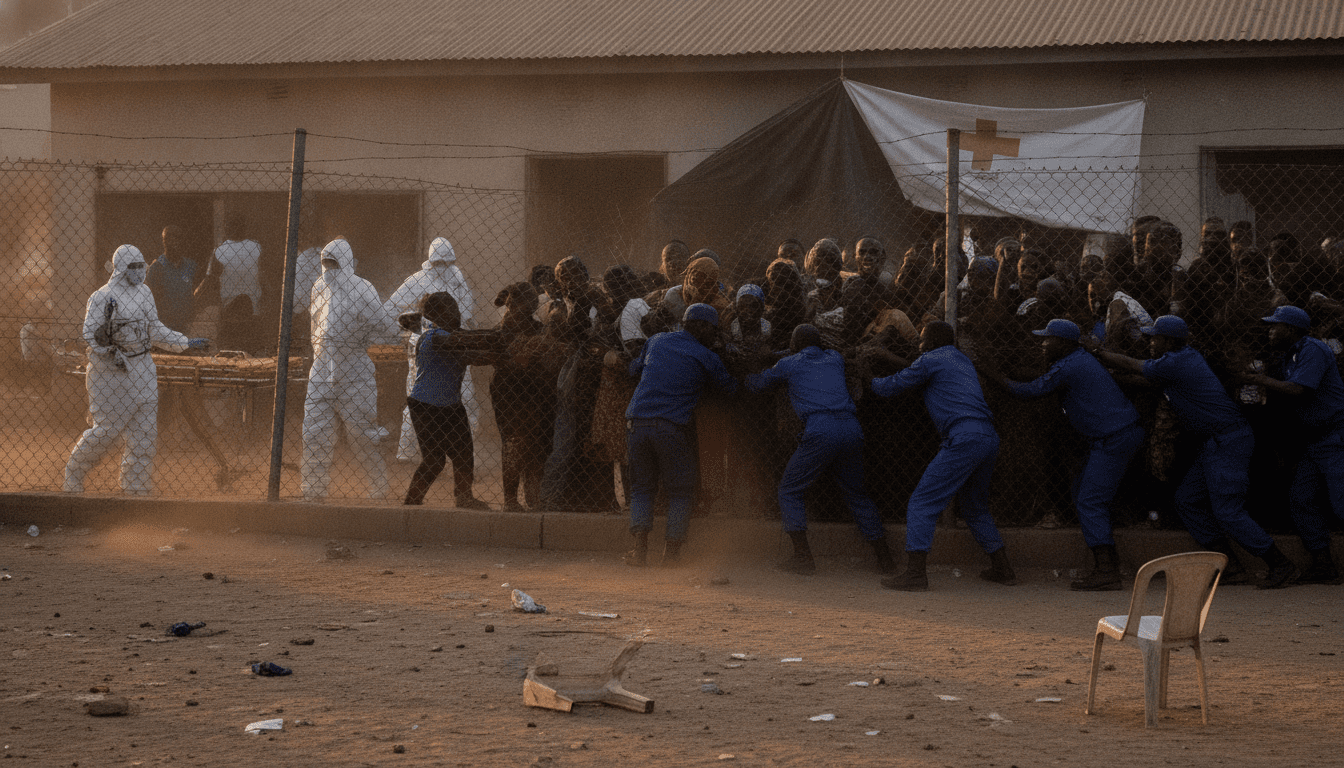
Families storm quarantine centre as Ebola in DR Congo sparks transmission fears
Families removed several suspected Ebola patients from a quarantine centre in eastern DR Congo, raising concerns about further spread of the Bundibugyo outbreak and hampering containment efforts. (streetinsider.com)
Incident at the quarantine centre
Relatives of suspected patients forcibly entered a quarantine facility in eastern Democratic Republic of Congo and removed those held there, according to local response officials. The interventions happened amid growing fear and mistrust in communities where health teams have been working to isolate and treat suspected Ebola cases. (streetinsider.com)
Authorities warned that patients taken from controlled settings may carry the virus back into the community, creating new chains of transmission that are harder to trace. The removal of patients complicates contact tracing and isolation procedures that are central to stopping the spread of Ebola in the region. (streetinsider.com)
Health officials warn of rising risk
Global and national public health bodies have repeatedly cautioned that the outbreak in DR Congo is accelerating, with more districts reporting cases and the risk of further spread increasing. The World Health Organization has characterized the situation as evolving rapidly and urged intensified surveillance, testing, and infection control measures. (WashingtonGazette.com)
Response coordinators said breaches of quarantine heighten the likelihood that exposures will go undetected, undermining efforts to identify and monitor contacts. Officials stressed that timely isolation, testing and safe burials remain the pillars of the public health response. (who.int)
Outbreak caused by Bundibugyo strain with no approved vaccine
The current outbreak has been linked to the Bundibugyo ebolavirus, a strain for which there is no licensed vaccine or widely approved therapeutic options. That reality increases reliance on classical public health tools—rapid case identification, quarantine, and infection prevention—to prevent uncontrolled transmission. (apnews.com)
Medical teams have emphasized the extra challenge posed by a strain that may not be detected by routine tests developed for more common Ebola variants, making laboratory confirmation and specialist expertise essential. The absence of licensed countermeasures has prompted accelerated research and calls for international support to fast-track candidate vaccines and treatments. (who.int)
Response capacity strained as cases climb
International agencies and local health services report that case counts and suspected infections have been rising in recent weeks, stretching treatment centres and testing capacity in affected provinces. Health partners warn that if isolation and contact tracing rates remain low, the outbreak could expand rapidly with serious public health consequences. (apnews.com)
Field responders described overcrowded facilities, shortages of personal protective equipment, and delays in laboratory confirmation that slow the overall response. Emergency coordinators have called for more staff, supplies and logistics support to bolster isolation units and restore community trust. (apnews.com)
Community tension, protests and attacks on clinics
The outbreak response has been met with resistance in several areas, including protests and violent incidents that have targeted treatment centres and quarantine operations. In multiple recent episodes, clinics were attacked or burned and relatives attempted to retrieve bodies or patients, increasing the risk of infection and disrupting care. (latimes.com)
Health workers say that community engagement and culturally sensitive communication are essential to reduce fear-driven actions and to encourage cooperation with surveillance teams. Local leaders and response agencies have been urged to prioritize transparent information sharing and to involve community representatives in decision-making. (WashingtonGazette.com)
International assistance and urgent priorities
WHO and regional health partners have outlined emergency plans to scale up coordination, surveillance, testing and clinical care, and to support safe burial teams and risk communication on the ground. Donor and technical support will be critical to expand isolation capacity and to enable the rapid deployment of diagnostic and protective supplies. (who.int)
Experts say immediate priorities include restoring secure, community-accepted quarantine procedures, increasing contact tracing coverage, and accelerating laboratory turnaround times so suspected cases can be confirmed and managed without delay. These steps are considered essential to interrupt transmission chains and protect vulnerable populations. (who.int)
Families and health teams remain locked in a fraught contest between urgent public health measures and deep community mistrust that has repeatedly impeded outbreak control. The coming days will test whether authorities and partners can re-establish secure isolation practices and rebuild confidence to prevent further spread of Ebola in DR Congo.
