
Friedrich-Ebert Bridge in Bonn to Stay Closed for Cars and Trucks for at Least Two Years
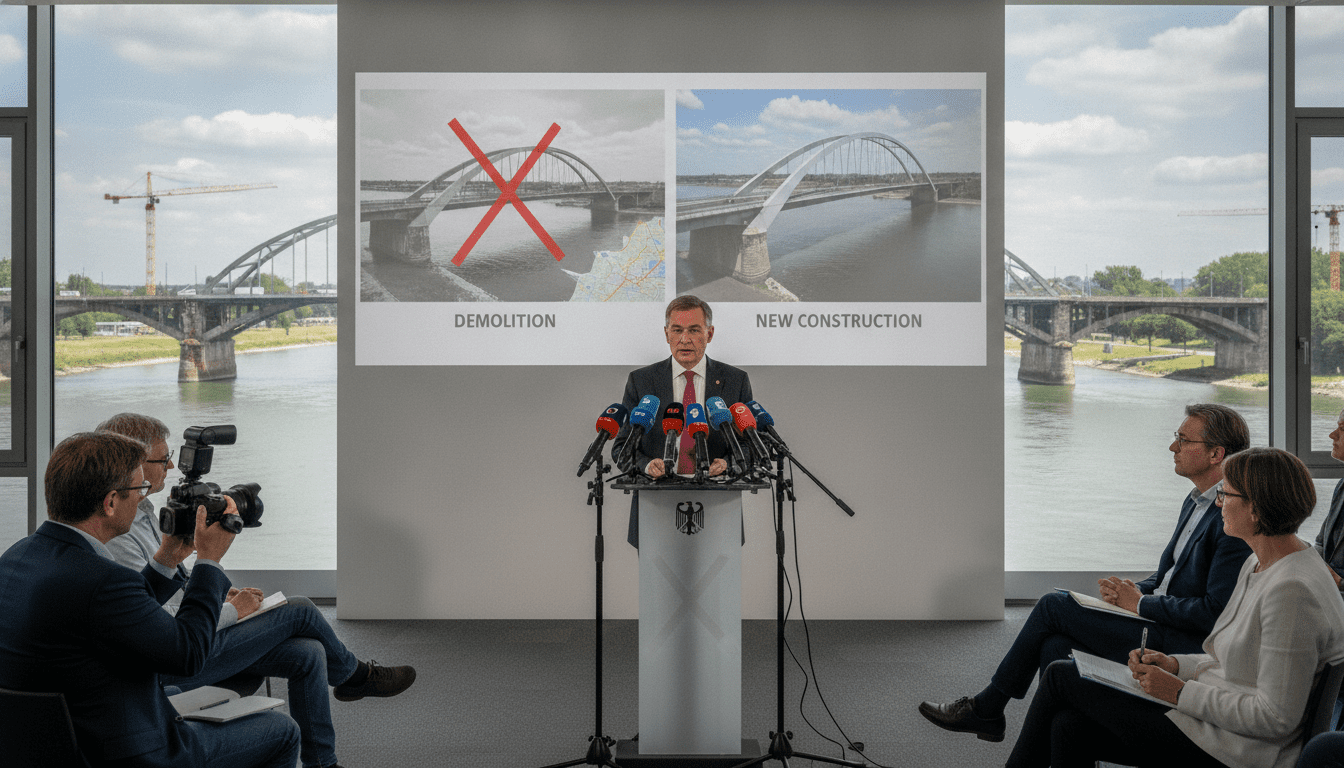
Friedrich-Ebert Bridge in Bonn will remain closed to cars and heavy vehicles for at least two years after officials announced the left-bank span will be demolished and rebuilt, with reopening targeted by end of 2028.
Federal minister orders demolition and rebuild of Friedrich-Ebert Bridge
On Friday, June 19, 2026, Federal Transport Minister Patrick Schnieder announced that the Friedrich-Ebert Bridge in Bonn will be closed to motor vehicles for a minimum of two years. The announcement confirmed that the left-river (left-bank) section of the bridge will be torn down and reconstructed after inspectors found severe structural damage. The move follows an emergency full closure of the bridge on June 3, 2026, when growing cracks and safety risks made continued traffic use untenable.
The decision elevates the bridge from a local repair to a federal reconstruction project, with the ministry saying speed of delivery will be prioritized. The reconstruction plan means the Nordbrücke, part of the A565, will not carry cars or trucks while the left-bank span is replaced.
Tendering this year and a target reopening by the end of 2028
Officials said the procurement for the new left-bank “Vorlandbrücke” will be advertised and contracts awarded within 2026, with a firm target to reopen the crossing by the end of 2028. The project will be procured using a “functional” contract model that gives bidders greater design freedom and places emphasis on schedule performance. The government has signaled that the winning bid will be selected on the basis of the fastest credible completion timetable rather than the lowest cost.
Authorities cautioned that a final cost estimate is not yet available, but defended the approach as economically sensible when wider regional and national losses from prolonged disruption are taken into account.
Bridge age, inspection findings and reasons for full replacement
The Friedrich-Ebert Bridge dates from 1967, placing it among thousands of postwar structures now facing deterioration across Germany. Recent forensic inspections by independent experts and the Autobahn GmbH revealed structural deficits and extensive cracking in load-bearing elements, which led technicians to conclude the left-bank portion is no longer salvageable. Dirk Brandenburger, technical director at the Autobahn GmbH, told officials the defects were confirmed in follow-up assessments and that renovation was not a viable option for that section.
While the need for a comprehensive overhaul of the bridge has been known in policy circles for years, repeated delays and planning setbacks left the structure vulnerable to accelerated wear, the ministry said.
Daily traffic loss and immediate regional impacts
Before the closure, the Nordbrücke carried about 100,000 vehicles per day and served as a key axis for commuters and freight on the A565. The sudden loss of that capacity has produced longer commutes, severe congestion on alternative routes such as the inner-city Kennedy Bridge, and heavy loads on regional river ferries that have become constrained bottlenecks. Local authorities reported commuter journeys increased by up to an hour at peak times, and images in local media showed schoolchildren forced to rely on crowded ferries to reach their classes.
Regional business groups organized under the IHK-Initiative Rheinland have warned that full bridge closures inflict economic damage running into “several hundred million euros per year,” a tally that reflects disrupted supply chains, higher transport costs and reduced planning certainty for companies across the Rhine.
Bund, states and municipalities set speed as the priority
A steering committee made up of federal, state and municipal representatives told reporters that “absolute speed” will guide the reconstruction effort. Minister Schnieder and the coordination staff stressed that expedited timelines will be used even if contracts are not the lowest-priced, arguing that faster delivery reduces wider economic losses. Officials cited the Rahmedetalbrücke replacement as a precedent, where a rapid replacement program led to an earlier-than-expected reopening in late 2025 after approximately four years of work.
The ministry said the procurement method learned from prior emergency bridge projects will be applied to compress delivery schedules while maintaining safety and construction quality.
Plans for cyclists and pedestrians as interim relief
Authorities indicated that it may be possible to restore a pedestrian and bicycle connection across the remaining stable sections of the bridge sooner than the vehicular reopening. Staatssekretärin Claudia Elif Stutz reported that inspections show the two remaining spans are structurally sufficient for non-motorized traffic, but that a provisional left-bank access ramp will be required. Officials said reopening for foot and bicycle traffic would ease local mobility pressures and reduce reliance on overloaded ferries while the reconstruction proceeds.
Ministry coordinators also announced plans to convene a local “Standortkonferenz” with businesses, chambers of commerce and craft associations at the end of August or early September 2026 to agree interim measures and support routes for critical freight.
The Friedrich-Ebert Bridge closure highlights the broader challenge confronting Germany’s aging transport network, where thousands of post-1960s bridges and viaducts require urgent renewal amid rising heavy truck traffic. Federal authorities say the Bonn project will be fast-tracked to limit regional economic fallout and restore a crucial Rhine crossing as quickly as practicable.
