
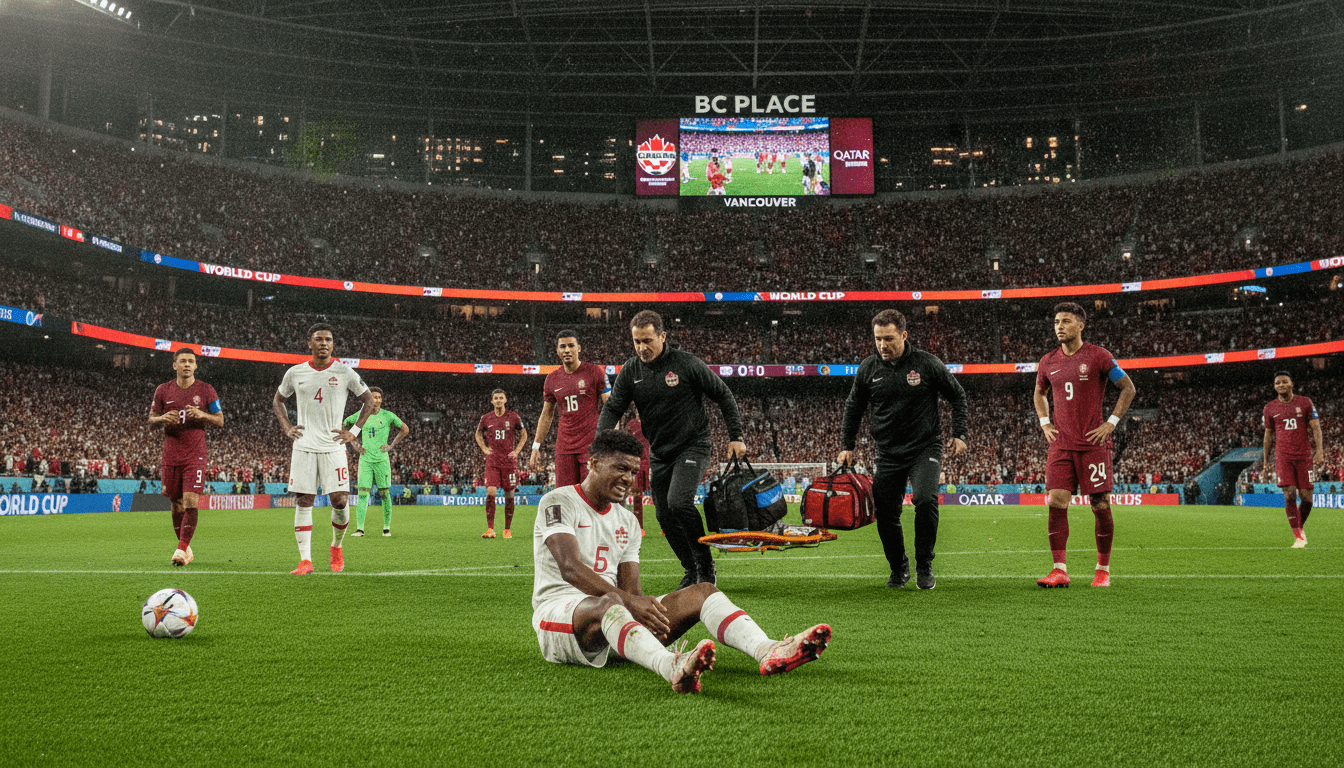
Canada 6-0 Qatar: Marsch’s side delivers historic World Cup rout in Vancouver
Canada routs Qatar 6-0 on June 18, 2026, at BC Place, a win that marked the country’s first World Cup victory and thrust coach Jesse Marsch’s “Belief” philosophy into the spotlight.
Canada stamped its authority on the 2026 World Cup on June 18, 2026, with a 6-0 victory over Qatar in Vancouver that became the nation’s first-ever World Cup win. The Canada 6-0 Qatar scoreline arrived before a packed BC Place and followed an opening draw in Toronto, putting the hosts on the brink of a top spot in their group. Jesse Marsch’s emphasis on relentless, forward football — often described by the coach as built on “Belief” — was evident throughout the match and in the national reaction that followed.
Record crowd and national moment
52,497 spectators, most clad in red, filled BC Place and lined Vancouver’s streets before kickoff on June 18, 2026. The atmosphere reflected the weight of the occasion for a country hosting matches across the tournament and seeking a breakthrough on football’s biggest stage.
Attendance figures and the presence of high-level officials underscored the significance of the result for Canada’s sporting profile. Fans and local leaders alike treated the evening as a defining moment for soccer’s growth in the country.
Early pressure produced quick rewards
Canada began the match with aggressive pressing and purpose, creating sustained pressure that prevented Qatar from settling into possession. Cyle Larin opened the scoring in the 16th minute, and the hosts amplified their intensity after the breakthrough.
Jonathan David added to the tally before halftime, including a volley that doubled Canada’s lead and shifted momentum decisively. By the break the match already felt one-sided, the home team having established control through speed and coordinated pressing.
Second-half escalation and six-goal finish
The second half saw Canada continue to attack with urgency and precision, tallying additional goals that reflected both clinical finishing and sustained dominance. Nathan Saliba scored in the 64th minute and celebrated by honoring injured teammate Ismael Koné, underlining the emotional stakes of the evening.
An own goal by Mohamed Al‑Mannai and a late strike by David completed the 6-0 scoreline, as Canada recorded 32 shots and never relaxed its pursuit of further opportunities. The margin transformed the match from a routine group fixture into a statement performance for the hosts.
Koné injury and red card drama
The match was marred by a serious injury to Ismael Koné after a challenge by Qatar’s Assim Madibo, which left Koné stretchered off and later treated in hospital for a broken leg. The incident prompted an immediate red card for Madibo and a lengthy stoppage while medical teams attended the player.
Both Madibo and Qatar coach Julen Lopetegui issued apologies to Koné, and the scene sparked heated exchanges between the teams’ benches during and after the match. Marsch described the moment as shocking but emphasized the squad’s collective response in rallying around their injured teammate.
Marsch’s message and national identity
After the victory Jesse Marsch framed the result as part of a larger project to change football culture in Canada, citing the need for belief and identity across the sport. The coach, who brought a high‑intensity approach from previous club roles, argued that matches like the one in Vancouver are essential to build lasting momentum.
Marsch’s insistence that the tournament is more than a series of games resonated with supporters and media, who interpreted both the emphatic win and his remarks as evidence that Canada’s ambitions in football are expanding. The coach’s line that “Canada is now a football nation” was repeated widely as a sign of newfound confidence.
Group implications and road to the knockout stage
The result puts Canada in a favorable position in its group ahead of the final group match against Switzerland, with a draw likely sufficient to secure top spot and keep the knockout-stage home advantage. The outcome alters the tactical calculus for both Canada and its remaining opponents in the pool.
Beyond immediate qualification scenarios, the victory increases expectations for the host nation as the tournament progresses. Organizers, fans and federation officials will now face the practical and symbolic task of sustaining performance and managing the emotional fallout from the injury to a key player.
Canada’s 6-0 win over Qatar will be remembered for its decisive scoreline and for the juxtaposition of elation and concern that followed. The result delivered a long-sought first World Cup victory for the country while raising urgent questions about squad depth and recovery as the tournament moves into its knockout phase.
