
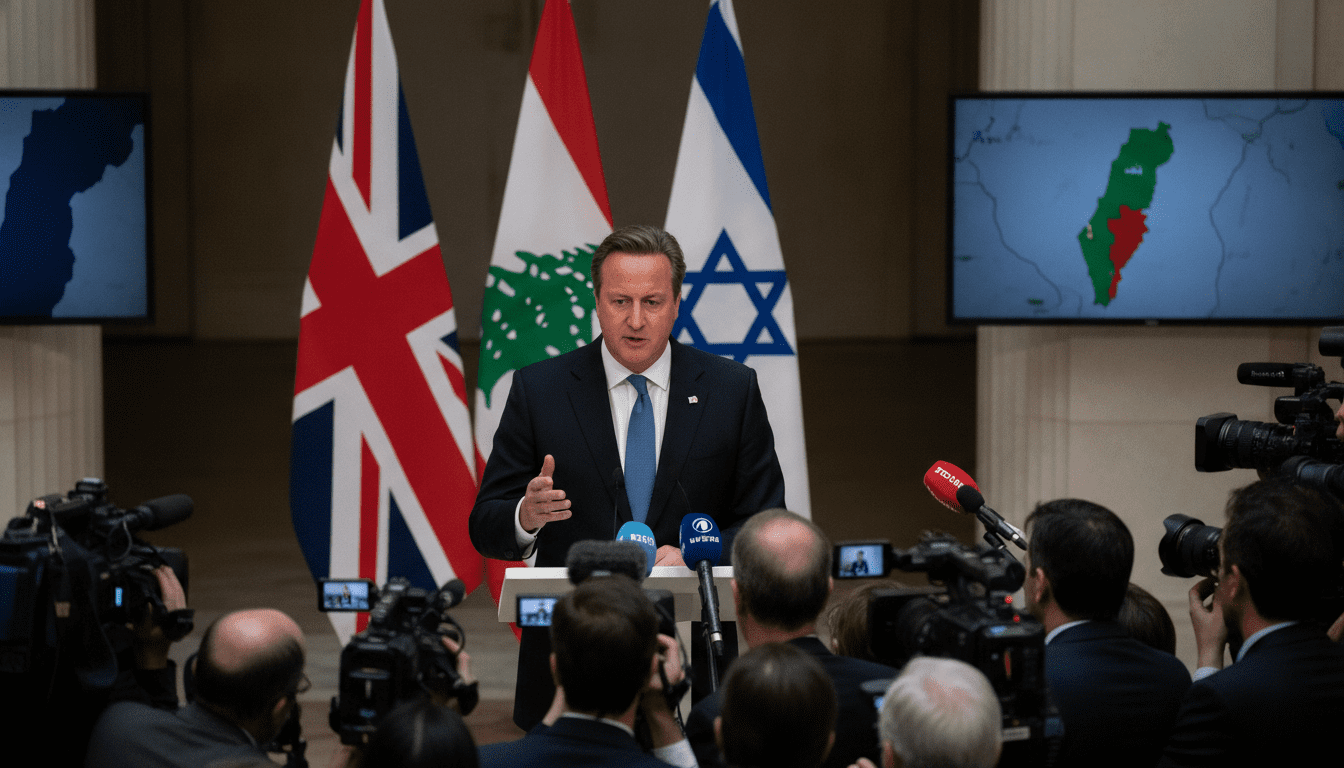
UK Minister Urges Israel to Withdraw from Southern Lebanon to Let Displaced Families Return
Britain’s International Development Minister Jenny Chapman on June 19, 2026 called on Israel to withdraw from southern Lebanon so families displaced by three months of war can return home.
Jenny Chapman said “Israel should withdraw from southern Lebanon” in a message shared on social media on June 19, 2026, directly tying the call to the urgent need for displaced civilians to go back to their communities. The minister framed the withdrawal as a necessary step to reopen access to homes, services and humanitarian assistance after three months of fighting that has uprooted thousands. Her statement signals a sharpened UK focus on civilian protection and the immediate humanitarian consequences of the cross-border conflict.
Chapman’s public appeal and official role
Jenny Chapman, Britain’s International Development Minister, used a public social media post to press for Israeli withdrawal from southern Lebanon.
Her position places the request within the remit of UK foreign and humanitarian policy, underlining London’s concern for civilian displacement and aid access during the conflict.
The message was circulated widely on June 19, 2026 and emphasized the link between military movements and the ability of displaced families to return. UK officials have increasingly highlighted civilian protection in recent weeks as a central element of their diplomatic engagement.
Scale and impact of displacement after three months of war
Humanitarian sources and local reports indicate that large numbers of civilians fled border areas amid months of escalation, leaving homes, schools and businesses empty.
Displacement has strained shelter capacity in safer regions, and families report disrupted access to water, healthcare and income that complicates any return.
Reconstruction of damaged homes — when possible — and clearance of unexploded ordnance are typically required before returns can be safe and sustainable. Chapman’s demand frames withdrawal as the immediate prerequisite to these longer-term steps.
Humanitarian access and aid delivery challenges
Aid agencies have repeatedly warned that active frontlines and restricted access hinder distribution of food, medicine and shelter materials.
A withdrawal from southern Lebanon, Chapman argued, would reduce barriers to relief convoys and allow organizations to scale up assistance in affected towns and villages.
Humanitarian workers also cite protections for medical facilities and safe corridors as critical to reduce mortality and prevent further displacement. Chapman’s public call aligns with appeals from relief groups for unimpeded access.
Diplomatic signals and international reaction
Chapman’s statement is a visible expression of British policy but joins a chorus of international actors urging restraint and protection of civilians.
Governments and multilateral bodies frequently call for de-escalation; public requests such as this aim to increase diplomatic pressure on parties to the conflict.
How other states and international organizations respond in the days after June 19, 2026 will affect whether Chapman’s appeal becomes part of coordinated pressure or remains a national statement with limited immediate effect.
Security considerations along the border zone
Military authorities on all sides emphasize security concerns that complicate any withdrawal proposal, citing threats from armed elements operating near population centers.
Planned or uncoordinated movements can create security vacuums or provoke renewed clashes, which is why many stakeholders call for carefully negotiated, verifiable steps.
Any withdrawal would likely need accompanying arrangements — monitoring mechanisms, timelines and guarantees to prevent new flare-ups — to ensure that displaced people can return safely and that local stability is maintained.
Next diplomatic steps and potential outcomes
Chapman’s public call may prompt further diplomatic engagement by the UK, including discussions with allies, regional partners and international institutions.
Follow-up could include formal demarches, participation in multilateral statements or quiet diplomacy aimed at negotiating conditions for civilian return.
Implementation will depend on willingness by the parties involved to agree to terms, the security dynamics on the ground and the capacity of humanitarian agencies to receive and support returnees.
The minister’s appeal underscores a central humanitarian imperative: enabling families uprooted by three months of fighting to return to their homes safely and with the basic services they need.
