
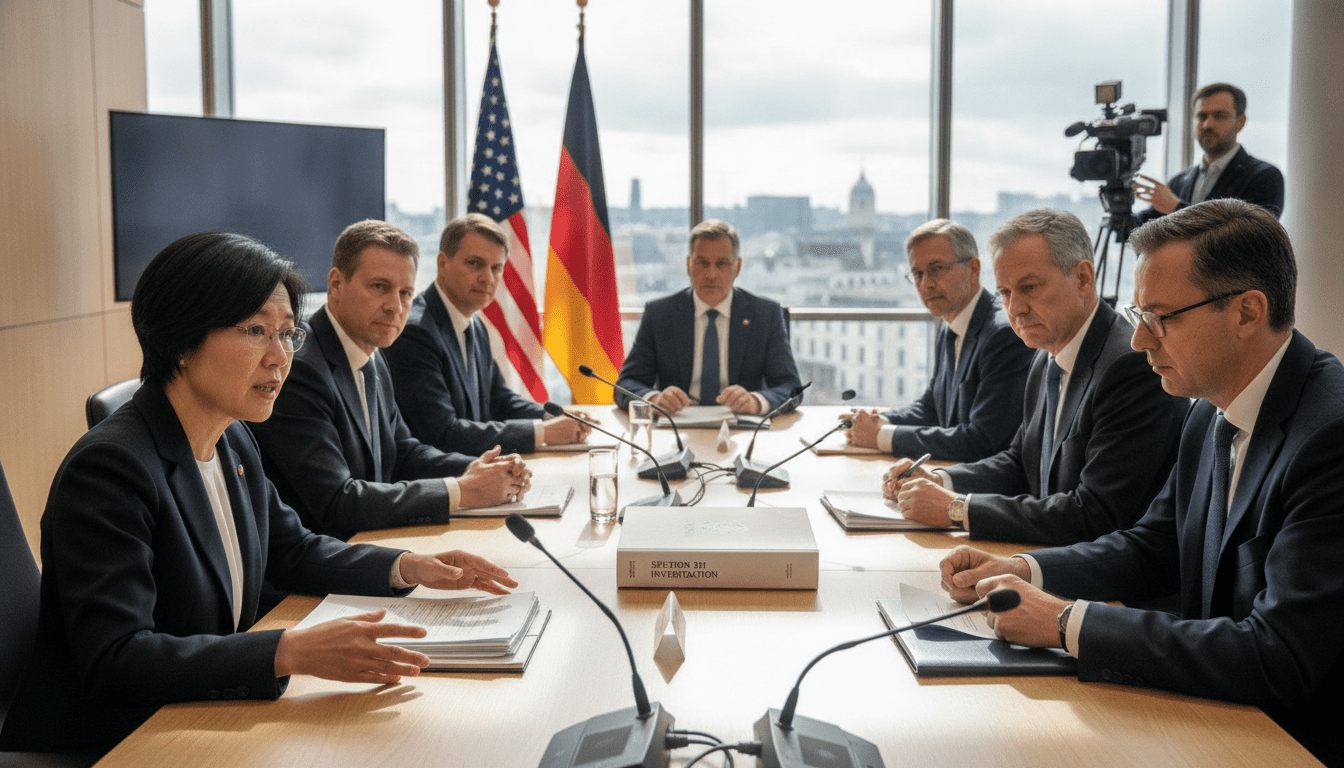
U.S. Launches Trade Investigation into German Drug Prices Under Section 301
U.S. opens a Section 301 trade investigation into German drug prices, probing whether Germany underpays for innovative medicines—possible tariffs loom.
The United States has launched a formal trade investigation into German drug pricing under Section 301 of the 1974 Trade Act, alleging that Germany may be paying persistently low prices for innovative medicines. U.S. Trade Representative Jamieson Greer said the probe will examine whether American patients are bearing an unfair share of research and development costs. The investigation raises the prospect of tariffs if Washington concludes that German pricing is discriminatory or harmful to U.S. interests.
U.S. rationale and legal basis
The U.S. action invokes Section 301, a statute used to address foreign trade practices deemed unjust or discriminatory by the United States. Greer framed the inquiry as a response to concerns that U.S. consumers subsidize pharmaceutical innovation through higher prices while Germany maintains lower reimbursement levels for new drugs. Officials said the inquiry follows months of bilateral talks that, according to USTR statements, did not resolve those concerns.
Greer also referenced a precedent in which Washington reached an agreement with the United Kingdom in April, urging Germany to enter constructive negotiations to rebalance cost-sharing. The U.S. statement cited fears that pending German reforms could deepen the disparity by further reducing public spending on innovative pharmaceuticals. That policy context, the U.S. argues, underpins the legal review and potential remedies.
German health reform at the center
Germany’s government is pursuing a broad health reform aimed at closing a projected €20 billion shortfall in statutory health insurance finances, and pharmaceutical spending is one of the areas targeted for savings. The reform proposals include a dynamic manufacturer rebate designed to require drugmakers to contribute when prices rise faster than insurers’ revenues. Health Minister Nina Warken has proposed exemptions for companies that conduct clinical trials in Germany, a carve-out intended to preserve early patient access to new therapies.
Proponents of the reform in Germany frame the measures as necessary for fiscal sustainability and the protection of the insurance solidarity system. Critics in industry and some patient groups warn that deeper price controls or larger mandatory rebates could reduce incentives for companies to launch or study new treatments in Germany. Those domestic debates have become a focal point of the U.S. complaint.
Industry reaction and coalition negotiations
German officials and pharmaceutical industry representatives have entered negotiations to soften the impact of planned rebates, according to reporting from Reuters and industry statements. The governing coalition has signaled willingness to make the rebate mechanism more predictable for manufacturers, while still securing a contribution from the sector to shore up insurer finances. One proposal under discussion would add a fixed surcharge to the existing manufacturer discount framework to make liabilities more calculable.
Drugmakers have argued that an overly aggressive squeeze on revenues would undermine investment and could delay or limit patient access to innovative medicines. Government negotiators counter that the industry must share responsibility for containing public spending. The unfolding compromise will be watched closely in Washington as part of the broader assessment of whether German policy constitutes an unfair burden-shifting to U.S. buyers.
Trump administration’s broader trade posture
The investigation comes amid an assertive U.S. trade policy stance that has previously included tariffs and threats of steep duties. The current administration has publicly urged higher drug prices in Europe, contending that elevated U.S. prices help finance pharmaceutical research and development. Earlier measures announced by U.S. trade officials have ranged from a proposed global tariff to targeted threats of high duties on imports from specific countries.
U.S. leaders say trade remedies are a legitimate tool to address systemic pricing imbalances, while European officials view such steps as heavy-handed and potentially disruptive to transatlantic commercial relations. The specter of tariffs on medicines, even if limited or symbolic, could have wide political and economic consequences given the sensitivity of healthcare supplies and the integrated nature of pharmaceutical markets.
Procedure and timeline for the probe
The U.S. trade agency has set a short procedural timetable for public input and hearings. Written comments on German drug pricing will be accepted beginning June 25, 2026, and a public hearing is scheduled for September 2026, according to the USTR announcement. Depending on the evidence gathered and legal conclusions, the investigation could lead to recommendations for retaliatory measures, including tariffs or other trade remedies.
Both German officials and industry observers will have the opportunity to submit evidence and arguments during the comment period. Legal analysts say the process could stretch for months and that final outcomes would hinge on whether the U.S. can demonstrate that German policies are discriminatory or otherwise violate international trade obligations. Meanwhile, stakeholders on both sides of the Atlantic are preparing for intensive advocacy and diplomacy.
The trade investigation has injected a new element into an already contentious domestic debate over healthcare financing in Germany, and it adds international pressure to coalition negotiations over drug pricing reforms. The coming weeks of written submissions and the September hearing will be pivotal in shaping whether the dispute escalates to duties or is resolved through negotiation.
