
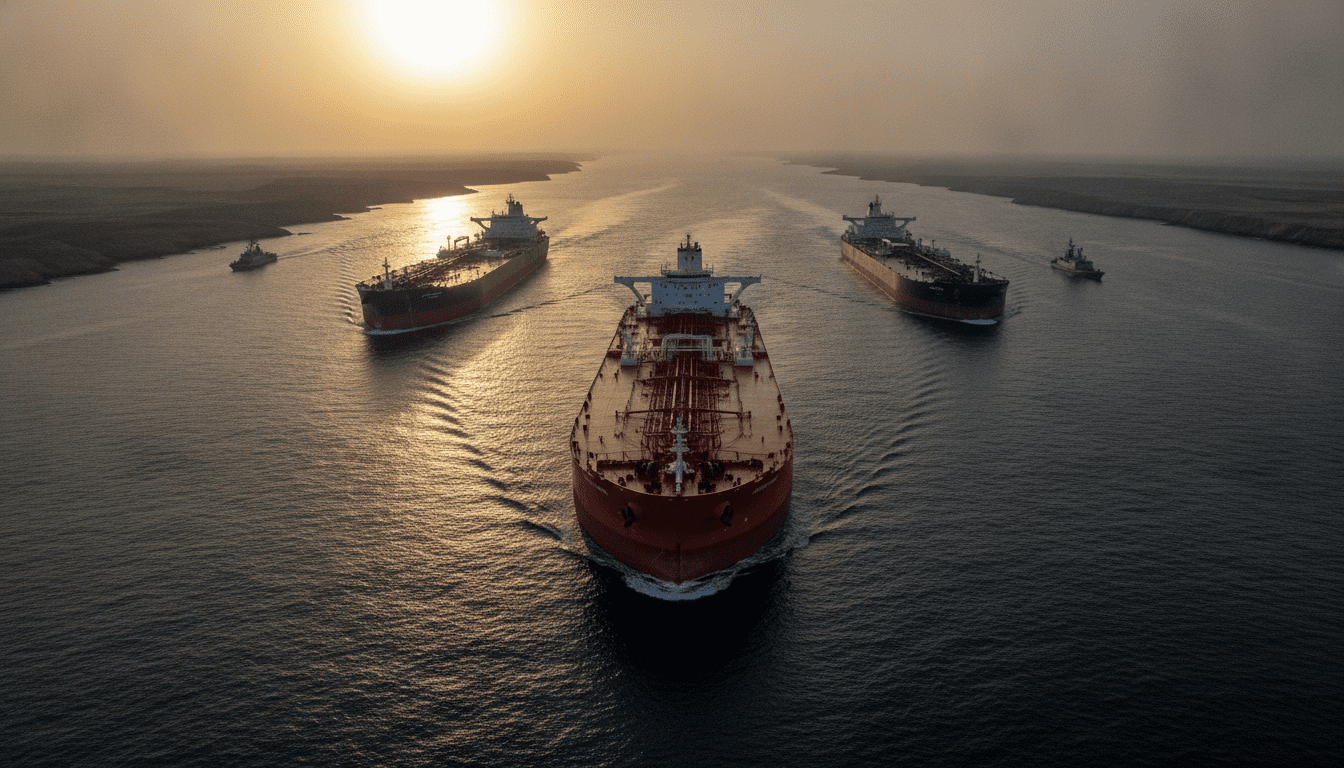
Three Saudi Supertankers Transit Strait of Hormuz After US-Iran Ceasefire
Three Saudi-flagged supertankers carrying six million barrels transited the Strait of Hormuz hours after a US-Iran ceasefire was signed, Reuters ship-tracking data shows, on June 17.
The move marked the largest set of departures from Saudi ports through the narrow waterway in weeks, according to an analysis of vessel movements. The sailings drew attention because the Strait of Hormuz is a critical artery for global oil flows, and the timing followed a high-profile diplomatic development.
Three Saudi-flagged vessels sail through Hormuz
Three supertankers flying Saudi flags left Saudi Arabian ports and passed through the Strait of Hormuz on June 17, carrying an estimated combined total of about six million barrels of crude oil. Ship-tracking feeds logged the transits within hours of a ceasefire agreement reached between the United States and Iran.
Shipping databases showed the vessels following the standard southbound and northbound lanes used in the strait, with AIS transponder data indicating no unusual changes to speed or course during the passage. The movements were recorded as part of routine commercial shipping but stood out for their timing and volume.
Reuters analysis identifies largest departures in weeks
A Reuters analysis of shipping movements found these sailings constituted the biggest departures from Saudi ports through the strait in recent weeks. The aggregate cargo size was notably larger than typical single-vessel loads recorded in the same interval, amplifying interest from market observers and regional security monitors.
Maritime tracking services and commercial intelligence firms provided the raw vessel positions and port calls that underpinned the analysis. Industry sources working with the data cautioned that individual ship manifests are commercially sensitive, but AIS and port-clearance records allow reliable estimates of cargo volumes.
Timing tied to US‑Iran ceasefire announcement
The sailings occurred hours after officials from the United States and Iran signed a ceasefire deal, an alignment that maritime analysts said was likely not coincidental. While shipping companies plan loadings and sailings days or weeks in advance, carriers and charterers can accelerate or delay sailings in response to shifts in security risk and market conditions.
Officials from the parties to the diplomatic agreement had not publicly linked the ceasefire text to the specific ship movements, and there was no immediate indication that the transits reflected a sudden change in routing policy. Still, the rapid succession of departures drew scrutiny from traders and observers weighing the potential for stabilized regional security to ease risk premiums on oil shipments.
Implications for oil markets and regional trade
The passage of large volumes of crude through the Strait of Hormuz is significant because the waterway serves as a major chokepoint for energy exports from the Gulf. Market participants monitor transits for signs of increasing export flows or shifts in tanker allocations that could influence short-term freight rates and crude availability.
Traders and analysts said they would watch weekly shipping tallies and port-dispatch data for confirmation of an uptick in Saudi loadings. Any sustained rise in transits from the kingdom could be interpreted as a signal that logistical constraints or risk-averse routing have eased, but officials and commercial sources stressed that a single day of sailings does not on its own constitute a durable trend.
Security posture and commercial safeguards
Regional navies and commercial operators routinely coordinate to maintain safe passage through the strait, employing convoy-like spacing and adhering to internationally agreed transit lanes. Shipping companies also adjust insurance, routing, and crewing decisions based on perceived threats and diplomatic developments.
While the recorded transits showed no operational disruptions, insurers and charterers typically reassess cover and voyage orders in the wake of major political agreements. Maritime security firms and flag-state authorities continue to provide advisories and escorts where necessary, and vessel operators remain focused on minimizing navigational risk while preserving commercial schedules.
The transits on June 17 underscored how closely maritime commerce in the Gulf remains intertwined with geopolitical events, and how rapid shifts in diplomatic dynamics can prompt measurable responses in shipping activity. Observers will continue to track vessel movements and official statements for signs that the ceasefire translates into sustained reductions in risk for oil exporters and tanker operators.
