
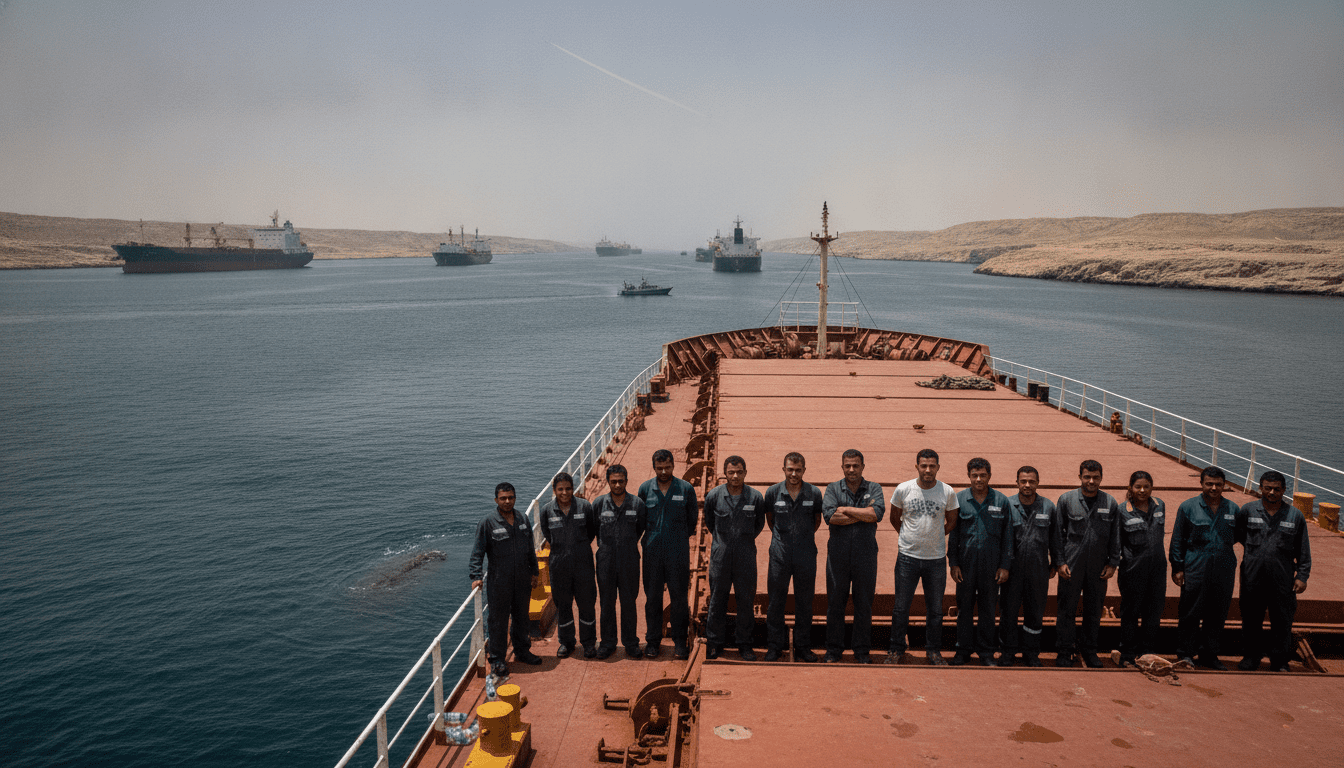
Tanker crews stranded as Strait of Hormuz reopens briefly amid conflict and insurance fears
Seafarers stranded off the Strait of Hormuz face renewed danger and economic strain as a temporary reopening is announced; crews and owners weigh the risks of transit.
The opening: a personal account
When 27-year-old seaman Vineet Sharma finally found internet service at the end of May, he told his fiancée the ship would be ordered through the Strait of Hormuz, the most perilous shipping lane in the world. The tanker on which Sharma serves as an electro-technical officer had been anchored near Khor Fakkan for weeks with hundreds of vessels waiting to transit. With Iran’s forces intermittently blocking the waterway since the outbreak of war, crews have spent months at anchor, uncertain whether to attempt passage.
A deadly attack increases crew apprehension
The immediate spark for widespread alarm was a strike by a U.S. warplane on a tanker that had called to Iran to load cargo, an attack that killed three Indian sailors. That incident hardened fears aboard many ships, who said their greatest worry was not only direct strikes but the speed and lethality of modern weapons. Even when captains and officers urged calm, crew members debated evacuation plans and whether lifeboats could outrun a missile.
Fertilizer shipments and supply chains under pressure
The tanker carrying Sharma was bound for Bandar Imam Khomeini to load 12,000 tonnes of liquid ammonia, a feedstock for fertilizer production. Disruptions in the Strait of Hormuz have already constricted supplies of oil, gas and fertilizer to large importers such as India, raising questions about crop inputs and food security. For many shipping companies, the decision to run through the passage has been framed as both an economic necessity and, in some quarters, a patriotic act to keep vital supplies moving.
Owners, insurers and crews: who decides to transit?
Shipowners and insurers, not the crew, ultimately decide whether a vessel will risk the passage, industry representatives say. Crewing firms and captains can advise and persuade, but the financial backers determine the course. That calculus includes the availability of insurance: as long as underwriters will not declare the route insurable, ship operators face steep premiums or are unable to obtain coverage at all, keeping many vessels at anchor.
Human cost beyond combat: abandoned ships and unpaid wages
The war has compounded an existing maritime crisis in which hundreds of vessels were abandoned last year, leaving thousands of seafarers without pay or safe repatriation. Industry figures show hundreds of ships were left in port by insolvent owners, and thousands of sailors endured months without wages, food or passage home. That shadow problem has worsened the psychological toll on crews now forced to choose between returning to sea for pay and staying ashore without income.
Crewing companies sound the alarm on mines and long-term change
A Mumbai-based crewing firm that represents thousands of seafarers warned that the risk of naval mines and further strikes has altered perceptions of the Gulf for the long term. Its founder said insurers and owners are increasingly treating major choke points as potential combat zones, prompting some energy exporters to consider alternate routes or infrastructure adjustments over the coming decades. Captains who once feared only pirates now contend with the possibility of state-directed attacks.
Prospect of a brief opening
A memorandum reportedly scheduled for signing in Switzerland was presented as a first step toward a ceasefire and a limited reopening of the Strait of Hormuz for an initial 60-day window. The pledge to allow transit, even temporarily, prompted calls from some leaders for ships to restart engines and resume movement. For fleets anchored in the Gulf, the announcement offered immediate relief and a chance to resume commercial schedules, but it stopped short of restoring long-term confidence.
Crew choices and economic realities
For seafarers like Sharma, the decision to return to sea is driven largely by economics: wages earned at sea often support extended families and local communities. Sharma returned home to his Himalayan village to rest briefly before planning to go back to work; he estimated one month’s leave at most. For many of his colleagues, there is no easy alternative to life at sea despite the risks, and the interplay of owner directives, insurance availability, and geopolitical developments will continue to dictate their movements.
Final paragraph
The temporary reopening of the Strait of Hormuz may ease immediate congestion and supply disruptions, but crews and operators warn that a full return to normalcy is far from assured; for tens of thousands of seafarers, the choice between livelihood and safety will remain a fraught one in the months ahead.
