
Vietnam cat meat trade exposed as police seize more than 400 stolen cats in Ho Chi Minh City
Animal welfare groups say a mid‑June raid uncovered an extensive Vietnam cat meat trade, with hundreds of cats recovered and several detained.
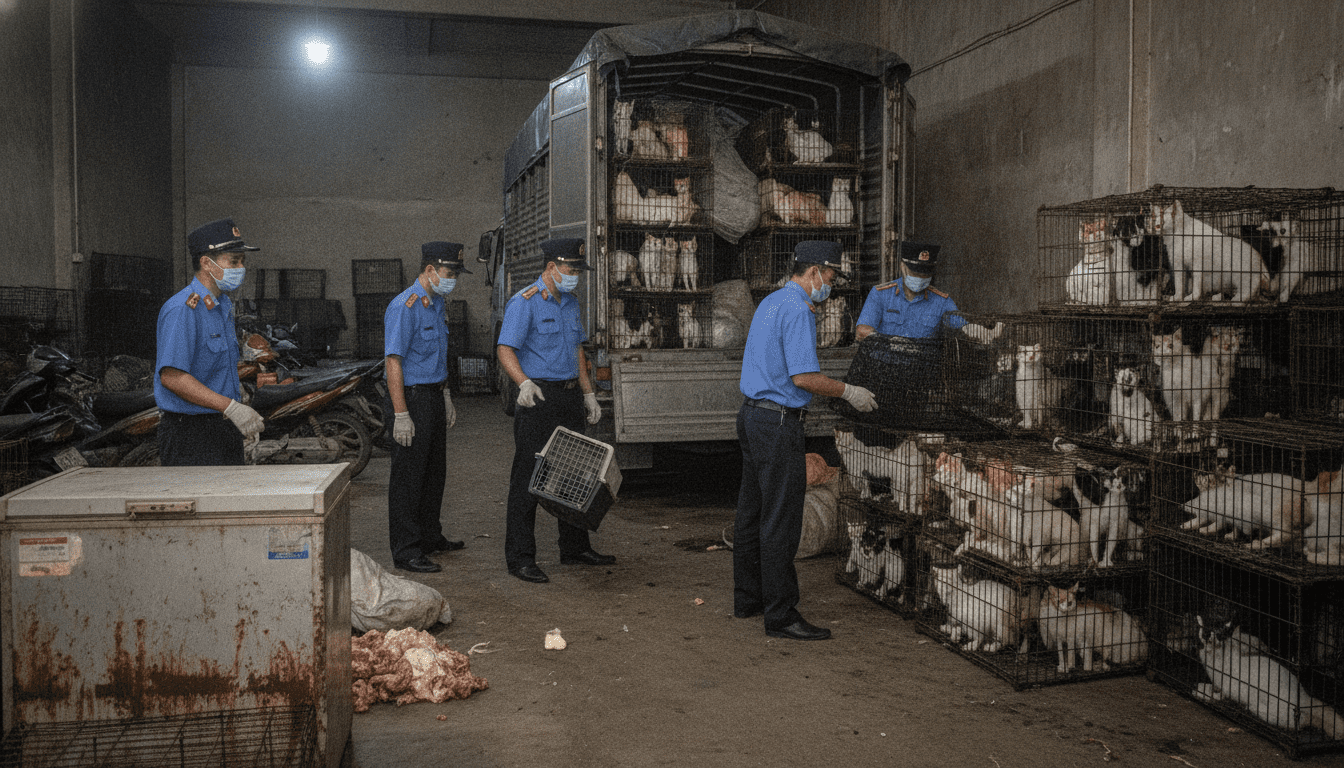
Police in Ho Chi Minh City recovered more than 400 cats during a coordinated mid‑June 2026 operation that exposed what animal welfare groups called the enormous scale of the Vietnam cat meat trade. The multiday raid, carried out around June 15–16, resulted in dozens of animals being reunited with owners, dozens more dying from neglect, and the detention of nine suspects, authorities and campaigners said. Local criminal police reported live animals found in dozens of cages and dead cats stored in ice‑filled containers, highlighting organized collection and transport networks operating across the south of the country.
Police operation uncovers cages, frozen carcasses
The Ho Chi Minh City Criminal Police Division said officers discovered 45 cages holding roughly 400 live cats at a primary site and separate premises where 21 live animals were recovered. Investigators also found four foam containers filled with ice that held about 80 dead cats, indicating on‑site storage for the meat trade. Officials detained nine people in connection with the ring as the inquiry continues to establish roles, routes and customers.
Suspects admit three‑year collection across southern provinces
Police statements indicate the suspects confessed to capturing and gathering cats over the past three years in multiple southern provinces, including Ho Chi Minh City, Tay Ninh and An Giang. Authorities are tracing reports of pet thefts that initially prompted the probe and are seeking to determine whether stolen animals were sold locally or moved to other markets. Investigators are also examining records and permits held by traders to establish whether legal requirements for animal origin documentation were met.
Owners, volunteers and vets respond to crisis
More than 40 of the rescued cats were reunited with their families after the operation, according to animal welfare organizations assisting on the ground. Many animals arrived in poor condition, and several dozen of those rescued died from the effects of overcrowding, dehydration and exposure before they could be treated. Veterinary teams and volunteers from groups such as Vietnam Cat Welfare joined international partners to triage, treat and shelter surviving animals, with campaigners describing a sustained community response as families searched for missing pets.
Animal groups say bust highlights industry’s scale
International and local animal welfare groups described the raid as a stark example of the size and organization of the Vietnam cat meat trade. Karanvir Kukreja, who leads a campaign against dog and cat meat consumption for Humane World for Animals, said the seizure underlines long‑standing concerns about theft linked to meat markets. Campaigners said the discovery of transport containers and the geographic scope of the operation point to systematic collection and distribution rather than isolated incidents.
Legal status and calls for reform
Consumption of dog and cat meat remains legal in Vietnam under national law, though vendors are required to hold permits verifying animals’ provenance. Some cities, including Hoi An in central Vietnam, have worked with global welfare groups to curb local demand and restrict sales. Vietnamese officials have previously indicated plans to reform aspects of the legal framework to better protect pets and owners’ rights, a stance that gained renewed attention after neighboring South Korea enacted a national ban on dog meat in 2024. Advocates say clearer rules, better enforcement and stronger penalties for theft are necessary to deter organized trafficking.
Community reaction reflected both relief and outrage after the raid, as owners reclaimed beloved pets while others mourned animals that could not be saved. A representative from Vietnam Cat Welfare described the scenes at recovery centers as emotionally charged, with many families arriving to search for pets and volunteers working long shifts to stabilize animals. The human cost, campaigners stressed, extends beyond lost animals to the emotional trauma of owners and the public health risks posed by unregulated slaughter and transport.
Investigators are expected to expand inquiries to follow supply routes and identify buyers, with prosecutors likely to determine whether existing statutes provide appropriate penalties for theft, animal cruelty and illegal trade. Police told local media that forensic and documentary evidence recovered at the scenes will inform subsequent charges and possible wider raids.
International groups say the raid should prompt renewed public discussion about demand and enforcement, while local NGOs are urging authorities to fast‑track legal reforms and invest in public awareness campaigns. They also call for measures to improve microchipping and registration systems so stolen pets can be reunited more quickly and traffickers can be traced through records.
The seizure in Ho Chi Minh City has intensified scrutiny of the Vietnam cat meat trade and reignited debates over cultural practices, animal welfare and legal protections for companion animals. As probes continue and communities mobilize to care for survivors, authorities face mounting pressure to translate evidence from the raid into tougher action against theft networks and clearer safeguards for pets and their owners.
