
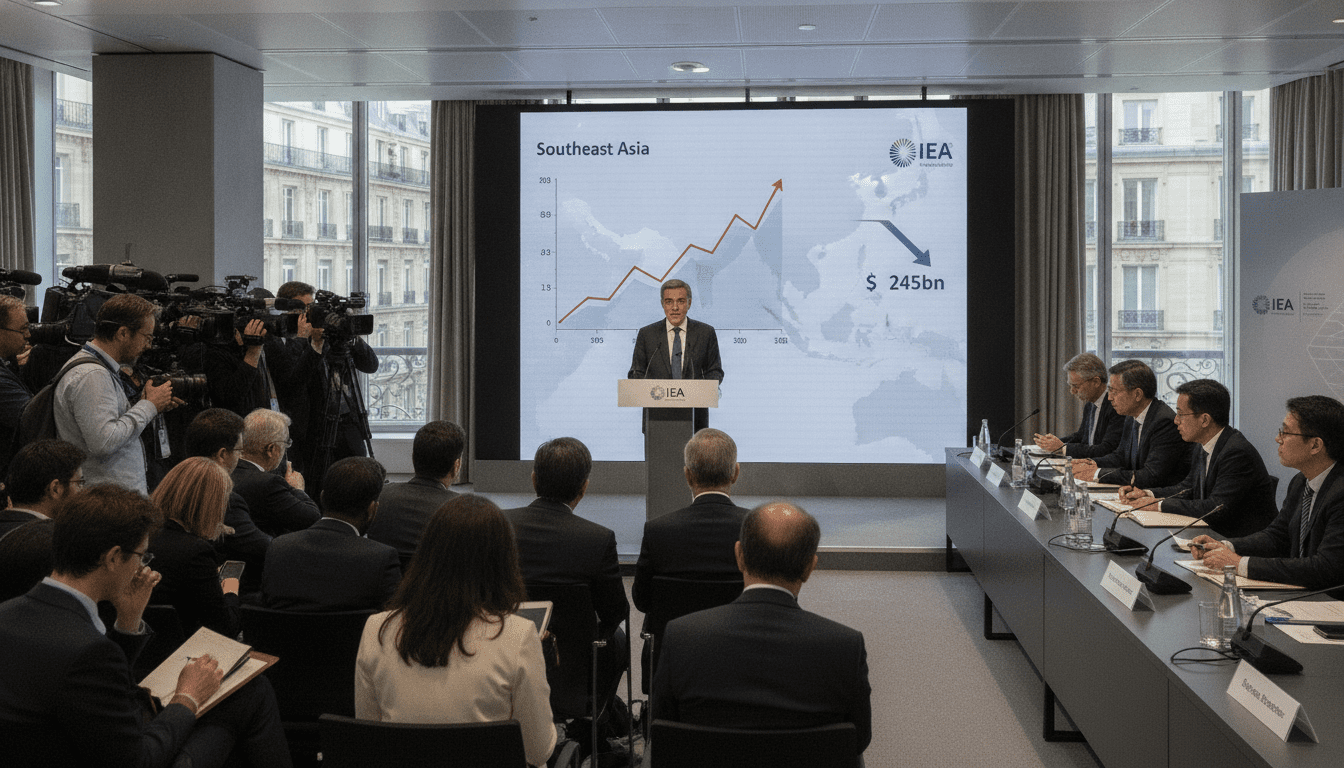
Southeast Asian energy costs could triple by 2035, IEA warns
IEA warns Southeast Asian energy costs could surge toward $245bn by 2035 without faster diversification; report urges renewables, nuclear and new supply routes and trade.
Southeast Asian energy costs are at risk of a sharp, sustained rise unless governments accelerate diversification of fuels and supply routes, the International Energy Agency said in a new report. The IEA linked recent price shocks to disruptions tied to the US–Israeli war on Iran and to interruptions at chokepoints such as the Strait of Hormuz. The agency cautioned that without structural reforms the region’s import bill could climb from about $80 billion in 2024 to roughly $245 billion by 2035, altering inflation and growth trajectories across the region.
IEA projects steep increase in import bill
The IEA’s analysis lays out a scenario in which energy import costs rise threefold by 2035 under limited policy change. That projection reflects sustained high fossil fuel prices, growing demand for power and transport, and continued exposure to global supply disruptions. The agency warns policymakers that reliance on volatile international markets will materially increase fiscal and balance-of-payments pressures.
Supply disruptions traced to Middle East tensions
The report attributes much of the recent energy shock to disruptions linked to the US–Israeli war on Iran, including episodes when the Strait of Hormuz was effectively closed. Those events sent immediate ripple effects through fuel and shipping markets, pushing up regional fuel prices and contributing to higher consumer inflation. The IEA emphasizes that supply-route vulnerability, not only production capacity, drove much of the short-term market volatility.
Renewables and electric vehicles expanding rapidly
In response to higher costs and security concerns, Southeast Asian governments and private investors have stepped up deployment of rooftop solar, wind projects and grid-scale renewables. Electric vehicle sales are also rising across several markets, signaling a shift in transport demand that could reduce oil dependence over time. The IEA notes that these trends are positive but uneven, with progress concentrated in a handful of countries and urban areas.
Nuclear interest resurges amid security worries
Several countries in the region have reopened conversations about nuclear power as a way to diversify baseload generation and reduce exposure to fossil fuel markets. The report highlights renewed interest in small modular reactors and longer-term planning for larger nuclear plants in nations with regulatory frameworks and financing capacity. Analysts caution that nuclear expansion requires decades of commitment, stringent safety oversight and significant upfront investment.
Coal consumption spikes during interruptions
Despite growth in renewables, the IEA observed that coal use has increased during periods of supply disruption, complicating emissions-reduction efforts. Utilities have leaned on domestic or contracted coal to stabilize grids when gas or oil deliveries were interrupted, which undercuts climate goals. The agency warns that short-term coal rebounds can become entrenched without targeted policies to protect clean-energy gains.
Policy reforms and route diversification urged
To avoid the projected cost escalation, the IEA calls for comprehensive reforms that combine expanded clean energy deployment, more flexible grids and diversified import routes. Strengthening regional interconnections, boosting storage and implementing market reforms to attract private capital are among the recommendations. IEA leadership also stressed that improving fuel-stock management and developing alternative maritime corridors can reduce exposure to single-point failures.
The economic stakes are significant: higher energy import costs would feed through to manufacturing and household bills, eroding competitiveness and living standards across Southeast Asia. The report suggests that timely policy action, coordinated regionally and underpinned by finance for clean projects, could substantially lower the projected import bill and align energy security with climate commitments.
Ultimately, the IEA frames diversification as both an economic imperative and a strategic priority for Southeast Asian governments seeking to insulate their economies from future shocks. Policymakers face a narrow window to accelerate transitions, shore up supply chains and prevent an expensive return to fossil-fuel dependency.
