
SpaceX IPO Sends Valuation to $2.75 Trillion After Stock Surge
SpaceX IPO stock jumped to $209 per share, valuing the company at $2.75 trillion and briefly eclipsing peers as analysts warn of potential overvaluation and volatility.
Rapid market surge pushes SpaceX into top-five rankings
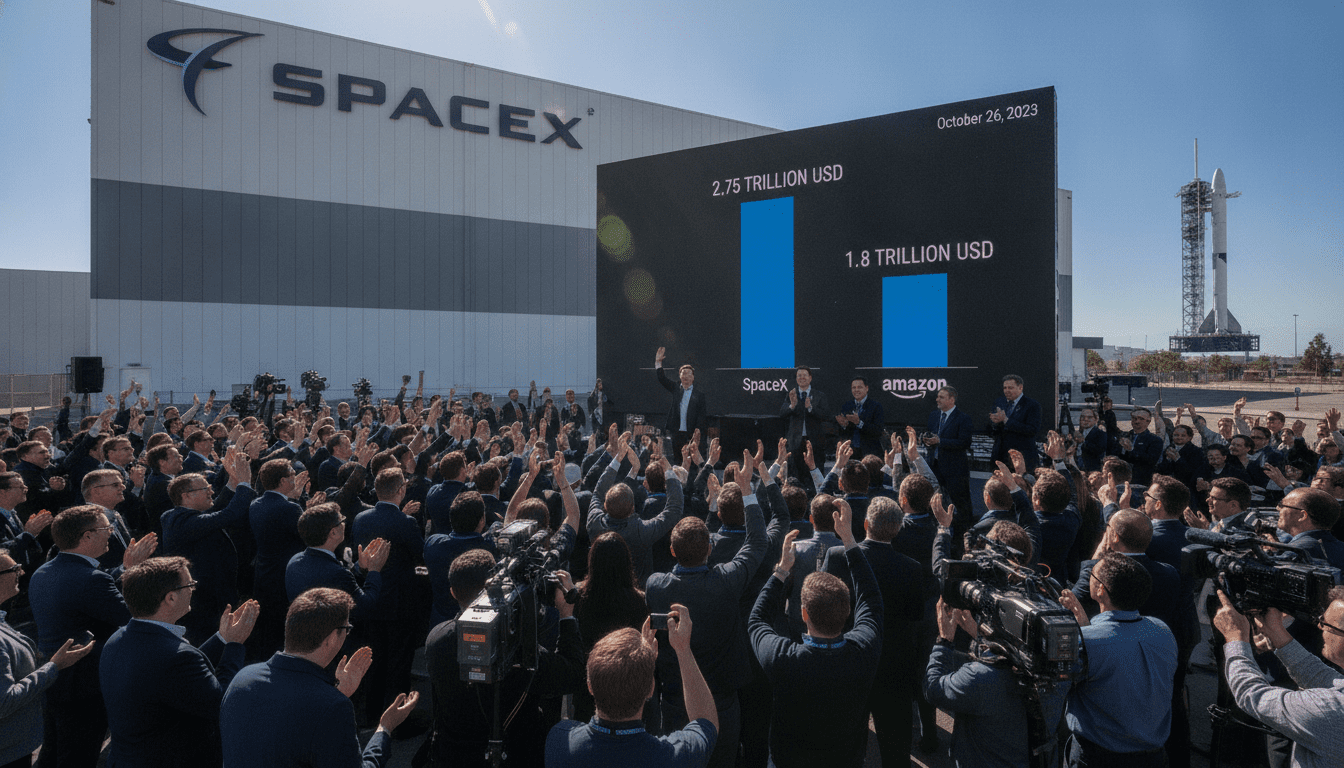
A sharp rise in SpaceX stock in the days after the SpaceX IPO lifted the company’s public market capitalization to about $2.75 trillion, according to exchange pricing that saw shares trade near $209. That level placed SpaceX among the world’s five most valuable publicly traded companies, trailing only Nvidia, Alphabet, Apple and, at times, Microsoft. Market watchers noted a period during the rally when SpaceX’s market value transiently surpassed rival Microsoft’s reported valuation.
The surge followed initial public trading that priced shares substantially lower, producing a swift market re-rating that has drawn intense attention from institutional and retail investors alike.
IPO structure and limited public float amplify price moves
SpaceX went public by issuing 555.6 million shares at an initial offering price of $135, creating an initial market valuation near $1.8 trillion at the debut. Only a small portion of the company’s equity is available for public trading — roughly five percent of the total implied value — a feature that can magnify price moves when demand outstrips supply.
The small float means that relatively modest buying or selling can cause outsized changes in the quoted share price, increasing the potential for abrupt gains or losses and complicating price discovery for large investors and index funds.
Elon Musk’s ownership and voting control remain concentrated
Founder and CEO Elon Musk retains a substantial economic stake in the company, holding about 42 percent of the equity, while control of voting power is heavily skewed: Musk’s holdings represent roughly 85 percent of voting rights. That concentrated voting structure exceeds the governance norms of many public corporations and consolidates decision-making authority in the hands of the founder.
Musk’s personal net worth has surged on paper with the SpaceX IPO and subsequent rally; estimates from private wealth trackers place his fortune well into the trillions of dollars, reflecting the market value of his stakes across the companies he controls.
Analysts caution that valuation may outpace fundamentals
Despite the headline valuations, several sell-side and independent analysts cautioned that SpaceX’s market price may be disconnected from near-term financial fundamentals. The company has reported a recent net loss approaching $5 billion, and with only a thin public float, valuation metrics such as price-to-earnings ratios are not meaningful in conventional terms.
Analysts pointed to the combination of substantial operating losses, concentrated insider control and limited liquidity as risks that could lead to sharp corrections if investor sentiment shifts or if large holders attempt to realize gains.
Index inclusions could sustain demand from passive funds
Market structure developments may, at least temporarily, support the stock’s elevated price. Index providers signaled that SpaceX is slated for rapid inclusion in major benchmarks including the Nasdaq-100, as well as global indices maintained by FTSE and MSCI. Those inclusions would force index-tracking exchange-traded funds and passive portfolios to buy shares in order to mirror the indices.
The prospect of automatic flows from passive funds has historically helped sustain demand for newly listed heavyweight names, but it also concentrates exposure in vehicles that may be compelled to trade at times that do not align with fundamental assessments.
Investor implications and market-watch priorities
For investors, the SpaceX IPO and ensuing rally present a mixture of opportunity and risk. Large institutional investors must weigh the liquidity constraints of a tiny float against the potential for index-driven demand, while retail investors face the possibility of rapid price swings driven by concentrated ownership and speculative flows. Corporate governance experts have also flagged the disparity between economic ownership and control as a factor that could affect minority shareholder protections.
Regulators and market participants will be watching trading volumes, short interest, and any disclosures from the company regarding future share sales or secondary offerings that could alter the public supply. The balance between structural demand from passive funds and concerns about valuation will likely determine whether this advance proves durable.
The SpaceX IPO has forever altered the landscape of the public technology and aerospace sectors by placing a space-focused company among the market’s largest names, but it has also raised fresh questions about market concentration, valuation discipline and the mechanics of public ownership in companies with unusually compact public floats.
