
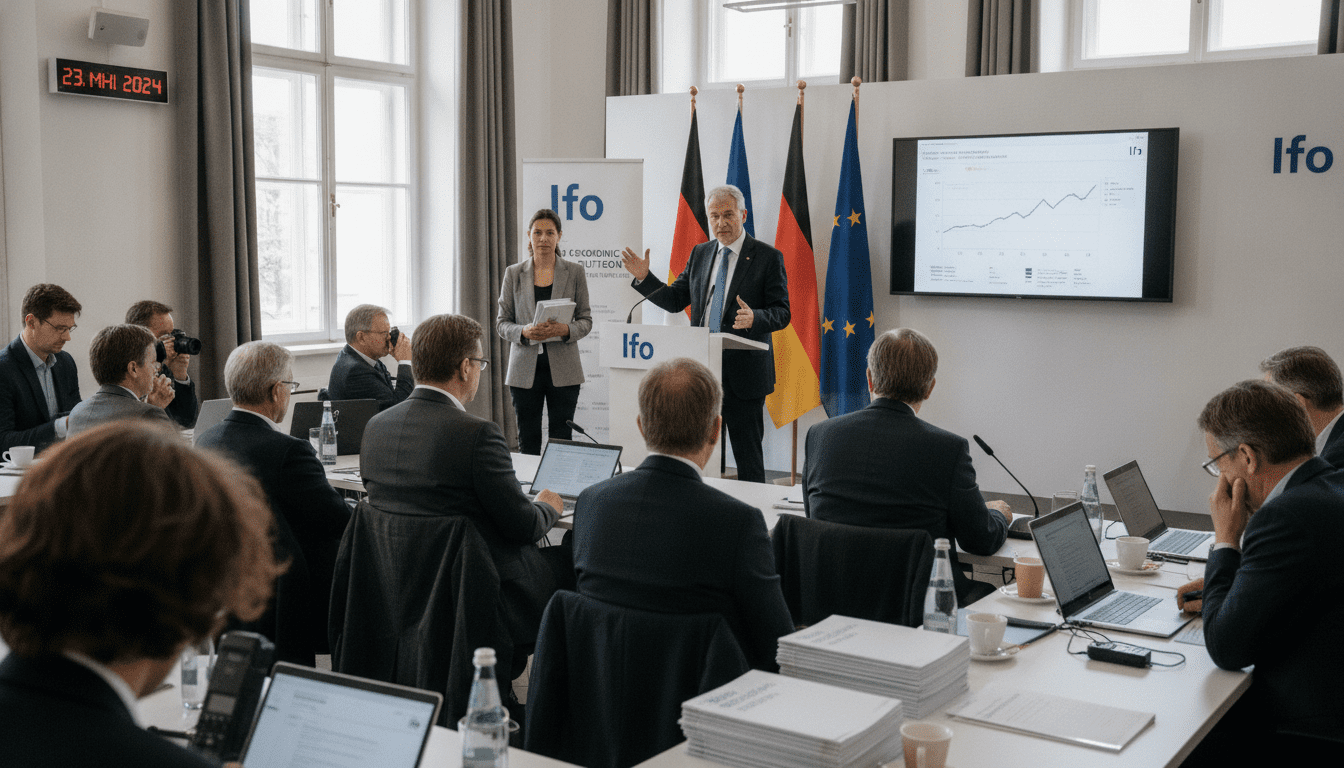
Ifo Institute Proposes Elterngeld Income Cap Cut to €50,000 in Budget-Saving Study
Ifo Institute report recommends lowering the Elterngeld taxable-income cap to €50,000, tying pensions to inflation and cutting subsidies to reduce federal spending.
The Ifo Institute has presented a budget-saving study commissioned by the Initiative Neue Soziale Marktwirtschaft (INSM) that recommends lowering the taxable-income threshold for Elterngeld to €50,000 and reconfiguring pension indexation to curb federal expenditure. The analysis, which quantifies potential savings across several program areas, also proposes cuts to the Mütterrente and targeted reductions in not-yet-approved subsidies.
Key fiscal proposals in the Ifo analysis
The report advocates an array of measures aimed at reducing near-term spending pressures in the federal budget. Central among them is a proposal to shrink the current Elterngeld income cap — now set at €175,000 taxable income — to a €50,000 threshold, which the institute says would significantly reduce the number of eligible recipients. The researchers additionally model a shift in pension indexing from wages to inflation and a phased reduction of the Mütterrente.
The study also proposes a uniform four-year, 15 percent annual cut to federal subsidies that have not yet been approved, and recommends channeling more resources into “productivity-enhancing investments” as a way to improve public finances further.
Ifo’s estimated savings and projections
In its calculations, the Ifo Institute assigns headline values to each of the major proposals. The institute estimates combined savings of around €20 billion from linking pensions to inflation and progressively reducing the Mütterrente. Reducing the pool of Elterngeld beneficiaries under the lower income cap is projected to save approximately €3 billion.
The report quantifies additional savings from cutting pending subsidies at roughly €31 million and suggests that a reorientation toward productivity-boosting investments could improve the fiscal situation by another €6 billion. The institute further states that the proposed package could yield significant annual savings by 2030. All figures are presented in the study’s summary and framed as scenario estimates.
Current Elterngeld and Mütterrente rules explained
Elterngeld functions as an income replacement for parents who temporarily step away from employment to care for a new child. Under current rules, the benefit generally replaces about 65 percent of the claimant’s previous net income, with monthly payments ranging from a minimum of €300 to a maximum of €1,800. The federal budget has allocated roughly €7.5 billion for Elterngeld in the current year.
Mütterrente payments, which the CSU successfully expanded in the governing coalition, provide additional pension credits for women for childcare years. The Ifo scenario models a reduction of the Mütterrente to 50 percent of its present level over the next four years as part of its consolidation pathway.
Political reactions and resistance
The study’s recommendations intersect with ongoing political debates. Federal Family Minister Karin Prien of the CDU has publicly rejected lowering the Elterngeld income threshold in recent statements, signaling resistance within the ministry to trimming parental benefits. On pension-related proposals, CSU leadership has indicated opposition to changes in the Mütterrente, with party figures defending the expansion negotiated in the coalition.
Ifo President Clemens Fuest emphasized urgency in the institute’s communication, arguing that reform packages should be set in motion now to take effect over the coming four years in order to avoid a sharp rise in net borrowing and state debt. His call for decisiveness frames the report as a prompt for policymakers rather than a policy blueprint already embraced by the government.
Budget trade-offs and investment emphasis
Beyond headline cuts, the Ifo report stresses reallocating savings toward investments that enhance productivity. The institute projects that concentrating on such investments could improve the federal fiscal balance by several billion euros, citing a €6 billion upside under the modeled scenarios.
The report also recommends that lawmakers weigh short-term consolidation against the longer-term economic effects of reduced social transfers and subsidies. That trade-off is likely to animate debates in the Bundestag and among social partners as the government refines its fiscal agenda.
Next steps for lawmakers and the public debate
The study serves primarily as an analytical input into the broader reform conversation rather than an immediate policy proposal with committed legislative sponsors. Lawmakers will have to assess the social and distributional consequences of lowering eligibility for Elterngeld and cutting components of pension support, and compare those consequences with alternative revenue or efficiency measures.
As the federal budget process advances, ministers and parliamentary groups will confront choices over which elements of the study — if any — to adopt, amend, or reject. Public responses from family policy stakeholders, pension organizations and regional political leaders can be expected to shape the pace and content of any reforms.
The Ifo Institute’s report brings fiscal consolidation back into the spotlight by offering concrete scenarios and numerical estimates, but translating those scenarios into enacted policy will require political consensus and careful consideration of social impacts.
