
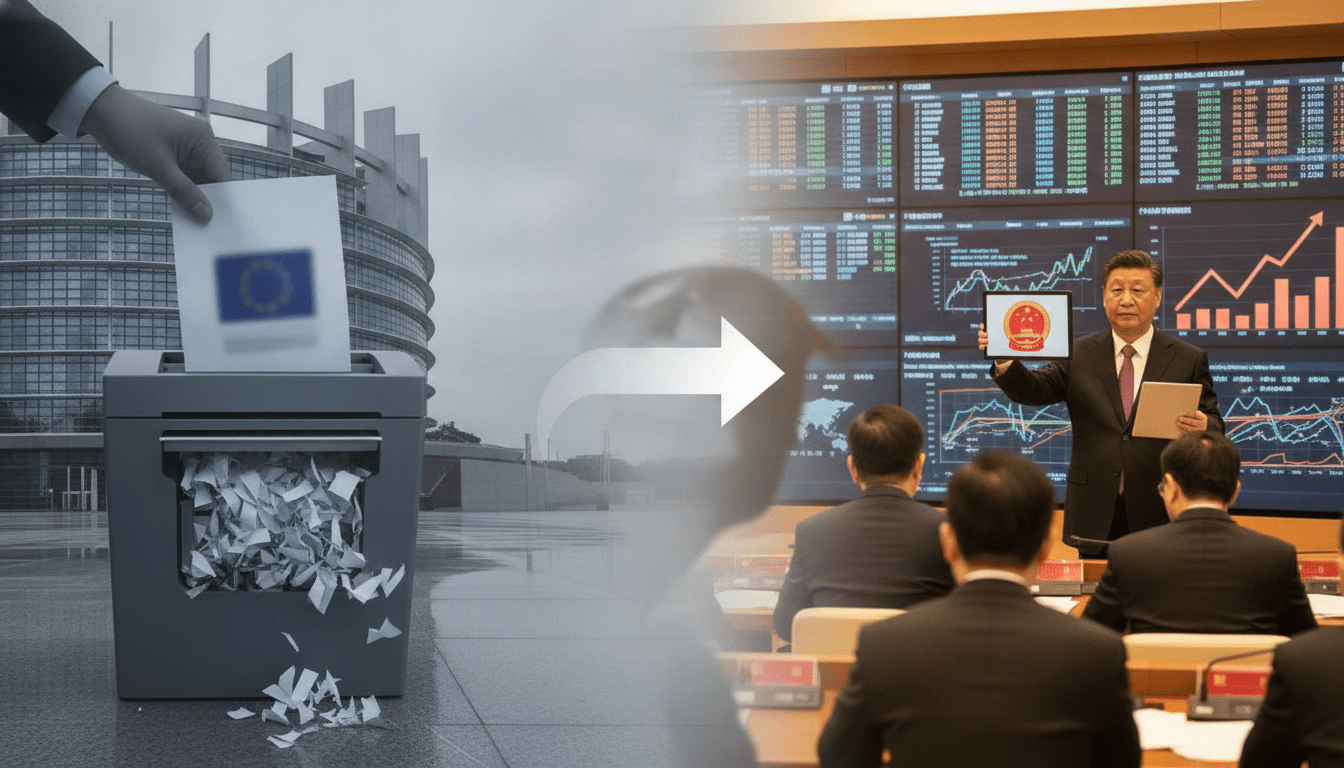
EU Eases Sustainability Reporting as China Tightens CSR Rules, Raising Global Competition Concerns
EU’s decision to scale back sustainability reporting obligations contrasts with China’s new CSR mandates for listed companies, intensifying debate over who will set global green standards.
Opening summary
Sustainability reporting has become a point of divergence between Brussels and Beijing, after the European Union moved to relieve many companies from detailed disclosure requirements while China rolled out mandatory corporate social responsibility rules for large listed firms. The policy shift has renewed industry and political debate about regulatory burden, competitiveness and who will shape future environmental and governance standards.
EU Eases Sustainability Reporting Obligations
European lawmakers recently adopted measures that scaled back planned reporting obligations under the Green Deal, citing excessive complexity and compliance costs for businesses. Proponents of the relief argued that smaller administrative burdens free companies to invest more in innovation rather than paperwork.
Opponents warned the rollback risks diluting Europe’s leadership in green technologies and may leave policy gaps that other jurisdictions exploit. The compromise nevertheless left suppliers under pressure: many firms that were exempt still must supply sustainability information to reporting customers, perpetuating data flows across value chains.
China Moves to Standardize CSR for Listed Firms
Beijing has implemented a parallel but opposite trend by standardizing and tightening CSR reporting requirements for many large, publicly listed enterprises. The new rules, introduced over recent years and recently reaching a compliance deadline, require companies to address a broad set of environmental, social and governance topics in a unified format.
The Chinese framework asks firms to report on issues ranging from greenhouse gas emissions and energy use to biodiversity, supply-chain resilience, research ethics and data protection. The rules also include unusual national priorities such as efforts to revitalize rural areas, aligning corporate disclosures with state policy objectives.
Companies Seek Uniform Standards Amid Conflicting Regimes
Businesses across regions have long sought clearer, harmonized standards to avoid juggling diverse voluntary frameworks and national rules, and that demand was one of the original drivers for EU-level reporting proposals. Corporates argued that differing requirements from investors, regulators and customers multiplied costs and distracted resources from operational priorities.
Yet geopolitical shifts and economic pressures since 2022 have changed the calculus. Some firms now favor lighter-touch regulation to preserve competitiveness, while others want stronger, consistent standards to provide clarity for long-term investments in low-carbon technologies. The result is a fragmented landscape in which companies must navigate both simplified EU mandates and stricter foreign regimes.
Experts Warn of China’s Industrial Scaling Advantage
Economists and policy specialists note that the regulatory differences matter because they interact with broader industrial policies, capital availability and scale advantages in ways that may accelerate China’s lead in certain green sectors. Observers point to China’s large-scale manufacturing, state-directed investment and willingness to sustain firms through early unprofitable growth phases as factors enabling rapid expansion of green chemistry, photovoltaics and electric vehicles.
Analysts caution that reporting rules alone will not overturn these structural strengths, but they can influence where standards, certification and market access evolve. If European firms withdraw from norm-setting processes, they may cede soft power over technical and sustainability standards to competitors who remain actively involved.
Enforcement Uncertainties in China
While Chinese law now prescribes CSR disclosures and attaches fines for non-compliance, enforcement practices vary and many new regulations take time to be implemented consistently. Penalties cited under the new regime include fines measured in millions of renminbi for companies and responsible individuals, but public records of enforcement actions remain limited as authorities calibrate their approach.
Industry watchers say enforcement is likely to be phased, with authorities initially offering guidance and flexibility before moving to stricter supervision. That gradualist approach can create ambiguity for multinational firms trying to assess compliance risk and align global reporting practices.
Political Debate in Brussels over Regulation and Bureaucracy
The EU’s decision to reduce reporting obligations reflects a broader political dispute over the balance between regulation and industrial competitiveness. Critics of the original proposals described them as overly prescriptive and burdensome, arguing that excessive detail produced little actionable benefit and risked stifling investment.
Supporters of strong disclosure counter that transparency is essential to steer capital toward decarbonization and to prevent greenwashing. The compromise in Brussels attempted to reconcile those aims by lowering paperwork for some companies while preserving core transparency goals, but the move has prompted concerns that Europe may be less able to export its regulatory model internationally.
The policy divergence is now prompting industry groups, standards bodies and national governments to revisit strategies for international coordination on sustainability metrics and technical norms. For many companies, the immediate challenge is practical: reconciling different reporting requirements while planning investments in cleaner technologies.
European firms and policymakers face a choice between prioritizing short-term relief from compliance costs and maintaining a robust rule-making presence to shape global standards. The outcome will influence where technological leadership and standard-setting power concentrate in the coming decade.
Ultimately, the contrasting trajectories on sustainability reporting in Brussels and Beijing underscore a larger competition over economic strategy and regulatory influence. How businesses respond to dual pressures — lighter-touch EU rules and stricter Chinese CSR mandates — will partly determine whether Europe preserves a leading role in green innovation or cedes ground to industrial competitors able to scale rapidly and align standards with state-backed investment priorities.
