
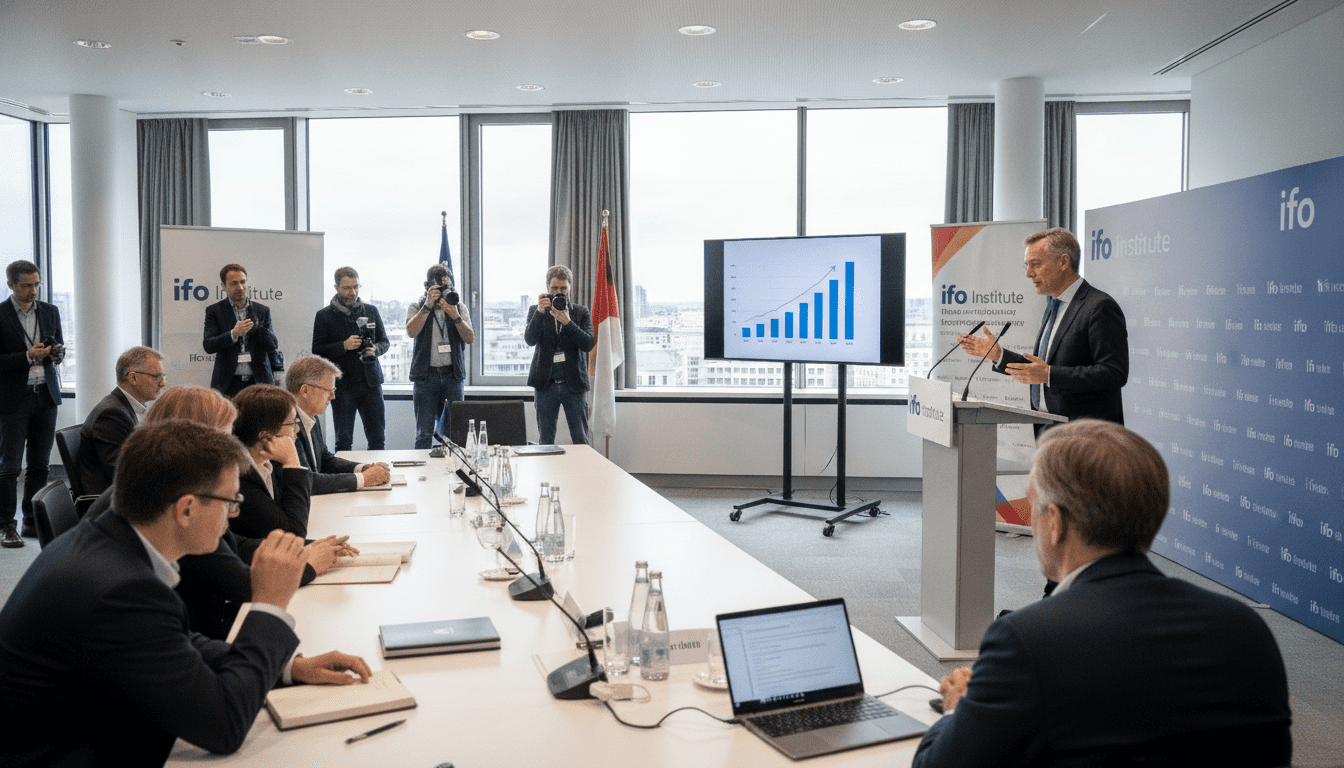
AI Replacing University Degrees: Ifo Survey Finds Growing Employer Confidence in AI Skills
Ifo survey: About one in five German firms say AI could replace university degrees in some roles, strongest in trade, but most firms see clear limits.
Artificial intelligence is being cited by a rising number of German employers as a practical substitute for formal qualifications, according to a new survey by the Munich-based Ifo Institute reported by Reuters. The survey finds that roughly 20 percent of companies using AI consider it easy or very easy to replace university graduates with less-qualified, AI-assisted workers, while about 15 percent see experienced staff as replaceable by inexperienced AI users. At the same time, a majority of firms say full substitution of credentials or experience remains difficult.
Extent of employer openness to AI substitution
The Ifo survey asked firms that already deploy AI about the relative ease of substituting formally qualified employees with AI-supported staff. Nearly one in five respondents judged replacing a university graduate with a less qualified, AI-enabled worker as straightforward. A smaller but notable share—around 15 percent—said replacing experienced employees with inexperienced AI users would likewise be feasible without major disruption.
These findings underscore a split within the business community between pragmatic adopters who view AI skills as a viable labor-market lever and those who caution that AI cannot fully compensate for human expertise and institutional knowledge.
Sectoral variation: trade leads, manufacturing lags
Not all industries responded the same way. Retail and trade firms were the most likely to report that AI skills could stand in for formal degrees, with 28.6 percent of companies in that sector describing replacement as easy. Service providers registered 19.7 percent, while the manufacturing sector reported the lowest share at 14.6 percent.
The differences reflect the types of tasks prevalent in each sector: routine, customer-facing or standardized processes in trade and services are more readily augmented by AI tools than complex, hands-on production tasks in manufacturing.
Limits to replacing experience and qualifications
Despite the headline figures, most AI-using companies remain skeptical about wholesale substitution. A majority—55.4 percent—said it would be hard or impossible to replace university graduates with less qualified AI-assisted workers. The figure is higher when it comes to experience: 62.7 percent judged it difficult or impossible to substitute an experienced employee with an inexperienced AI user.
This gap suggests firms still value tacit knowledge, decision-making judgment and on-the-job learning that AI tools cannot yet replicate reliably across contexts.
Adoption rates and current AI use in Germany
The survey also reports that 54.5 percent of companies in Germany have integrated AI into their business processes to some degree. That level of adoption places AI firmly inside contemporary corporate practice, even if firms differ widely on how transformative the technology will be for staffing and skills.
Analysts note that the mere presence of AI does not equate to full automation; many organizations use AI for augmentation—improving worker productivity—rather than for outright replacement.
Expert perspective from the Ifo Institute
Ifo researcher Anna Ruffert, cited by Reuters, said the findings indicate AI is altering the world of work and can in certain areas partially supplant formal qualifications and experience. Her assessment frames the survey results as part of a broader transition in which digital tools reshape role definitions and hiring priorities.
Ruffert’s comments underline that the phenomenon is neither universal nor instantaneous; rather, it is emerging unevenly and will depend on how firms redesign tasks, retrain personnel and manage risk.
Implications for employers, education and policy
The survey raises immediate questions for human resources, higher education and vocational training systems. Employers may increasingly prioritize candidates with demonstrable ability to use AI tools, prompting universities and training providers to adapt curricula and assessment methods. Policymakers will face pressure to balance workforce upskilling initiatives with protections for job quality and pathways to career progression.
Trade unions and education stakeholders have signaled the need for coordinated responses so that AI adoption does not widen skill gaps or undermine the value of longer-term professional experience.
The Ifo data paints a complex picture: AI replacing university degrees is a plausible outcome in some roles and sectors, but widespread replacement is not the prevailing expectation among German firms. How quickly and where substitution occurs will depend on task structure, investment in training and the regulatory environment shaping AI deployment.
