
FIFA World Cup 2026: Full schedule, groups, venues and Germany’s emphatic start
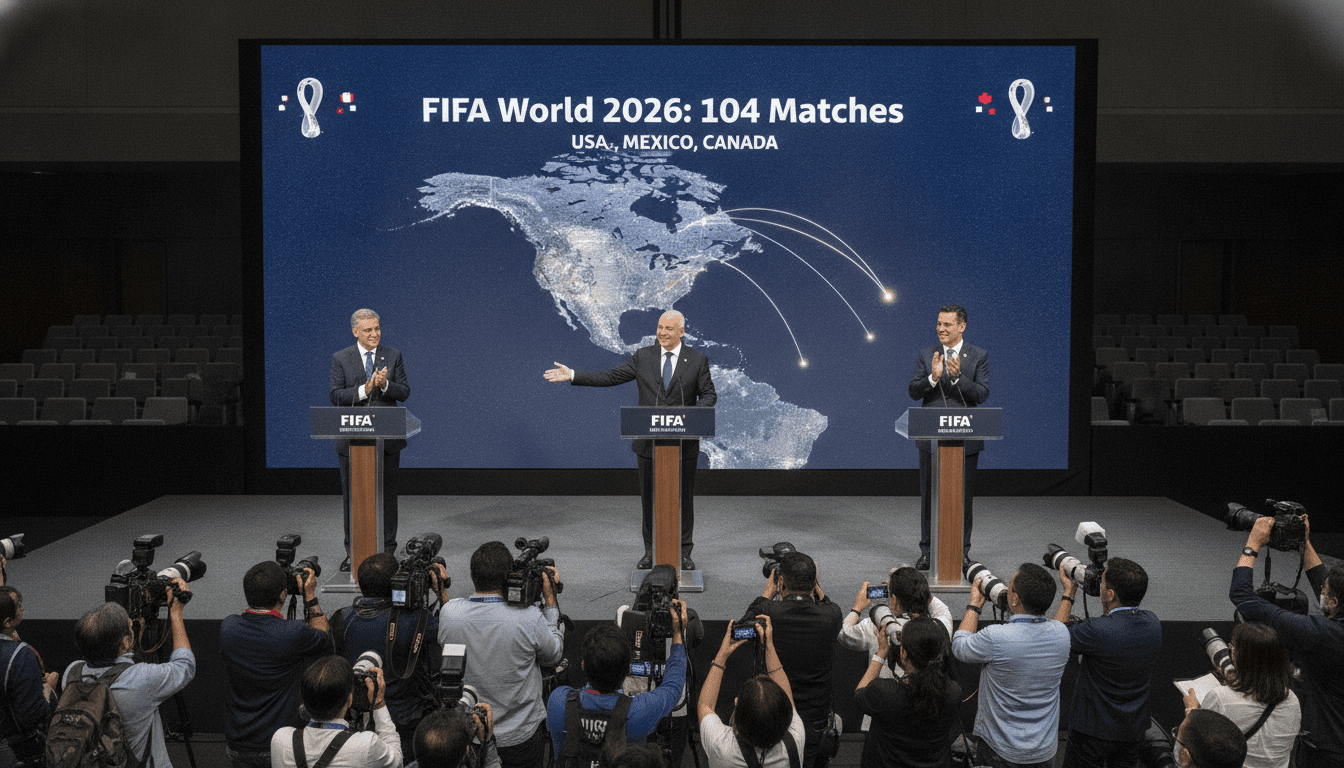
FIFA World Cup 2026 kicks off June 11–July 19 across Mexico, the United States and Canada, featuring 48 teams and a record 104 matches. The expanded tournament delivers more venues, more time zones and a revised knockout path that admits the eight best third-placed teams. This article summarizes the groups, key results so far, match times in CEST and where fans can watch the games.
Hosts and tournament dates
The FIFA World Cup 2026 is being staged across three countries for the first time, running from June 11 to July 19, 2026. Mexico, the United States and Canada share 16 host stadia and will together stage 104 matches, the largest World Cup in history by number of games. The opening match took place in Mexico City on June 11, with the final scheduled for July 19 in New York.
Group composition and early outcomes
Twelve groups of four teams apiece were drawn for the tournament, producing a diverse field from traditional powers to smaller nations. Group E contains Germany, Curaçao, Ivory Coast and Ecuador; Germany began the campaign with a 7–1 victory over Curaçao on June 14 in Houston. Other opening fixtures included Mexico’s 2–0 win over South Africa and the United States’ 4–1 victory against Paraguay.
Match schedule and broadcast details
Due to transcontinental time differences, kick-off times are presented in Central European Summer Time; most European viewers will see matches scheduled six to nine hours earlier locally. Public-service broadcasters ARD and ZDF are carrying 60 of the 104 matches, while the commercial package from Telekom’s MagentaTV streams all fixtures live. ARD and ZDF also offer live coverage via their respective apps and media libraries, and Magenta supplies a paid livestream for subscribers.
Stadiums, capacities and travel logistics
Sixteen stadia host the competition, with eleven venues in the United States, three in Mexico and two in Canada. Capacities range from Toronto’s roughly 45,000-seat stadium to Dallas’s largest venue seating about 94,000. Notable sites include Mexico City’s Azteca Stadium (c. 83,000), East Rutherford’s New York–New Jersey stadium (approx. 82,500) and BC Place in Vancouver (approx. 54,000). Organizers and federations face a complex logistics task as teams and supporters traverse multiple time zones between group matches.
Revised format and knockout pathway
The expanded field advances the top two teams from each group and adds the eight best third-placed teams to a newly activated round of 32, referred to in some reporting as the Sechzehntelfinale. That creates a 32-team first knockout round rather than the traditional 16-team knockout start. Tie-breakers remain conventional: goal difference, goals scored and head-to-head results, with fair-play points used only if the other criteria are exhausted.
Key fixtures and matches to watch
Germany’s comfortable opening win has positioned the DFB side as the immediate favorite to progress from Group E, but the group still features tests against the Ivory Coast (scheduled June 20 in Toronto) and Ecuador (June 25 in New York). High-profile matchups elsewhere include Brazil and Morocco in Group C, France and Norway in Group I, and the host nations’ own fixtures that will draw significant home support. The schedule maps crucial knockout dates across June 28 to early July, with the round of 32 and subsequent rounds spread among Los Angeles, Houston, Boston, Dallas, Mexico City and other host cities.
Germany faces Ivory Coast on Saturday, June 20 in Toronto at 22:00 CEST on ZDF, and then travels to New York for Ecuador on Thursday, June 25 at 22:00 CEST on ARD. If Germany tops the group, the team could meet a third-placed qualifier in the round of 32 or face the winner of Group I in later rounds, depending on how the bracket unfolds.
Political and operational complexities
The three-country layout has introduced diplomatic and operational complications for select delegations. One notable example involved Iran, whose team faced constraints on accommodation and travel between Mexico and the United States. An agreement reached with the relevant authorities allowed the Iranian squad to remain overnight in the U.S. rather than being required to enter and exit on the same day, easing logistics ahead of their scheduled matches.
The FIFA World Cup 2026 brings a radically larger field and a record schedule that will test squads’ depth, travel planning and recovery routines. With 48 nations competing across 16 venues and a new round-of-32 stage, the tournament promises more group-stage drama and a longer knockout phase than any previous World Cup, delivering extended viewing for global audiences until the final in New York on July 19.
