
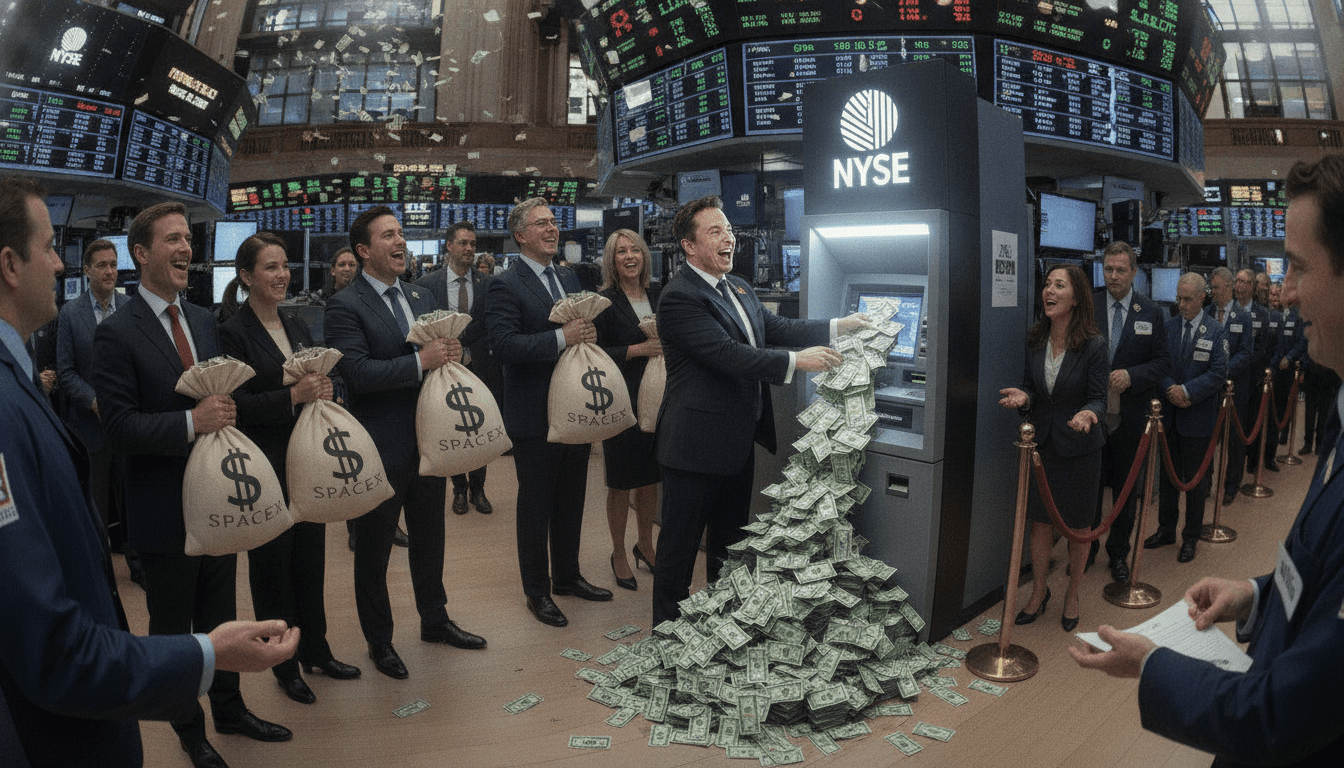
SpaceX IPO Fuels Dramatic Wealth Shift as Retail Investors Propel Market Rally
SpaceX IPO ignited a surge in wealth, driving thousands into millionaire status while concentrating gains among insiders and luxury sectors in the immediate aftermath.
Elon Musk’s SpaceX listing, in its market debut, produced an extraordinary redistribution of wealth that unfolded within days of trading. The SpaceX IPO drew intense retail demand, sending the stock sharply higher and creating a wave of new millionaires and a handful of billionaires from rapid paper gains. The speed and scale of the move have sharpened debates over who benefits from equity markets and how the structure of public offerings amplifies concentration.
SpaceX IPO Sparks Rapid Wealth Creation
The SpaceX IPO became a focal point for retail enthusiasm and institutional allocation alike, producing unusually concentrated gains. Brokers and trading platforms reported record retail order volumes as small investors chased the stock, boosting the opening price and subsequent intraday momentum. The result was a one-day wealth transfer visible in brokerage account statements and luxury-market spending patterns.
Market observers say the initial surge was driven more by sentiment than by immediate changes to SpaceX’s fundamentals. Analysts note that while SpaceX commands a leading position in commercial launch and satellite services, the valuation surge reflected expectations about future revenue streams and strategic positions in AI and defense contracts. That gap between narrative and near-term earnings widened the dispersion of winners and losers among market participants.
Retail Investors and the Hype Cycle
Retail participation played a decisive role in the SpaceX IPO’s early moves, with online communities and social-media chatter amplifying buying pressure. Many small investors were drawn by the symbolic appeal of owning a piece of a company associated with high-profile space exploration and cutting-edge technologies. That momentum often translated into steep short-term gains for accounts that timed entries early.
At the same time, the episode highlighted structural risks for retail buyers who enter at peak sentiment. Those who purchased on the first-day run saw immediate paper wealth, but volatility remains high and timing is critical when gains are realized. Financial advisers warn that speculative inflows can create crowded trades that reverse quickly when broader market sentiment shifts.
Luxury Markets and Immediate Winners
The influx of newly minted wealth from SpaceX IPO-driven paper gains produced visible effects in luxury sectors almost immediately. Real-estate agents reported renewed interest in high-end properties, and demand for yachts, private jets, and upscale timepieces showed a measurable uptick. These consumption changes underline how equity-market returns can translate into concentrated real-world spending.
Companies that serve the ultra-wealthy are among the quickest to capitalise on sudden wealth creation, but the effect is asymmetrical. While a minority benefits disproportionately, broader consumer demand and wage effects from such concentrated spending are limited, reinforcing questions about the distributional impact of market-driven windfalls.
Insiders, Allocations and Market Mechanics
A central criticism arising from the SpaceX IPO is that public markets functioned as a cash machine for insiders and large, well-connected investors. Allocation mechanisms during the IPO and the aftermarket structure often favor long-standing institutional partners and company insiders. These groups can lock in substantial gains before broader investor bases have time or access to participate fully.
Regulatory experts and market participants point to allocation practices, lock-up agreements, and placement rounds as drivers of unequal outcomes. The combination of selective pre-IPO allocations and explosive secondary-market demand tends to concentrate initial wealth among those closest to the deal, rather than diffusing it across a wide set of public shareholders.
Private Markets, Aging IPOs and Concentrated Capital
The SpaceX debut also highlighted longer-term trends in how companies choose between public listings and private funding. Firms are staying private longer and raising larger late-stage rounds, which concentrates equity with a relatively small set of private investors and employees. When such companies eventually list, the public float can be limited, magnifying price moves and wealth concentration on debut.
This pattern has shifted the profile of IPOs to include more mature, capital-intensive firms that command large valuations from the outset. The consequence is a market where fewer new entrants dilute insider stakes, and where public trading primarily reallocates existing private wealth rather than broadening ownership.
AI, Valuation Narratives and Systemic Risks
Analysts say the SpaceX IPO is also a harbinger of how AI and future-technology narratives can reshape market valuations and investor behavior. Companies positioned at the intersection of space, data, and artificial intelligence attract narrative-driven premiums that can outpace near-term earnings growth. That creates a feedback loop between headlines, retail flows, and institutional positioning.
The systemic risk lies in a potential regime change in market dynamics: if narrative premiums become the dominant driver of listed-company valuations, volatility and concentration may increase. Policymakers and market operators will need to weigh whether existing disclosure, allocation, and market-structure rules sufficiently protect less-connected investors in this new environment.
The SpaceX IPO has forced a public reckoning with who gains when high-profile companies go public and how markets allocate opportunity. As regulators, exchanges and institutional investors assess the fallout, the broader debate will focus on whether reforms to allocation practices, disclosure and retail access can make future listings a vehicle for wider-based participation rather than a windfall for a select few.
