
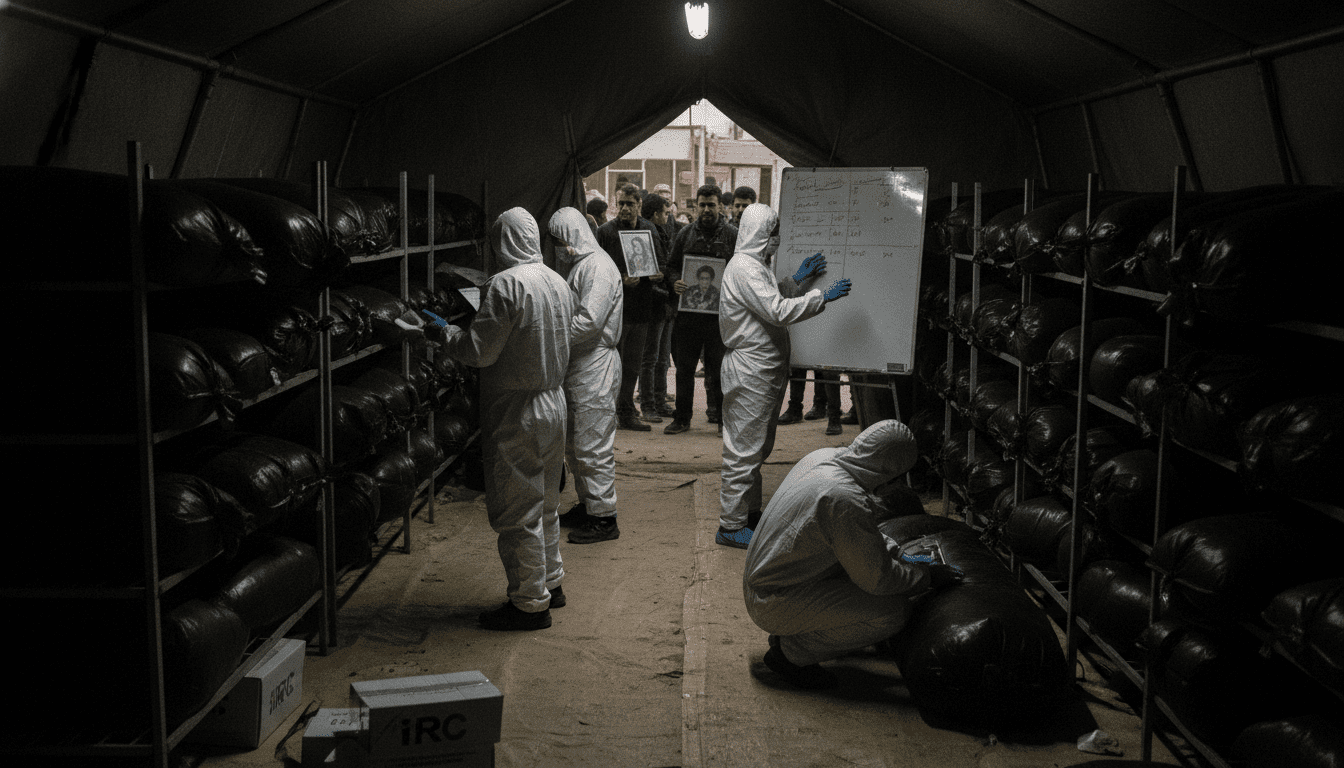
ICRC warns thousands of bodies in Gaza may never be identified as recovery stalls
ICRC says thousands of bodies in Gaza risk permanent loss of identity as slow recovery, lack of equipment and decomposition hamper forensic work.
The International Committee of the Red Cross has warned that thousands of bodies in Gaza risk being impossible to identify if recovery and forensic work do not accelerate. Pat Griffiths, the ICRC spokesperson in Jerusalem, said delays in recovering human remains beneath rubble increase the likelihood of advanced decomposition and the loss of crucial identifying evidence. The warning comes amid large-scale damage across the territory and ongoing constraints on rescue operations since the ceasefire in December 2025.
ICRC issues urgent warning on identification window
The ICRC told aid agencies and families that the longer bodies remain under rubble, the narrower the window for forensic identification. Griffiths warned that decomposition, environmental exposure and the loss of circumstantial evidence such as clothing, personal effects and fingerprints make later identification far more difficult. Forensic teams already face cases where skeletonised remains remove many standard avenues for confirming identity, the organisation said.
Forensic challenges from decay and lost evidence
Humidity, pest activity and prolonged exposure accelerate tissue loss and destroy items that help match remains to missing persons. Dental records, fingerprint patterns and biological samples degrade over time, and belongings that could corroborate identity are often lost or scattered during demolitions. Forensic experts also note that when recoveries occur weeks or months after an attack, the evidentiary chain can be broken, complicating legal and family efforts to establish who has died.
Scale of destruction and the numbers beneath the rubble
United Nations assessments and local authorities describe Gaza as heavily damaged, with the territory buried under tens of millions of tonnes of debris. UN data cited in recent reports estimate roughly 61.5 million tonnes of rubble and indicate that about three quarters of buildings were destroyed or rendered uninhabitable. Palestinian Civil Defence figures published in February reported that around 8,000 bodies remained under rubble despite recovery work, while more than 3,000 people were still listed as missing and unaccounted for.
Recovery hampered by lack of heavy machinery and access
Rescue teams have carried out extensive manual recovery efforts, but repeated appeals for excavators and heavy lifting equipment have been largely unmet. Teams continue to rely on shovels, pickaxes and hand tools in many areas where mechanical entry could speed retrieval and reduce risk to personnel. The ICRC and other humanitarian actors say restrictions on the entry of heavy machinery into Gaza remain a central obstacle to completing searches across sites where remains are believed to be located.
Concerns over bulldozer activity and site disturbance
Residents and aid agencies have expressed alarm that bulldozers operating in areas controlled by military forces may inadvertently move or bury remains and personal effects, further complicating identification. Disturbance of sites can destroy forensic contexts that are essential for documenting how and where a person died, and for preserving evidence needed for legal inquiries. The ICRC urged all parties with control over access to allow unimpeded searches and to coordinate with forensic teams to minimise destructive site activity.
Environmental and public-health implications of delayed recovery
Beyond identification, prolonged presence of human remains in unstable rubble poses public-health and environmental risks. Decomposition fluids can contaminate soil and water, while scattered debris increases the danger of secondary collapse during recovery work. The UN Environment Programme has warned that the volume of rubble — estimated to be twenty times greater than the total generated by previous rounds of conflict since 2008 — will complicate clearance and recovery for years to come.
International calls for coordinated forensic and humanitarian action
Humanitarian organisations, forensic specialists and family groups have called for coordinated international support to expand technical capacity inside Gaza. The ICRC reiterated requests for safe, sustained access for forensic teams and equipment, and it said direct dialogue with relevant authorities on these matters is ongoing. Donors and agencies have been asked to prioritise resources for identification, DNA sampling, and the training of local personnel to help preserve evidence and establish reliable death registries.
The ICRC’s warning underscores a grim choice facing families and authorities: either accelerate recovery and forensic interventions now or accept that many victims may ultimately be recorded as unidentified. Without improved access, equipment and protection for search teams, relatives risk never receiving certainty about the fate of loved ones, and future efforts to account for the dead will be markedly constrained.
