
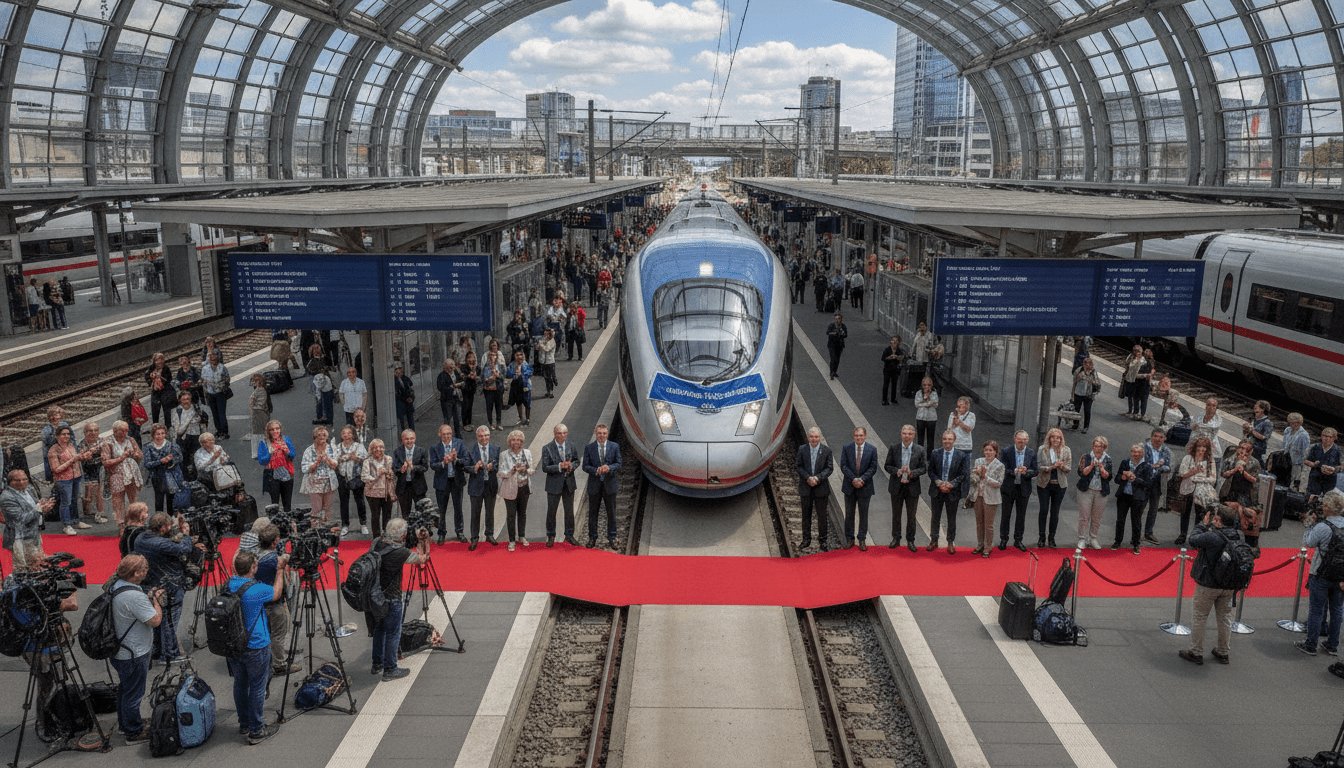
Hamburg–Berlin rail line reopens after 10½-month overhaul
Hamburg–Berlin rail line reopens after 10½ months. ICE and regional services resume; timetables adjusted, phased tests continue and bus replacement services end.
The Hamburg–Berlin rail line reopened in full on Sunday, June 14, 2026, ending roughly ten and a half months of replacement services and detours. Long-distance and regional trains returned to the restored corridor, with the first scheduled long-distance departure from Hamburg Central at 05:34, and planned travel times targeting under two hours. Deutsche Bahn (DB) confirmed that regional services had already resumed on parts of the route earlier in June.
Service Restored Across the Entire Corridor
From June 14, long-distance services on the Hamburg–Berlin corridor operate again at the regular half-hourly frequency that characterized the route before the overhaul. Regional trains also returned to their customary itineraries, replacing the extensive bus substitution network that had been in place for many commuters. DB cautioned that some trains will run with temporary speed restrictions during a phased testing period in the weeks following the reopening.
Timetable Changes and Travel Time Notes
Under the current timetable, standard ICE journey times on the route have been adjusted to 107 minutes, an increase of two minutes compared with the previous schedule for this year. DB explained that the marginal increase reflects a denser timetable and operational buffers while more trains re-enter the corridor, rather than limitations in the renewed infrastructure itself. Passengers should expect full timetable normalization only after the block of technical tests concludes later in June.
Major Infrastructure Upgrades Delivered
The works replaced track, turnouts and signalling equipment along roughly 280 kilometres of mainline between Germany’s two largest cities. DB reported modernization at 28 stations, where platforms were extended, shelters improved, toilets renewed and additional bicycle parking installed. The upgrades were designed to accommodate longer trains and to strengthen the route’s resilience under high traffic volumes.
Delay Causes and Cost Uncertainty
The generational refurbishment began on August 1, 2025, and was originally planned to finish by April 30, 2026, but frost and adverse winter conditions delayed open-cut and overhead-line works. DB attributed the roughly six-week delay to difficulties excavating cable ducts and to restricted access for overhead-line teams during cold spells earlier this year. The project was initially budgeted at approximately €2.2 billion, but final costs will be confirmed only after the completion of all works and accounting processes.
Operational and Economic Effects During the Closure
The closure forced long-distance trains to be rerouted via Stendal and Uelzen, adding up to about 45 minutes to journey times and reducing frequency for some services. Regional passengers experienced the most significant disruptions: partial cancellations, truncated services and a large-scale bus replacement program were in place for months. That bus operation, which saw more than 200 vehicles deployed at times, drew criticism for quality shortfalls and intermittent cancellations from some operators and users.
Freight Sector Concerns and Wider Network Impact
Freight operators flagged substantial disadvantages during the renovation window, saying detour routes were not always prepared to absorb the redirected traffic. Associations warned that inadequate diversion capacity and unforeseen local disturbances produced lengthy circuitous journeys for freight trains, sometimes adding several hundred kilometres to trips. The disruptions underlined the challenge of maintaining industrial supply chains while performing concentrated high-capacity upgrades on primary corridors.
ETCS Omission and Future Signalling Plans
Notably, the European Train Control System (ETCS) was not installed during this refurbishment, despite earlier plans to equip the corridor with the digital train-control standard. DB has completed preparatory works to permit a later ETCS rollout and stated that full implementation on this corridor is now planned for the early 2030s. The omission drew criticism from some transport stakeholders who argued that deploying ETCS alongside the physical upgrades would have maximized the project’s long-term benefits.
Context in the National Corridor Renovation Program
The Hamburg–Berlin overhaul is part of Germany’s larger Korridorsanierung Hochleistungsnetz program launched in 2022, which aims to modernize more than 40 high-performance routes by the mid-2030s. Work on other major corridors began in 2024, with the Riedbahn (Frankfurt–Mannheim) and the Emmerich–Oberhausen freight link completed earlier in the program. DB plans four further comprehensive renewals to finish this year on corridors including Hagen–Wuppertal–Köln, Nürnberg–Regensburg, Obertraubling–Passau and Troisdorf–Wiesbaden.
The reopening of the Hamburg–Berlin rail line restores a central artery of Germany’s passenger and freight network and is expected to reduce delays once the phased tests and timetable stabilisation are complete. While critics note the deferred ETCS rollout and the unresolved final cost tally, officials say the physical improvements and station modernisations will yield more reliable service and greater capacity in the years ahead.
