
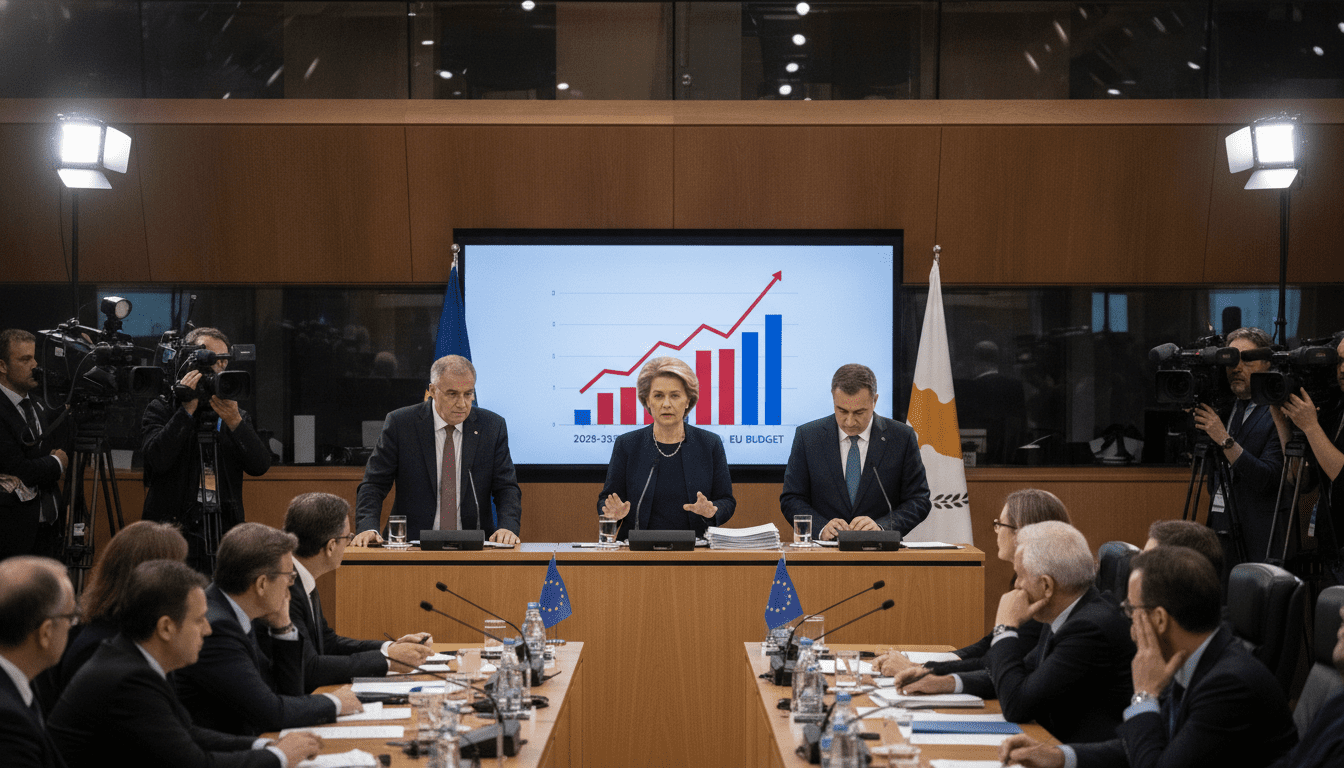
EU budget 2028-2034 deal called unaffordable as Cyprus compromise sparks row
EU budget 2028-2034: Cyprus’ compromise is criticised as unaffordable and imbalanced, prompting German warnings and complicating Brussels’ budget talks.
The compromise proposal put forward by Cyprus for the EU budget 2028-2034 has drawn sharp criticism from multiple capitals and fiscal experts, who say it would leave the bloc with an unaffordable and poorly balanced spending plan. On June 12, 2026, German Chancellor Merz urged restraint, describing the proposal as a sign that priorities are skewed and costs are too high. Negotiators in Brussels now face intensified pressure to rework figures and priorities before the next round of intergovernmental talks.
Cyprus compromise draws criticism across the bloc
EU officials and analysts said the Cyprus text attempts to bridge competing demands but falls short of offering a fiscally credible framework for 2028–2034. Critics argue the compromise allocates disproportionate resources to a few high-profile programmes while leaving long-standing cohesion and structural funds underfunded. That imbalance, they warn, could deepen political divisions between member states that view the budget as either overly redistributive or insufficiently targeted.
Proponents of the Cyprus draft counter that any compromise must reflect political realities and accommodate new priorities such as security and green transition costs. Even so, several finance ministries privately told journalists they see the proposal as a negotiation opening rather than a final blueprint. The debate highlights how difficult it is to reconcile competing national agendas with a common fiscal strategy.
German government frames the plan as unaffordable
Chancellor Merz publicly called for fiscal moderation, saying the EU must “show restraint” in its long-term spending commitments under the 2028–2034 plan. Berlin’s stance centers on concerns about rising obligations for net contributors and the absence of new, sustainable revenue streams to cover expanded programmes. German officials insist any multiannual financial framework must be realistic about member states’ willingness to increase contributions or accept new own resources.
Domestic political dynamics in Germany add urgency to the German warning, with coalition partners and opposition figures scrutinising the potential burden on national budgets. Berlin’s intervention is likely to stiffen resistance among other net contributors, complicating efforts to craft a cross-Atlantic—in the EU sense—consensus.
Disagreement over priorities and fiscal mechanics
Debate over the budget is not limited to headline totals but extends to how money is divided among defence, climate action, innovation and cohesion policy. Analysts point out that without clearer rules on how proposed new programmes are to be financed, the EU risks creating recurring gaps that national treasuries will be forced to fill. The Cyprus compromise, critics say, offers insufficient detail on revenue mechanisms and contingency planning.
Some economists warn that expanding commitments without corresponding revenue reforms could force either cuts to popular programmes or unplanned increases in national contributions during the budget period. Brussels negotiators must therefore balance immediate political trade-offs with longer-term fiscal sustainability, an exercise made harder by divergent economic conditions across member states.
Member states and institutions register mixed reactions
Responses across capitals have been mixed, with some governments welcoming the Cyprus text as a pragmatic step and others describing it as a starting point for tougher negotiations. Eastern and southern EU members have emphasised the need to protect cohesion funding and agricultural support, while several northern contributors stress tighter controls and clearer performance metrics. The European Parliament has signalled it will press for stronger social and climate conditionality, complicating the trilogue ahead.
European Commission officials have urged negotiators to avoid a protracted stalemate, arguing that a timely agreement is necessary to provide certainty for programmes and beneficiaries. However, reaching that agreement will require compromises that satisfy a broad array of political priorities, from defence cooperation to migration and digital transition.
Negotiation calendar and likely next moves in Brussels
Diplomatic sources say talks will continue through the summer as ambassadors and budget sherpas attempt to narrow differences before any leaders’ summit can ratify a final text. Negotiators face practical deadlines tied to programme planning and legal windows for approval, which makes timely progress politically important. Expect successive iterations of the Cyprus compromise, with technical adjustments and concessions likely on both spending lines and revenue proposals.
Key sticking points will include the scope of new own resources, safeguards for net recipient states, and mechanisms to manage unforeseen fiscal shocks during the 2028–2034 period. If these issues remain unresolved, the EU risks either settling for a weak compromise that fails to meet stated priorities or facing delay that would disrupt funding cycles and programme rollout.
The Cyprus proposal has brought into sharp relief the tensions at the heart of any multiannual EU budget: competing national interests, evolving policy priorities and the difficulty of matching ambitions to financial realities. Whether negotiators can convert the current compromise into a sustainable, balanced EU budget for 2028–2034 will depend on political will, technical fixes to revenue rules and a willingness among member states to accept trade-offs that preserve both fiscal discipline and the Union’s policy goals.
