
Robinhood Sees Record-Breaking Traffic After SpaceX’s Historic IPO
Robinhood reported record-breaking trading traffic and brief latency after SpaceX’s Nasdaq debut, as the stock surged and $42B changed hands in the first hour.
Robinhood Reports Platform Strain After SpaceX Listing
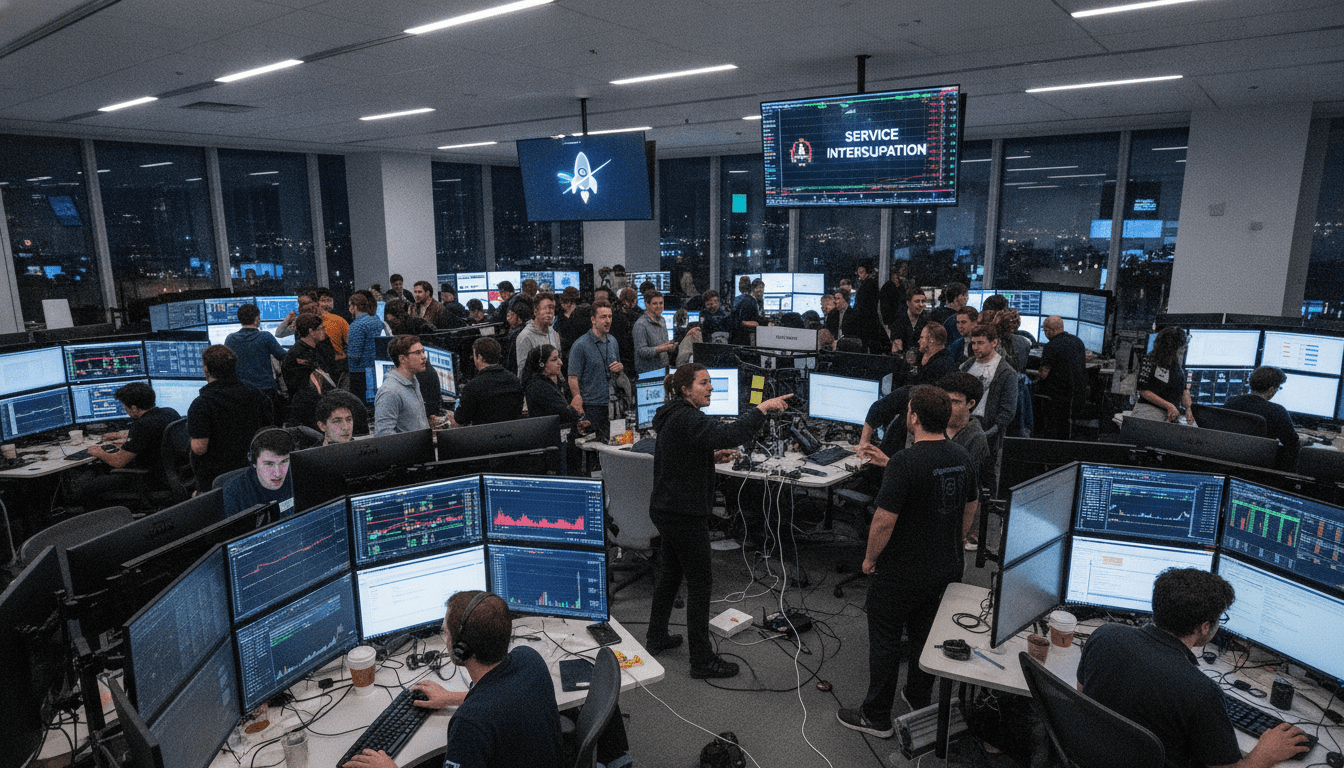
Robinhood said Friday it experienced “record-breaking” traffic on its trading platform in the hours following SpaceX’s historic public debut. The brokerage acknowledged that some customers encountered latency and intermittent trading issues, but said the platform recovered quickly and remained operational.
The company posted the update publicly and framed the disruption as tied directly to the unusually heavy demand surrounding SpaceX’s listing. Robinhood’s statement highlighted both the scale of retail interest and the strain that intense, concentrated order flow can place on digital trading systems.
SpaceX’s Nasdaq Debut and Immediate Market Moves
SpaceX began trading on the Nasdaq at roughly 11:47 a.m. ET, and the shares jumped about 11% immediately after the opening print. That surge pushed SpaceX’s market capitalization past $2 trillion, a move that briefly placed its founder, Elon Musk, in the position of a trillionaire by some measures.
Nasdaq reported that roughly 263 million shares changed hands in the first hour of trading, representing about $42 billion in turnover. The combination of a large valuation, heavy volume and a small float created an intense market backdrop for both institutional and retail participants.
Scope and Nature of Robinhood’s Disruption
Robinhood characterized the issue as intermittent latency rather than a prolonged outage, saying most customers were able to trade and the platform stabilized after the initial surge. Users on social media posted screenshots and reports of delayed orders and slowed interface responses, consistent with the company’s message about heavy traffic.
Industry observers noted that modern brokerages expect spikes when landmark listings occur, but the size of the SpaceX debut presented an unusually concentrated burst of activity. For Robinhood, which serves a large retail base, that concentration translated into measurable pressure on order routing and user experience during critical early trading minutes.
Why SpaceX’s Limited Public Float Amplified Volatility
SpaceX allocated only about 4% of its outstanding shares for public trading, a small float that can magnify price swings when demand is concentrated. With a limited number of shares available for purchase, even moderate buying or selling pressure can lead to outsized moves in the share price and rapid changes in order book depth.
A tiny float also increases the likelihood that retail-driven waves of buying will overwhelm execution systems and create transient dislocations. In this case, the combination of strong retail interest and tight supply contributed to both the sharp early price move and the exceptional trading volume observed in the opening hour.
Market Reaction and Broader Implications for Brokerages
The episode underscores the operational challenges brokerages face when managing sudden surges in retail trading volume tied to headline listings. Brokerages must balance user experience, order-routing efficiency and regulatory obligations during periods of extreme activity, and outages or latency events can raise scrutiny from both customers and regulators.
For Robinhood, which has previously been scrutinized for platform reliability during high-profile market events, the quick recovery and transparent acknowledgement of issues may help temper criticism. Still, the incident will likely prompt renewed internal reviews of capacity planning and contingency protocols across the industry.
Liquidity, Price Discovery and Retail Participation
The first hour of SpaceX trading demonstrated how liquidity and price discovery can be compressed into a narrow window when a major company lists with a small public float. Heavy turnover concentrated early in a stock’s life can produce wide bid-ask spreads and rapid price moves that challenge typical execution strategies.
Retail participation played a visible role in the dynamics, with many individual investors and app-based traders converging on the stock at the same time. That phenomenon highlights the continued influence of retail platforms on market structure during headline corporate events.
Robinhood said it would monitor system performance and customer feedback as the market absorbed the SpaceX listing, while market participants weighed the broader consequences of a $2 trillion valuation for a newly public company with restricted liquidity.
