
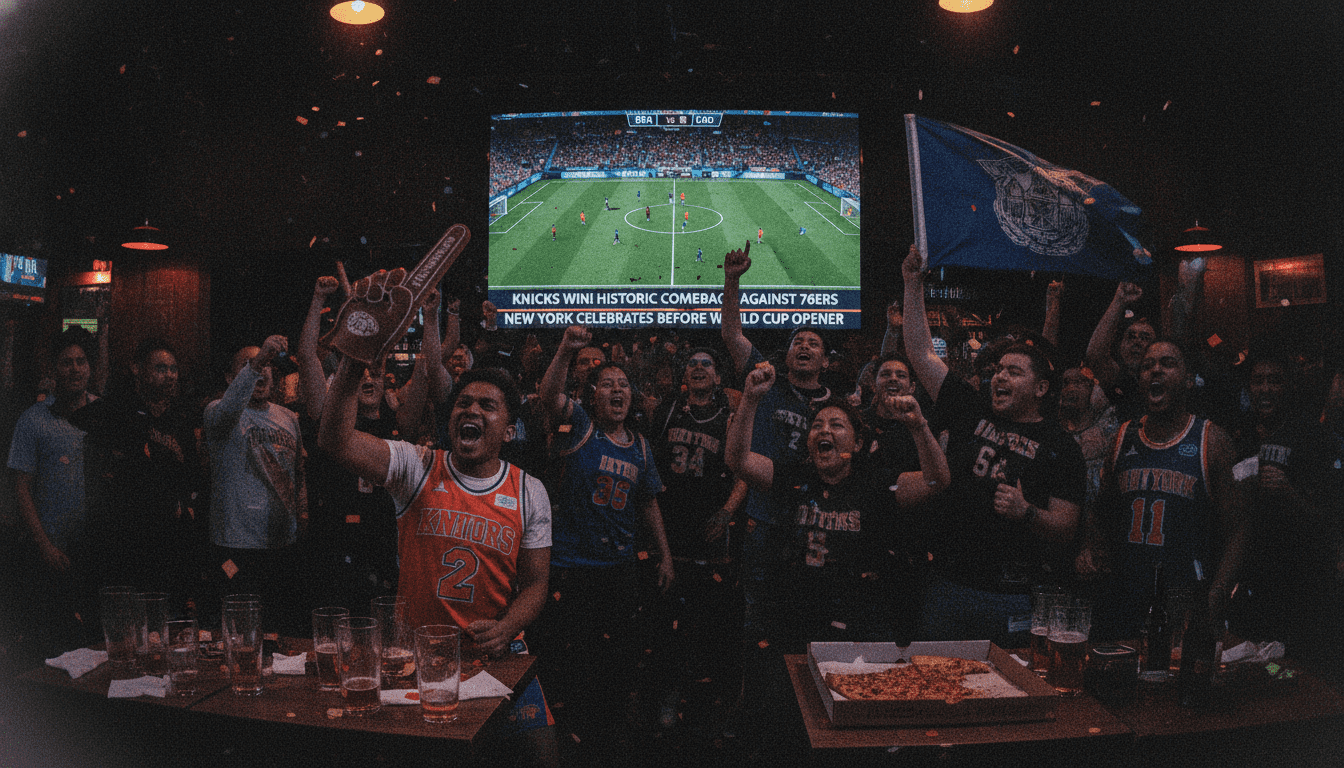
New York World Cup celebrations erupt as Knicks’ historic NBA comeback adds to the city’s joy
New York World Cup celebrations spilled into the streets on the night before the tournament opener, as ecstatic crowds gathered across the city and the unexpected drama of a historic New York Knicks comeback provided a soundtrack to the revelry. The scenes combined the raw emotion of a major football tournament kickoff with a reminder of local sporting pride, creating a mood of shared joy in public spaces. Fans chanted, climbed car roofs and debated key plays, with the World Cup opening night and the Knicks’ late surge dominating conversations.
New York Streets Erupt Ahead of Tournament Opener
Crowds gathered in neighborhoods across Manhattan, Brooklyn and beyond in the hours before the World Cup opener, converting thoroughfares into impromptu celebration zones. People cheered in groups, waved flags and embraced strangers, producing an atmosphere more ecstatic than raucous in many places. Observers noted a prevalence of families and women among the celebrants, and relatively few signs of disorder as the city welcomed the international spectacle.
Public transit hubs and plazas became focal points for the early festivities, with fans stopping to discuss lineups, referee calls and which teams to watch. Street vendors and local cafes reported brisk business as viewers and passersby lingered to share predictions and photographs. City officials encouraged peaceful celebration while coordinating crowd management and public safety measures.
Knicks’ Comeback Resonates with Fans
The city’s mood was amplified by the New York Knicks’ unprecedented comeback in the NBA finals, erasing a large deficit to secure a pivotal victory against San Antonio. The scale of the turnaround — a deficit that once seemed insurmountable — reverberated through sports conversations and fed into the celebratory energy on the streets. For many New Yorkers, the Knicks’ late rally mirrored the drama and unpredictability they hoped to see in the World Cup.
That basketball milestone became a touchstone for fans who saw both events as evidence of sport’s capacity to surprise and unify. Supporters compared decisive plays and coaching choices across the two sports, finding common pleasure in moments of tactical daring and individual brilliance. The simultaneous surge in civic pride underscored how local achievements and global tournaments can intersect to lift public mood.
Fans Focus on Moments and Decisions
Amid the noise, detailed conversations about tactics and turning points were common. Spectators debated coaching substitutions, pivotal referee calls and the exact sequence of plays that altered outcomes, demonstrating a deep engagement with the mechanics of sport. This analytical enjoyment — breaking down decisions and replaying key actions — added a cerebral dimension to the emotional celebrations.
Observers highlighted how these technical debates coexist with pure emotion; fans can both dissect a missed opportunity and be moved to tears by a decisive goal or shot. That blend of analysis and passion helps explain why public gatherings felt like both a social event and a spontaneous study group in sporting drama. It also reinforced an appreciation for the small, decisive actions that determine big results.
Football’s Appeal Persists Despite Off-Field Controversies
The arrival of the World Cup did not erase criticism surrounding the tournament’s organization and governance, but many in the city appeared ready to separate politics from play. Public sentiment suggested a willingness to set aside controversies at least temporarily, allowing the spectacle of football to reassert its emotional pull. Supporters and casual viewers alike emphasized the immediacy of goals, the thrill of close calls and the human stories that unfold on the pitch.
Analysts and commentators cautioned that lingering issues around officiating and administration would remain relevant topics, especially when contentious decisions occur on the field. Still, the broader impulse among crowds was to embrace the event’s unifying potential: a global competition that displays national identities in a peaceful and celebratory forum. For now, that force seemed to outweigh the grievances.
Economic and Cultural Ripple Effects in the City
Local businesses reported a noticeable uptick in foot traffic as supporters converged to watch matches and celebrate outcomes, fueling a short-term boost for bars, restaurants and retailers. Neighborhoods with large public viewing areas experienced spikes in demand for food and merchandise, while cultural venues scheduled related events to tap into the heightened public interest. The combined effect of the World Cup and the Knicks’ success offered a welcome economic jolt during what is typically a busy summer season.
Cultural institutions and community groups also mobilized, using public screenings and gatherings to promote social programming and civic engagement. These events provided platforms for local voices and youth involvement, expanding the social footprint of the sporting moments beyond mere consumption. Organizers emphasized safety and inclusivity while seeking to sustain the positive energy through neighborhood activities.
Temporary Relief, Enduring Challenges
While celebrations offered respite, many commentators reminded audiences that sport’s elation is short-lived and that deeper societal problems persist. Economic inequality, governance disputes and broader geopolitical tensions remain unresolved, and those realities accompany even the most rousing public moments. Still, the brief unity generated by large sporting events can provide meaningful relief and a chance for communities to gather without acrimony.
For participants, the choice to celebrate does not signal complacency about larger issues; rather, it reflects a recognition that communal joy is itself valuable. The World Cup opening night and the Knicks’ comeback combined to produce that kind of communal emotion in New York, giving residents a momentary but potent experience of shared belonging and exhilaration.
The ball is rolling and, at least for now, New Yorkers have surrendered to the spectacle, allowing sport’s unpredictable drama to knit strangers together and to remind a city facing many pressures why public celebrations retain their power.
