
Coalition Confirms Tankrabatt Will End on July 1, Cites Fiscal Limits and Readiness to Act
German coalition confirms Tankrabatt ends July 1; government cites fiscal limits and readies measures to prevent fuel-price shocks while considering relief.
Coalition confirms end date for Tankrabatt
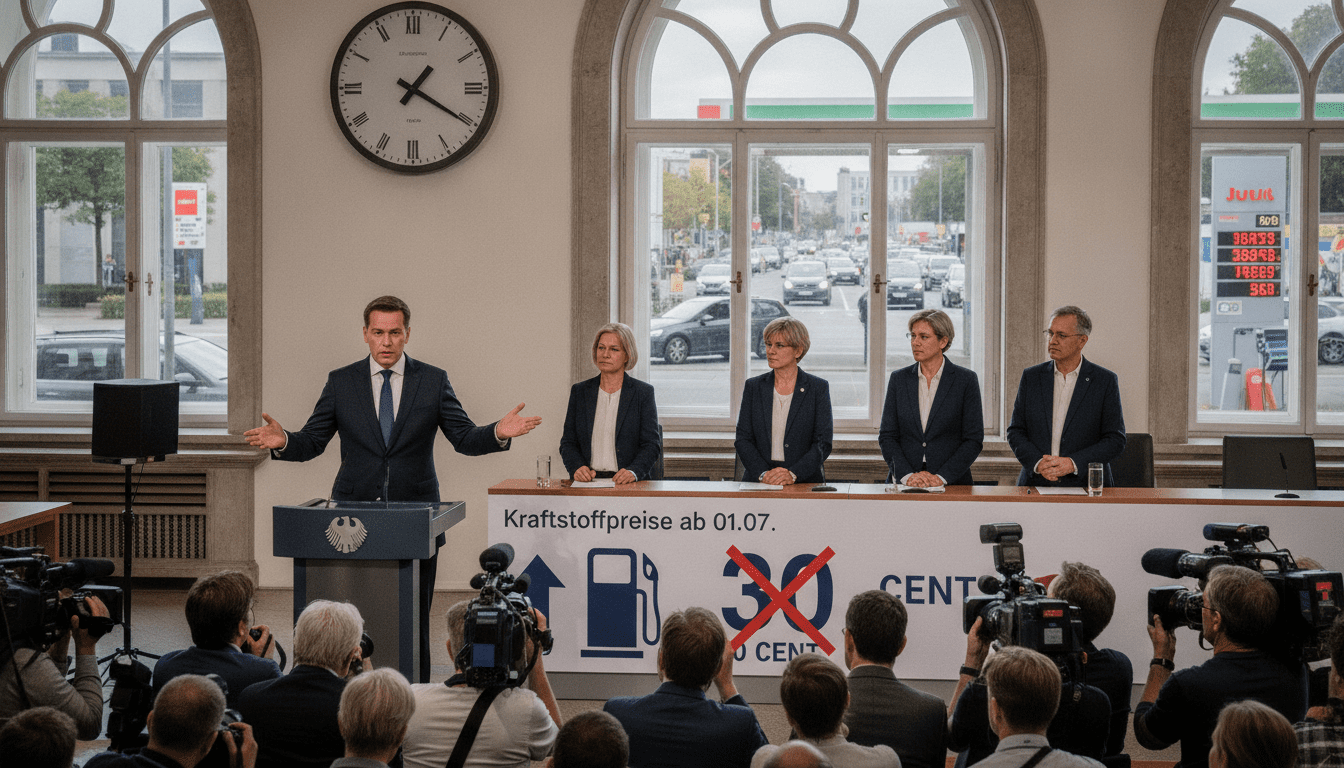
The governing CDU–SPD coalition has agreed that the Tankrabatt will expire as planned on July 1. The decision was announced by parliamentary deputies Sepp Müller (CDU) and Armand Zorn (SPD), who told the Bild newspaper the temporary fuel rebate had served its purpose but was no longer fiscally sustainable.
Müller said the measure “is fiscally not sensible” and the coalition will not take on additional debt to extend it. Both deputies warned that the government is prepared to act quickly if market conditions change after the rebate lapses.
Coalition signals swift response to sudden price rises
Lawmakers stressed they are monitoring the market and ready to intervene if fuel prices spike after July 1. Müller and Zorn said the coalition could convene special Bundestag sittings even during the summer recess, and they expect the Länder to support emergency measures in the Bundesrat if necessary.
The deputies also issued a warning to oil companies against abrupt price increases when the rebate ends. Officials emphasized that the government prefers preventative measures over protracted emergency spending.
Why the Tankrabatt was introduced in May
The Tankrabatt, a temporary cut in the energy tax on petrol and diesel, was introduced for May and June after a sharp run-up in pump prices that began in March. The government said the move sought to relieve households and temper inflationary effects caused by the regional conflict that pushed crude prices higher.
The rebate reduced prices by up to 17 eurocents per liter, according to government descriptions of the measure. It was explicitly time-limited, designed to provide immediate relief while longer-term policy options were evaluated.
Fiscal cost and measurable impact on inflation
The two-month Tankrabatt package is estimated to cost the federal budget roughly €1.6 billion. Officials point to a measurable effect on headline inflation, noting that consumer price growth slowed to 2.6 percent in May from 2.9 percent in April following the rebate’s implementation.
Economic analysts say the rebate dampened fuel-related inflation and provided a short-term cushion for consumers, but they caution that such measures offer only temporary relief and carry a fiscal trade-off if extended.
Alternatives under discussion after rebate expires
With the Tankrabatt set to end, coalition partners are discussing a suite of targeted relief options. Proposals reportedly under consideration include focused subsidies for low-income drivers, an increase in the commuter allowance, reductions in energy or electricity taxes, a fuel-price cap and a windfall profits tax on oil companies.
Lawmakers described the options as complementary tools that could be targeted more efficiently than a broad tax cut. Officials emphasized that any further measures would be weighed against budgetary constraints and assessed for legal and administrative feasibility.
Market watch and consumer outlook for July
Industry observers say pump prices could rise modestly once the rebate ends, depending on wholesale crude and refined product markets. Retail price changes will also reflect margins set by fuel distributors and retailers, prompting government appeals for restraint in passing through full price increases to consumers.
Consumer groups urged transparency and close supervision of fuel markets to prevent opportunistic hikes. The coalition’s pledge to act quickly if prices surge is aimed at reassuring households and stabilizing expectations ahead of the rebate’s termination.
The Tankrabatt offered a short-term reduction in pump prices and a visible political response to rising energy costs, but its scheduled expiration on July 1 shifts the debate back to longer-term, targeted measures and regulatory options to protect consumers without widening budget deficits.
