
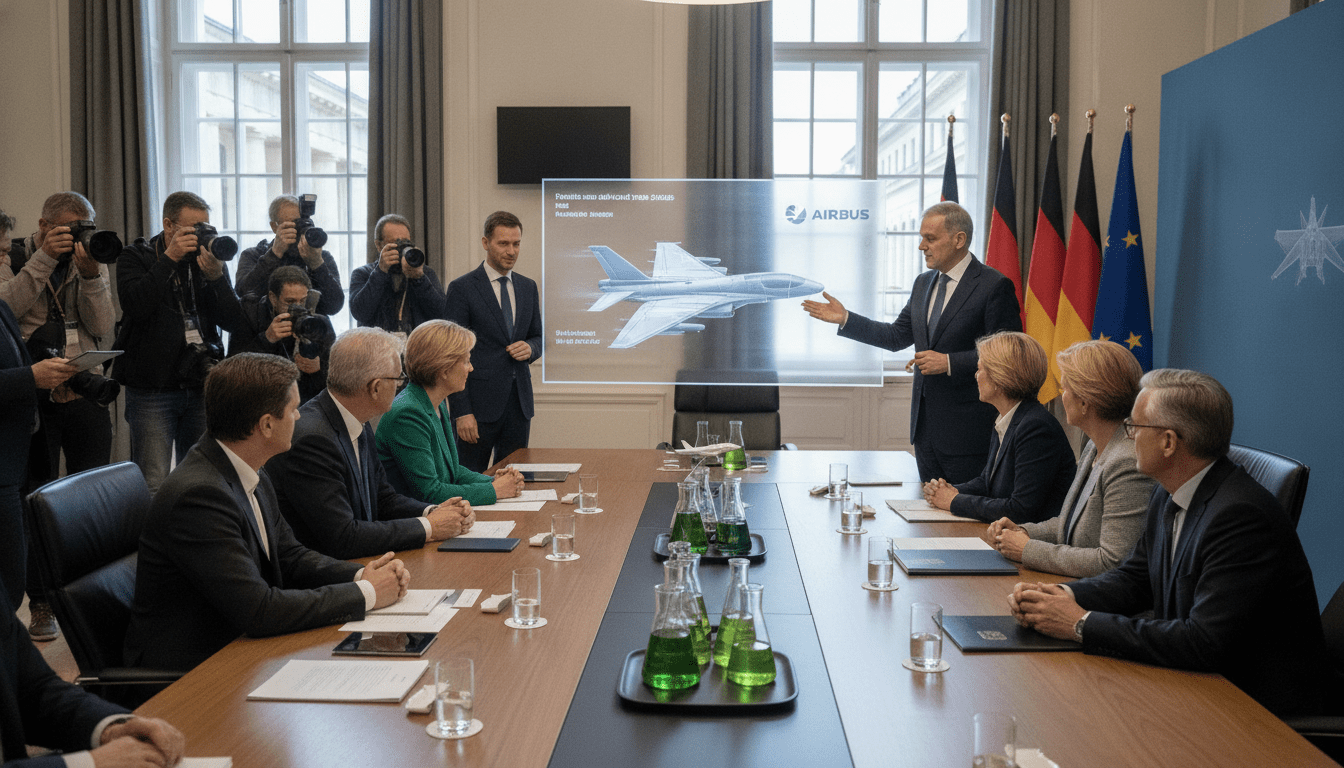
German aviation strategy seeks lower taxes, Airbus role and new fighter jet
Germany unveils aviation strategy to cut taxes, secure German roles on the next Airbus jet, boost SAF production and fast‑track a domestic fighter by 2040.
The federal cabinet approved a comprehensive German aviation strategy at the opening of the ILA air show in Berlin, setting targets to strengthen airlines, airports and manufacturers over the next 15 years. The plan calls for lower taxes and fees, a strengthened industrial role in the next Airbus mid‑market aircraft, accelerated investment in sustainable aviation fuels (SAF) and a state‑backed push for a new fighter jet program. Officials said the measures are intended to keep Germany internationally competitive in a sector the government describes as strategically important for jobs and supply chains.
Cabinet decision framed at Berlin air show
The cabinet presented the strategy as a long‑term blueprint during the ILA industry gathering, framing aviation as a growth sector expected to expand substantially through mid‑century. The document addresses commercial flight operations, airports, and the civil and defence supply chain, asserting the sector’s role for Germany’s export economy. Chancellor Friedrich Merz emphasized the country’s ambition to share in global aviation growth and signalled political backing for stronger domestic industrial participation. Government sources said the strategy combines regulatory adjustments with targeted industrial policy.
Cost relief measures for airlines and airports
A central plank of the strategy is to reduce the regulatory burden that industry groups have blamed for a sluggish post‑pandemic recovery in Germany. The package includes a reduction of the ticket tax effective July 1 and a phased cut to air navigation fees through 2029, measures the government says will improve international competitiveness. Industry representatives welcomed the principle of relief but many described the initial steps as insufficient and called for clearer timelines and deeper cuts. Opposition lawmakers from the Union and SPD plan a parliamentary initiative to press for an expanded review of further tax relief measures.
Claims on Airbus mid‑market programme and Hamburg role
The government explicitly states a preference for substantial German system responsibilities on the next generation Airbus mid‑market aircraft that will follow the A320 family. Federal leaders have set out to secure key industrial work at German sites, with Hamburg‑Finkenwerder named by officials as central to future production. The strategy frames “system responsibility” as a negotiating objective and signals readiness to defend German industrial participation in forthcoming procurement and partnership talks. Airbus executives present at the ILA signalled willingness to discuss those arrangements while stressing the company’s pan‑European industrial footprint.
New fighter jet initiative and industry alliance
In response to the collapse of the earlier Franco‑German FCAS project, the strategy adds a commitment to develop a new combat aircraft with “substantial participation of the German industry” by around 2040. Eight mainly German firms, including parts of the Airbus defence group, have publicly indicated readiness to collaborate and to press for an industrially led successor programme. Corporate leaders said this grouping should not be read as a formal consortium for production today but as an industrial preparedness to move quickly once political mandates and financing are clarified. Defence and industry officials asked for a fresh timeline and clearer procurement directives to convert readiness into concrete development work.
State support mechanism for synthetic SAF
The strategy places a high priority on scaling synthetic aviation fuels as a means to decarbonise air transport, noting current SAF volumes are limited and often based on waste feedstocks. To bridge the investment gap, the government proposes a two‑tier auction mechanism in which intermediaries first secure synthetic SAF and downstream airlines bid in a second auction; the state would cover price shortfalls to secure investor returns. The plan earmarks roughly €2 billion for 2030–2039 to underwrite the scheme and reduce investor risk for commercial e‑fuel plants. Green politicians and some industry voices said the approach is a step forward but argued stronger, clearer incentives and cross‑ministerial coordination are needed to avoid conflicting uses of scarce e‑fuels.
Industry leaders and trade groups gave measured responses to the strategy, praising its ambition while demanding more immediate and binding measures on costs and investment. Airport and airline associations noted that the announced tax and fee changes will help but fell short of the deeper reductions they say are required for full recovery. Defence and aerospace managers welcomed the reaffirmation of industrial participation but pressed for a “clear order” and funding commitments to move R&D and prototyping into the execution phase.
The cabinet’s German aviation strategy sets a broad and multifaceted goal: to safeguard industrial jobs, secure strategic production roles and accelerate the transition to cleaner fuels while improving competitive conditions for airlines and airports. Implementation will depend on subsequent regulatory details, funding allocations and international negotiations with industry partners.
